

Policy Snapshot
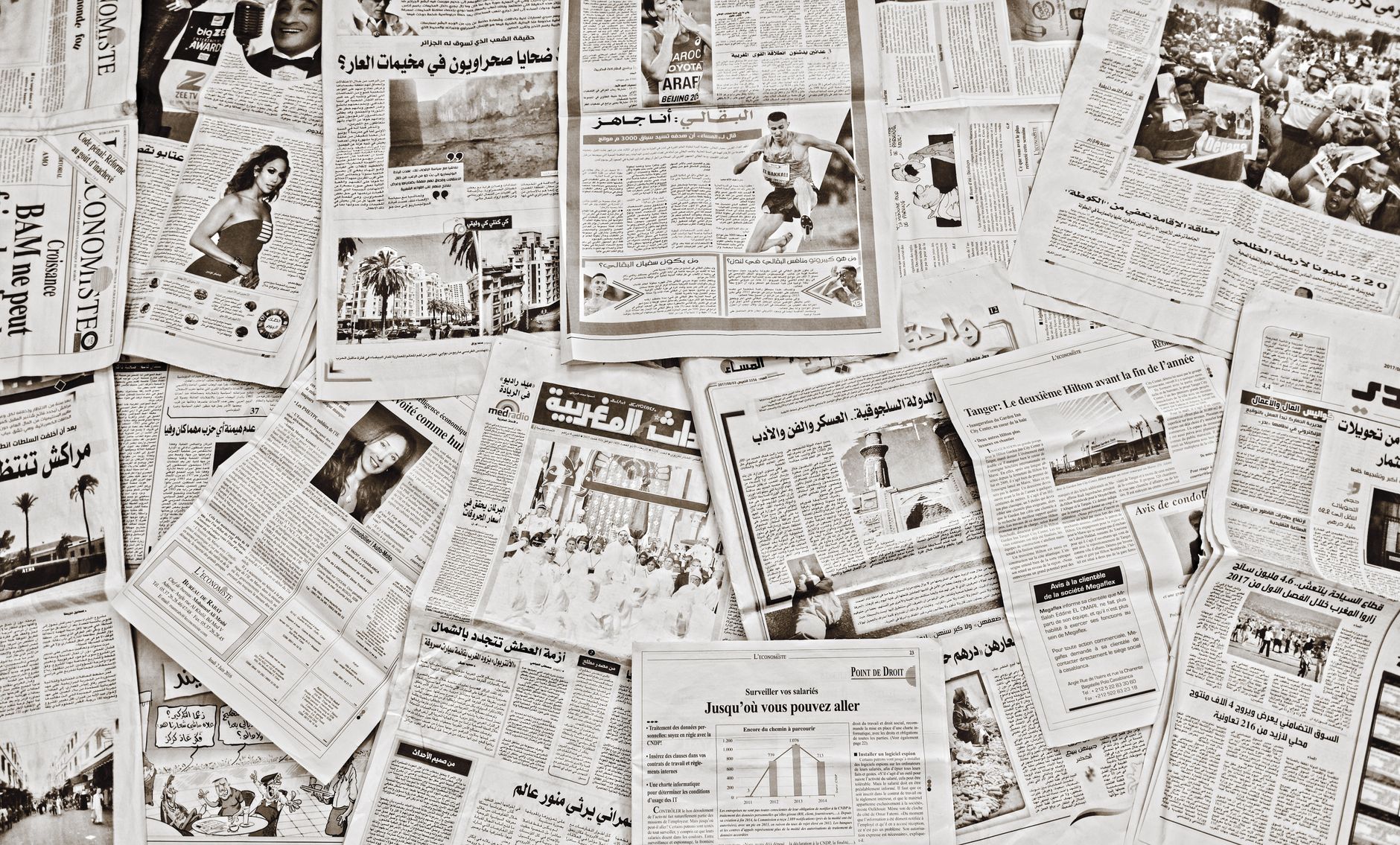
- Many leading journalistic organizations, including the Society of Professional Journalists (SPJ), emphasize accuracy as the paramount principle, urging verification of all facts before publication, even when under immense pressure to break news first.
- The Associated Press Stylebook, a widely adopted guide, provides strict rules on sourcing, attribution, and fact-checking, serving as a foundational text for ensuring factual integrity across diverse newsrooms globally.
- Editors' codes of conduct frequently stipulate that corrections must be issued promptly and prominently for any factual errors, acknowledging that mistakes happen but transparency is crucial for maintaining credibility with the audience.
- Digital-first newsrooms often implement multi-layered fact-checking processes, involving not just reporters and editors but also dedicated fact-checkers or research teams to scrutinize information before it goes live on fast-moving platforms.
- Ethical guidelines increasingly address the responsible use of social media by journalists, cautioning against sharing unverified information or speculation, and advocating for a clear distinction between reporting and personal opinion.
- Training programs for journalists regularly include modules on media ethics, emphasizing critical thinking, source evaluation, and the long-term impact of misinformation on public discourse and democratic processes.
The Policy History
Journalism's core tenets have always revolved around informing the public with verifiable facts. From the earliest newspapers to the advent of radio and television, the pursuit of truth was a laborious, often slow process, constrained by printing deadlines and broadcast schedules. Editors had ample time to vet stories, cross-reference sources, and refine narratives, establishing a tradition where accuracy was not merely an aspiration but a practical necessity dictated by the very mechanics of news dissemination. This historical foundation built public trust in institutions that meticulously curated information, setting a high bar for reliability.
The digital revolution, however, dramatically reshaped this landscape, ushering in an era of instant gratification and continuous news cycles. The internet, social media platforms, and mobile technology shattered traditional publishing barriers, transforming every smartphone into a potential newsroom. This unprecedented speed created a new competitive pressure: the race to be first, often at the expense of thorough verification. News organizations, once gatekeepers of information, now contend with a deluge of unverified content from citizen journalists and anonymous sources, making the distinction between fact and rumor increasingly blurred for both producers and consumers.
This relentless pursuit of immediacy has cultivated a culture where speed can inadvertently overshadow accuracy, leading to significant ethical compromises. The consequences are far-reaching, ranging from the spread of misinformation and disinformation to the erosion of public trust in legitimate news sources. When errors, even unintentional ones, proliferate rapidly across digital platforms, they can inflict real-world harm, influence public opinion unfairly, and undermine the credibility essential for a functioning democracy. The challenge now is not just reporting the news, but doing so responsibly in a perpetually "on" environment.
Who Is Affected
At the forefront of this ethical tightrope walk are individual journalists and the news organizations they represent. Reporters face immense pressure from editors, competitors, and the public to deliver breaking news instantaneously, often with limited resources and under intense deadlines. This environment can lead to rushed reporting, over-reliance on single sources, or insufficient fact-checking, increasing the likelihood of errors. The mental and professional toll on journalists, constantly battling the urge to be first while upholding ethical standards, is substantial, affecting their morale and career longevity.
The repercussions extend far beyond the newsroom, directly impacting the public and the health of democratic societies. When news outlets prioritize speed over accuracy, they risk disseminating misinformation, which can mislead citizens, fuel polarization, and even incite real-world violence. Public trust, once a cornerstone of journalism's authority, erodes rapidly when repeated errors or retractions become commonplace. This diminished trust makes it harder for citizens to distinguish credible information from propaganda, leaving them vulnerable to manipulation and undermining their ability to make informed decisions about their communities and leaders.
Ultimately, the very fabric of democracy is at stake. A well-informed populace is essential for democratic processes to function effectively. If the public cannot rely on accurate, impartial news, then the foundation for reasoned debate, civic engagement, and accountability crumbles. The proliferation of "fake news" and the declining faith in traditional media create a vacuum that can be filled by partisan narratives and propaganda, threatening the stability and integrity of democratic institutions globally. Addressing this challenge is not merely an industry concern; it is a societal imperative that demands urgent attention and robust solutions.
The Case For
Proponents of rapid news dissemination argue that speed is no longer a luxury but a fundamental necessity for modern journalism to remain relevant and competitive. In a world where information travels instantly across social media platforms, traditional news outlets risk being left behind if they cannot keep pace. Breaking news quickly allows journalists to establish their authority as primary sources, capture audience attention, and prevent the vacuum from being filled by less credible, unverified information from amateur sources or malicious actors. This immediate presence is crucial for maintaining a competitive edge in a saturated media landscape.
Furthermore, the public's expectation for instant updates has been profoundly shaped by digital technology. Audiences now anticipate real-time coverage of unfolding events, whether it's a natural disaster, a political development, or a major cultural moment. News organizations that can deliver timely reports meet this demand, ensuring their content remains a vital part of the daily information diet. This rapid response can also serve a public service function, providing crucial alerts and updates during emergencies, which can have tangible benefits for public safety and awareness.
The ability to quickly publish initial reports, even with limited details, allows news organizations to "plant a flag" on a story, signaling to the public that they are actively covering an event. Subsequent updates can then add layers of verified information, context, and analysis. This iterative approach, often seen in live blogs or continually updated articles, allows for both speed in initial reporting and a gradual build-up of accuracy. When managed responsibly, this method can balance the need for immediacy with the eventual delivery of comprehensive, well-vetted journalism, demonstrating adaptability in a dynamic media environment.
The Case Against
The most compelling argument against prioritizing speed above all else is the inherent risk of sacrificing accuracy, which is the bedrock of journalistic credibility. Rushed reporting often leads to factual errors, misinterpretations, and the dissemination of unverified claims. In the digital age, such mistakes can propagate globally within minutes, causing irreparable damage to reputations, public understanding, and the integrity of the news organization itself. The pursuit of being first can easily devolve into being wrong, a cost that far outweighs any temporary competitive advantage.
The long-term consequences of consistent inaccuracies are severe, primarily manifesting as a profound erosion of public trust. When audiences repeatedly encounter retractions, corrections, or discover that initial reports were flawed, their faith in the media diminishes significantly. This skepticism not only harms individual news outlets but also undermines the entire journalistic profession, making it harder for credible information to gain traction against a backdrop of widespread doubt. A distrustful public is more susceptible to misinformation and less likely to engage with complex issues, weakening the very foundations of informed civic discourse.
Beyond trust, inaccurate reporting can have devastating real-world consequences. Misinformation during a public health crisis can cost lives. False reports about political events can destabilize governments or incite violence. Errors in financial reporting can trigger market fluctuations. The ethical imperative for accuracy is not an abstract concept; it is a practical necessity with tangible impacts on individuals, communities, and global stability. Therefore, journalists and news organizations bear a profound responsibility to prioritize truth and verification, even if it means delaying publication, recognizing that the societal cost of error far exceeds the perceived benefit of speed.

Policy Questions Answered
Implementation Watch
Newsrooms worldwide are actively adapting their workflows and investing in new strategies to navigate the speed-accuracy paradox. Many are implementing "slow journalism" principles for certain types of content, dedicating more resources to in-depth investigative reporting and long-form analysis that explicitly prioritizes thoroughness over immediacy. Concurrently, for breaking news, they are adopting a "publish-and-refine" model, where initial, verified facts are released quickly, followed by continuous updates and expanded context as more information becomes available and is rigorously checked by dedicated teams. This dual approach acknowledges different journalistic needs.
Significant emphasis is also being placed on enhancing journalistic training and leveraging technological advancements. News organizations are regularly conducting workshops on digital verification techniques, source authentication, and ethical reporting in the age of social media. Furthermore, they are exploring and integrating AI-powered tools for fact-checking, data analysis, and identifying potential misinformation at scale. These technologies, while not replacing human oversight, serve as powerful aids, allowing journalists to process vast amounts of information more efficiently and flag suspicious content for deeper investigation, thereby bolstering accuracy without entirely sacrificing speed.
Looking ahead, the future of journalism hinges on a sustained commitment to these evolving practices. The industry recognizes that maintaining public trust is paramount, and this trust is directly tied to the reliability of the information it provides. This means fostering a culture within newsrooms where ethical considerations are paramount, where editors empower reporters to take the necessary time for verification, and where transparency about corrections and evolving stories is standard practice. The ongoing challenge is to innovate responsibly, ensuring that technological progress serves to strengthen, rather than compromise, the fundamental journalistic imperative of truth-telling in an increasingly complex and demanding information ecosystem.















Comments
No comments yet. Be the first to comment!