

The Story in Brief
- Hamas has officially announced the dissolution of its administrative committee in Gaza, a significant step towards potentially relinquishing direct governance of the Strip. This move comes after intense international pressure and internal challenges.
- The dissolution is intended to facilitate an agreement with Fatah and establish a unified Palestinian government, marking a critical juncture for inter-Palestinian reconciliation efforts. This could pave the way for a more cohesive political landscape.
- The group has invited the Palestinian Authority (PA) to assume control and manage the affairs of Gaza, signaling a readiness to transfer administrative responsibilities. This invitation is a direct challenge and opportunity for the PA.
- Egypt has played a crucial mediating role in these developments, actively working to broker reconciliation between Hamas and Fatah. Their diplomatic efforts are central to the progress being made.
- The international community, particularly the United Nations, is poised to support the establishment of a UN-backed committee to oversee the transition and subsequent governance. This international oversight is crucial for legitimacy and stability.
- This strategic shift by Hamas could profoundly impact the humanitarian situation in Gaza, potentially leading to improved aid distribution and reconstruction efforts under a unified administration. The lives of millions hang in the balance.
The Human Face
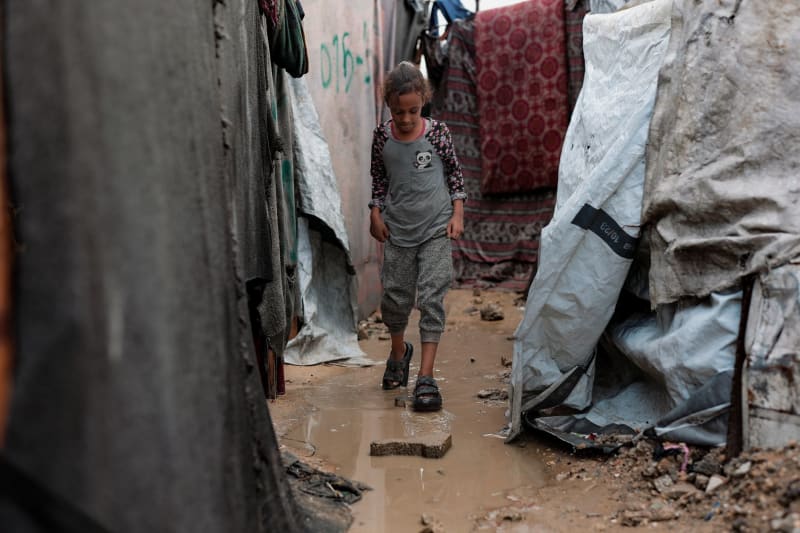
For the two million residents of Gaza, this announcement isn't just a political headline; it's a potential lifeline. Years of blockade, conflict, and fractured governance have left the Strip in a perpetual humanitarian crisis. Access to basic necessities like clean water, electricity, and medical supplies has been severely curtailed, and the economy remains in tatters. The daily struggle for survival under these conditions has become an agonizing norm, with families constantly grappling with uncertainty and despair. This proposed change offers a glimmer of hope that their lives might finally see some stability and improvement, a chance for a future less defined by scarcity and conflict.
Children in Gaza have known little else but hardship. Many have witnessed multiple conflicts, grown up in an environment of constant fear, and suffered from the psychological trauma of displacement and loss. Educational opportunities are limited, and the prospects for meaningful employment are even scarcer. The dissolution of Hamas's government and the potential for a unified, internationally supported administration could mean a chance for these children to experience a childhood free from the immediate threat of violence and with greater access to education and healthcare. It represents a fragile hope for a generation that has been disproportionately affected by the ongoing political stalemate and humanitarian catastrophe.
Healthcare workers and aid organizations on the ground have long struggled with the complexities of operating under a divided authority, often facing bureaucratic hurdles and resource shortages. A unified government, especially one with international backing, could streamline aid delivery, facilitate reconstruction projects, and improve the overall functionality of essential services. This transition, if successful, promises to alleviate some of the immense pressure on these dedicated individuals and allow them to more effectively address the dire needs of the population. The potential for a more coordinated and efficient response to the humanitarian crisis is a significant relief for those on the front lines.
How We Got Here
The current political landscape in Gaza is a direct consequence of the 2006 Palestinian legislative elections, which saw Hamas emerge victorious. This unexpected outcome led to a severe rift with Fatah, culminating in the 2007 Battle of Gaza, where Hamas forcibly took control of the Strip. This event solidified the political division between Gaza, governed by Hamas, and the West Bank, administered by the Palestinian Authority (PA) under Fatah. The ensuing decade and a half have been marked by repeated attempts at reconciliation, all of which have ultimately failed, leaving the Palestinian people divided and weakening their collective political leverage on the international stage. The blockade imposed on Gaza following Hamas's takeover further exacerbated the humanitarian crisis, creating an untenable situation that has persisted for years.
International pressure, particularly from Egypt and the United Nations, has been a constant factor in pushing for reconciliation. Egypt, sharing a border with Gaza and deeply invested in regional stability, has frequently mediated between the rival factions, recognizing that the ongoing division fuels instability and hinders any prospects for a lasting peace. The UN, through its various agencies, has been at the forefront of humanitarian efforts in Gaza, consistently highlighting the dire conditions and advocating for a unified administration to facilitate aid and reconstruction. The cumulative weight of these diplomatic efforts, coupled with the deteriorating conditions within Gaza, has finally created an environment where Hamas felt compelled to consider a significant shift in its governance strategy.
Internally, Hamas has faced mounting challenges. The sustained Israeli-Egyptian blockade has crippled Gaza's economy, leading to soaring unemployment and widespread poverty. Public discontent has been simmering, with protests occasionally erupting over the lack of basic services and economic opportunities. Furthermore, the group's isolation on the international stage has limited its ability to secure much-needed resources and diplomatic support. These internal pressures, combined with the persistent external calls for unity, have likely played a crucial role in Hamas's decision to dissolve its administrative committee. This move can be seen as a pragmatic response to an unsustainable situation, an attempt to alleviate the immense burdens on the population and potentially regain some international legitimacy.
Why This Cannot Be Ignored
This development carries immense geopolitical weight, potentially altering the dynamics of the Israeli-Palestinian conflict. A unified Palestinian government, even if initially limited to administrative functions, could present a more cohesive front in future peace negotiations, strengthening the Palestinian position. Conversely, a failure to successfully implement this transition could plunge Gaza into further chaos, exacerbating an already dire humanitarian situation and potentially leading to renewed conflict. The stakes are incredibly high, not just for Palestinians, but for regional stability and the broader international community's efforts to foster peace in the Middle East. The world watches to see if this fragile opportunity can be seized or if it will crumble under the weight of historical mistrust and political maneuvering.
From a humanitarian perspective, the implications are profound. A single, internationally recognized authority in Gaza would significantly streamline the delivery of aid, facilitate reconstruction efforts, and improve access to essential services like healthcare, water, and electricity. The current fragmented governance has created bureaucratic nightmares for aid organizations, often delaying critical assistance to those who need it most. A unified administration could unlock substantial international funding and expertise, accelerating recovery and development in a region that has been devastated by conflict and neglect. This could mean the difference between life and death for countless individuals and a chance for millions to rebuild their lives with dignity and hope.
The reconciliation between Hamas and Fatah, if genuinely achieved, would represent a monumental step towards ending the debilitating internal Palestinian division. This unity is crucial for the long-term viability of a future Palestinian state and for presenting a united voice on the international stage. It could also alleviate some of the pressure on Israel, which has long cited the division as a barrier to peace. However, deep-seated mistrust and ideological differences between the factions remain significant hurdles. The success of this reconciliation hinges on genuine commitment from both sides to prioritize the welfare of the Palestinian people over narrow political interests, a challenge that has proven insurmountable in the past. The path to true unity is fraught with obstacles, but the potential rewards are too significant to ignore.
Possible Paths Forward
The most optimistic path involves the Palestinian Authority (PA) fully embracing the opportunity to assume administrative control of Gaza. This would require a clear and comprehensive plan for integrating Gaza's civil institutions, security forces, and public services under the PA's umbrella. International bodies, particularly the UN and key donor nations, would need to provide substantial financial and logistical support to facilitate this transition, ensuring that essential services continue uninterrupted and that reconstruction efforts can be scaled up. A successful handover would pave the way for broader political reconciliation, potentially leading to long-delayed elections and a more unified Palestinian leadership capable of engaging effectively on the global stage. This path, while challenging, offers the best hope for stability and progress.
Alternatively, a transitional period could see a UN-backed technocratic committee taking the reins, at least initially. This committee, composed of independent experts and international representatives, would focus solely on administrative and humanitarian governance, sidestepping the immediate political complexities between Hamas and Fatah. Its mandate would be to stabilize the situation, ensure the efficient delivery of aid, and prepare the ground for a more permanent political solution. This approach could provide a much-needed cooling-off period, allowing both Palestinian factions to rebuild trust and negotiate a power-sharing agreement without the immediate pressure of direct governance. However, such a committee would require robust international backing and a clear exit strategy to avoid becoming a long-term, unelected governing body.
A less favorable, but still plausible, outcome involves a partial or stalled transition. Fatah might hesitate to fully commit to taking over Gaza due to security concerns, financial burdens, or a lack of trust in Hamas's intentions. This could lead to a power vacuum or a continuation of fragmented governance, albeit under a different guise. Without a clear and decisive transfer of authority, the humanitarian situation could remain precarious, and the opportunity for genuine reconciliation might be squandered. Such a scenario would perpetuate the cycle of instability and despair, further entrenching the divisions that have plagued Palestinian society for so long. The risk of this outcome underscores the critical need for robust international engagement and clear commitments from all parties involved.
Questions People Are Actually Asking
What to Watch
- The immediate response from the Palestinian Authority (PA) and its willingness to fully engage in the transfer of power. Their commitment is paramount for the process to move forward effectively and without further delays.
- The details of the UN-backed committee's mandate and composition, including the extent of its authority and its operational timeline. Clarity on these aspects will define its potential for success.
- Any statements or actions from Israel regarding the potential easing of the Gaza blockade in response to a unified Palestinian administration. Their cooperation is crucial for humanitarian relief and economic recovery.
- The reaction from various Palestinian factions, particularly those within Hamas and Fatah, to ensure internal consensus and prevent spoilers. Internal dissent could undermine the entire reconciliation effort.
- The flow of international aid and pledges of financial support for Gaza's reconstruction and the new administrative structure. Sustained funding is essential for stability and effective governance.
- Signs of genuine reconciliation between Hamas and Fatah, beyond just administrative transfers, including progress on long-term political unity and potential elections. True unity is the ultimate goal for the Palestinian people.

















Comments
No comments yet. Be the first to comment!