

At a Glance
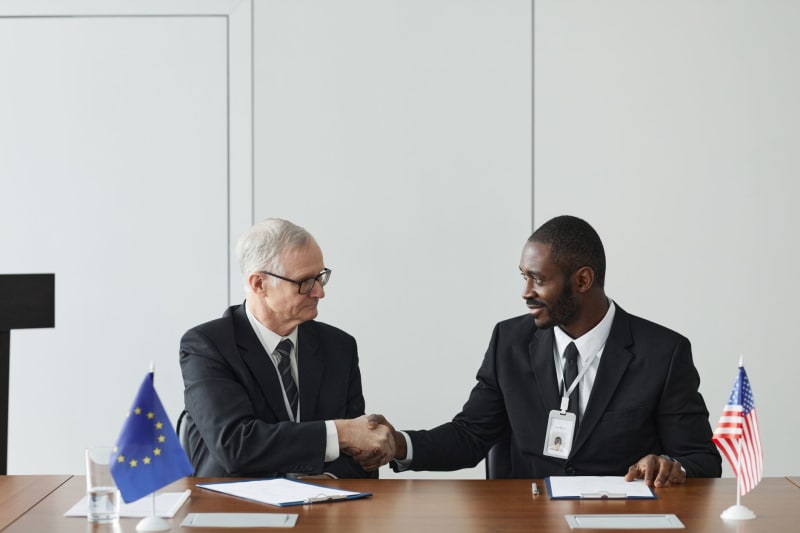
- Iran has publicly announced its willingness to establish a direct communication channel with the United States, specifically concerning a crucial Memorandum of Understanding (MoU) focused on regional security.
- This significant diplomatic overture follows a series of indirect talks held in Qatar, which served as a vital, albeit challenging, platform for preliminary discussions between the two nations.
- The proposed communication channel is intended to facilitate direct engagement on the specifics and implications of the MoU, potentially bypassing the complexities and delays inherent in third-party mediation.
- Both Iranian and American officials have acknowledged the sensitivity of the discussions, emphasizing the need for careful consideration and strategic planning to ensure any direct dialogue is productive and sustainable.
- Experts suggest that the success of this initiative hinges on the political will of both Tehran and Washington to overcome deep-seated mistrust and find common ground on critical security issues in the Persian Gulf.
- The international community is closely monitoring these developments, recognizing that direct communication between Iran and the US could significantly impact regional stability and global energy markets.
The Record
Following a series of intense, indirect negotiations held in Qatar, Iran has signaled a pivotal shift in its diplomatic strategy, indicating a readiness to forge a direct communication channel with the United States. This unprecedented move is specifically aimed at discussing a critical Memorandum of Understanding (MoU) that has been at the heart of recent regional security dialogues. The announcement, made by senior Iranian officials, underscores a potential thawing in the often-frosty relations between Tehran and Washington, offering a glimmer of hope for de-escalation in a volatile region. For years, direct engagement has been a rare commodity, often replaced by proxy discussions or public statements through intermediaries. This explicit willingness to engage directly on a substantive document like an MoU marks a significant departure from established protocols and signals a pragmatic approach from both sides, recognizing the imperative of direct dialogue for effective conflict resolution.
The Qatari talks, while indirect, proved instrumental in laying the groundwork for this potential direct engagement. These discussions, shrouded in diplomatic secrecy, allowed both sides to gauge intentions, clarify positions, and identify areas of potential convergence without the immediate pressure of direct confrontation. The success of these preliminary exchanges in fostering a degree of mutual understanding appears to have been a crucial factor in Iran's decision to propose a more direct line of communication. It suggests that the indirect format, while slow, was effective in building a rudimentary level of trust, or at least a shared recognition of the necessity for more transparent dialogue regarding the intricate security architecture of the Gulf. The MoU itself, though its specific contents remain largely undisclosed, is understood to encompass vital aspects of regional stability, including maritime security, nuclear safeguards, and broader geopolitical concerns.
This development carries profound implications for the intricate geopolitical landscape of the Middle East. A direct communication channel, if established and sustained, could serve as a vital mechanism for preventing miscalculation, managing crises, and potentially paving the way for broader diplomatic breakthroughs. However, the path ahead is fraught with challenges. Decades of mistrust, deeply entrenched ideological differences, and a history of escalating tensions mean that any direct dialogue will require immense political will, strategic patience, and a genuine commitment from both nations to find common ground. The world watches with bated breath, understanding that the success or failure of this initiative could significantly alter the trajectory of regional stability and global security dynamics, making this a truly critical juncture in international relations.
Who Knew and When
The initial indications of Iran's willingness to engage directly began to surface shortly after the conclusion of the most recent round of indirect talks in Qatar. While the exact timeline of internal deliberations within Tehran remains confidential, senior Iranian diplomatic sources began subtly hinting at a shift in strategy to select international media outlets and regional partners in the days immediately following the Qatar meetings. These early signals suggested a growing consensus within the Iranian leadership that direct engagement, particularly on a structured document like an MoU, might offer a more efficient and less ambiguous path forward compared to the often-circuitous route of third-party mediation. The US, through its own intelligence and diplomatic channels, was likely aware of these evolving sentiments, preparing for such a possibility.
High-ranking officials within the Iranian Foreign Ministry and the Supreme National Security Council were reportedly the primary architects of this policy pivot. Their assessments, based on the nuanced outcomes of the Qatari discussions, likely concluded that the benefits of direct communication in clarifying intentions and negotiating specifics outweighed the risks associated with engaging a long-standing adversary. Simultaneously, American officials involved in the Qatar talks would have reported back to Washington on the tenor and potential openings observed during the indirect exchanges. This internal analysis within both governments would have been crucial in shaping the subsequent public announcements and diplomatic maneuvers, indicating a carefully considered, rather than impulsive, decision.
The public announcement from Iran, confirming its intent to open a communication channel, came several days after the Qatar talks concluded, allowing for internal consultations and strategic alignment. This timing suggests a deliberate effort to present a unified and clear stance. While the specifics of the MoU and the exact nature of the proposed communication channel are still being ironed out, the fact that both sides appear to be moving towards a more direct dialogue indicates a shared, albeit perhaps reluctant, recognition that the current state of indirect communication is insufficient for addressing the complex and urgent security challenges in the Gulf. This moment represents a critical juncture where the willingness to engage, however cautiously, could redefine the diplomatic landscape.
Voices from the Ground
In Tehran, the news of a potential direct communication channel with the United States has been met with a mix of cautious optimism and deep-seated skepticism among the general populace. "Any step towards direct talks, even on a specific issue like an MoU, is better than the constant tension and threats," remarked Reza Ahmadi, a retired teacher in Tehran. "We have suffered enough from sanctions and regional instability. If this can bring some peace, it is welcome." However, others remain wary. "The Americans have a long history of broken promises," stated Zahra Hosseini, a university student. "I will believe it when I see concrete actions, not just words about communication channels. Our leaders must be very careful not to concede too much." This sentiment reflects a profound distrust rooted in decades of strained relations and perceived betrayals, underscoring the delicate balance the Iranian government must strike between pursuing diplomatic solutions and safeguarding national interests.
Across the Gulf, in countries like Saudi Arabia and the UAE, regional leaders and analysts are closely monitoring the developments with a blend of apprehension and strategic interest. "Direct dialogue between Iran and the US could either stabilize the region or further complicate it, depending on the outcomes," commented Dr. Abdullah Al-Shamri, a political analyst based in Riyadh. "Our primary concern is that any agreement reached does not compromise the security interests of our allies and partners in the Gulf." There is a palpable sense that while de-escalation is desirable, the specifics of any MoU and the nature of this communication channel must be transparent and inclusive, ensuring that regional stakeholders are not sidelined in decisions that directly impact their security. The fear is that a bilateral deal might inadvertently create new vulnerabilities or shift existing power dynamics in unpredictable ways, necessitating constant vigilance and diplomatic engagement from regional capitals.
Meanwhile, international observers and diplomatic circles in Europe and Asia have largely welcomed the news, viewing it as a potentially significant step towards reducing regional tensions. "The establishment of a direct communication channel, however limited, is a crucial development," stated a senior European diplomat speaking off the record. "It provides a much-needed mechanism for de-escalation and crisis management, which has been sorely lacking. We encourage both parties to seize this opportunity responsibly." The global community recognizes that stability in the Persian Gulf is intrinsically linked to global energy security and economic stability. Therefore, any move that fosters dialogue and reduces the risk of conflict is seen as a positive development, even if the road ahead remains long and arduous. The hope is that this initiative could lay the groundwork for broader diplomatic engagement on issues ranging from nuclear proliferation to regional proxy conflicts, offering a pathway out of perpetual tension.
The Debate
The proposal for a direct communication channel between Iran and the United States has ignited a fervent debate among foreign policy experts and political commentators worldwide. Proponents argue that direct dialogue is not merely beneficial but absolutely essential for managing the complex and often volatile relationship between these two powerful nations. They contend that indirect talks, while useful for initial probing, are inherently prone to misinterpretation, delays, and a lack of real-time clarity, which can be catastrophic in high-stakes security situations. "Bypassing intermediaries can cut through layers of diplomatic noise and allow for a more precise exchange of intentions and proposals," argues Dr. Eleanor Vance, a Middle East scholar at a prominent think tank. "In a region as combustible as the Persian Gulf, direct lines of communication are a fundamental requirement for preventing accidental escalation and fostering genuine understanding, particularly when a critical MoU is on the table." This perspective emphasizes the pragmatic necessity of direct engagement to navigate the intricate geopolitical landscape effectively.
Conversely, a significant contingent of skeptics warns against the potential pitfalls and inherent risks of direct engagement, particularly given the deep-seated mistrust and historical animosity between Tehran and Washington. Critics fear that direct talks could be exploited by either side for propaganda purposes, or worse, could inadvertently legitimize a regime perceived as hostile without securing meaningful concessions. "Direct talks without a clear agenda and verifiable commitments could be a trap," cautions Ambassador David Chen, a former diplomat with extensive experience in the region. "Iran might use this channel to extract concessions or gain international legitimacy without genuinely altering its regional behavior. The US must approach this with extreme caution, ensuring that any direct engagement is tied to concrete, measurable outcomes and not merely symbolic gestures." This viewpoint stresses the importance of strategic leverage and the need for robust preconditions before entering into direct dialogue, to avoid perceived diplomatic defeats or the erosion of leverage.
Furthermore, the debate extends to the specific nature of the Memorandum of Understanding itself. Some analysts believe that focusing on a single, well-defined MoU could provide a manageable framework for initial direct talks, allowing both sides to build confidence on a specific issue before tackling broader, more contentious topics. Others argue that limiting the scope to an MoU might be too narrow, failing to address the systemic issues that fuel regional instability. "While an MoU can be a starting point, the real challenge lies in addressing the broader strategic competition and proxy conflicts that define the US-Iran relationship," states Dr. Ahmed Khan, a security expert. "A communication channel focused solely on one document might miss the forest for the trees." This divergence of opinion highlights the complex strategic considerations both nations face as they weigh the benefits and risks of this unprecedented diplomatic opening, underscoring the difficulty in finding a universally acceptable path forward.

Your Questions Answered
What Accountability Looks Like
For this proposed direct communication channel to be truly effective and build genuine accountability, several key elements must be in place. Firstly, there needs to be a clear and agreed-upon framework for engagement, outlining the frequency, format, and participants of these direct talks. Vague or ad-hoc interactions will likely yield minimal results. Accountability also demands transparency, at least to a degree that allows for verification of commitments, even if the specifics of the MoU remain confidential. Both sides must demonstrate a consistent willingness to adhere to agreed-upon protocols and to engage in good faith, rather than using the channel as a platform for grandstanding or blame-shifting. Without these foundational elements, the channel risks becoming another symbolic gesture rather than a substantive mechanism for progress.
Furthermore, accountability will be measured by the tangible outcomes produced through this direct dialogue. If the communication channel leads to a clearer understanding of the MoU, a reduction in regional incidents, or even small steps towards de-escalation, it will be deemed successful. Conversely, if tensions persist or escalate despite the channel's existence, or if one party is perceived as negotiating in bad faith, accountability will be lacking. This means that both Iran and the US must be prepared to demonstrate concrete progress, however incremental, to justify the establishment of this direct line. The international community, particularly regional stakeholders, will be closely watching for evidence that this new diplomatic avenue is yielding positive, measurable results that contribute to stability.
Ultimately, the long-term accountability of this direct communication channel will hinge on its ability to foster a more predictable and less confrontational relationship between Iran and the United States. This requires not just adherence to the MoU, but also a broader commitment to preventing miscalculation and managing crises effectively. Should the channel prove instrumental in averting a major regional conflict or in laying the groundwork for future diplomatic breakthroughs, it will have served its purpose. However, if it merely becomes another forum for airing grievances without tangible resolution, it risks undermining future attempts at direct engagement and further entrenching the existing cycle of mistrust and tension. The onus is on both nations to ensure that this opportunity for direct dialogue translates into meaningful and lasting positive change.














Comments
No comments yet. Be the first to comment!