

At a Glance
- Ukrainian long-range drones successfully targeted and significantly damaged the Taneco oil refinery in Nizhnekamsk, Tatarstan, Russia, marking a critical escalation in the conflict.
- The Taneco refinery, one of Russia's largest and most technologically advanced, plays a pivotal role in the country's petroleum production, processing over 15 million tons of crude oil annually.
- This strike represents Ukraine's deepest penetration into Russian territory with drone attacks to date, demonstrating an evolving capability to hit strategic targets far from the front lines.
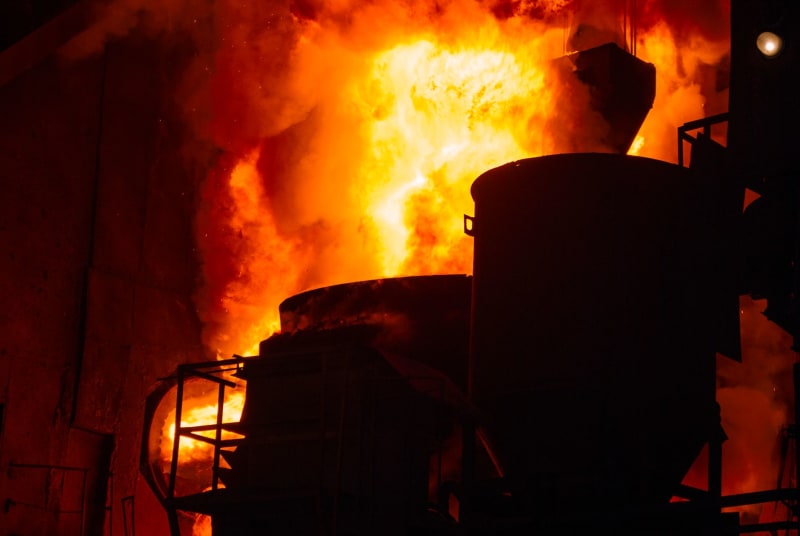
- The attack caused a fire and disrupted operations at a primary crude oil distillation unit, which is essential for initial processing, indicating a direct impact on the refinery's output capacity.
- Russian authorities confirmed the drone attack, reporting no serious damage or casualties initially, but subsequent reports and satellite imagery suggest more substantial disruption.
- The incident highlights Ukraine's strategy to degrade Russia's military-industrial complex and its war-funding capabilities by targeting critical energy infrastructure, potentially influencing global oil prices.
The Record
On April 2, 2024, Ukrainian long-range drones executed a precision strike against the Taneco oil refinery in Nizhnekamsk, Tatarstan, Russia. This audacious attack, occurring approximately 1,300 kilometers (800 miles) from the Ukrainian border, represents a significant escalation in the ongoing conflict and showcases Ukraine's increasingly sophisticated long-range drone capabilities. The targeted facility, operated by Tatneft, is not just any refinery; it is Russia's largest and most technologically advanced, boasting an annual processing capacity of over 15 million tons of crude oil. The strike specifically aimed at a primary crude oil distillation unit, a critical component in the initial stages of petroleum refining, causing a substantial fire and disrupting its operational integrity. This strategic targeting underscores Ukraine's intent to cripple Russia's energy infrastructure, a cornerstone of its economy and military funding.
Initial reports from Russian state media and local officials downplayed the severity of the incident, claiming that the fire was quickly extinguished and that production remained unaffected. However, independent analysis and subsequent satellite imagery, corroborated by Ukrainian intelligence sources, painted a starkly different picture. The damage to the distillation unit was more extensive than initially admitted, necessitating repairs that could take weeks or even months, thereby impacting the refinery's output. This discrepancy highlights the information warfare inherent in modern conflicts, where both sides seek to control the narrative surrounding military successes and failures. The attack's success in reaching such a distant and vital target has undoubtedly sent shockwaves through Russia's energy sector and its defense establishment, forcing a reevaluation of air defense strategies.
The strike on the Taneco refinery is part of a broader, deliberate campaign by Ukraine to degrade Russia's ability to finance its war efforts. By systematically targeting oil refineries and storage depots, Ukraine aims to reduce Russia's export revenues and disrupt the supply chain for its military. This strategy carries significant geopolitical implications, as Russia is a major global oil and gas producer. Any sustained disruption to its energy infrastructure could lead to volatility in international oil markets, potentially affecting global energy prices and supply stability. The international community watches closely, balancing concerns over escalating conflict with the imperative to support Ukraine's defensive efforts against Russian aggression, while also mitigating potential economic fallout.
Who Knew and When
Ukrainian military intelligence, specifically the Security Service of Ukraine (SBU), has been developing and deploying long-range drone capabilities for several months, with a clear strategic objective to target Russian military and economic assets deep within its territory. The planning for an attack on a high-value target like the Taneco refinery would have involved extensive intelligence gathering, reconnaissance, and meticulous operational planning. While the exact timeline of the planning phase remains classified, it is understood that such an operation would require detailed knowledge of the refinery's layout, critical vulnerabilities, and surrounding air defense systems. The successful execution suggests a sophisticated understanding of Russian air defense gaps and a well-coordinated effort to exploit them.
Russian authorities were undoubtedly aware of the increasing threat posed by Ukrainian drones, particularly after a series of earlier, less impactful strikes on other energy facilities closer to the border. However, the sheer distance of the Taneco refinery from Ukrainian territory likely led to a degree of complacency or an underestimation of Ukraine's evolving capabilities. The fact that drones could penetrate so deeply into Tatarstan, a region previously considered safe, indicates a significant intelligence failure or a severe deficiency in Russia's layered air defense systems. This incident will undoubtedly prompt a rigorous internal review within the Russian military and intelligence apparatus, leading to increased vigilance and potentially a reallocation of air defense assets to protect critical infrastructure.
Internationally, Western intelligence agencies have been monitoring Ukraine's development of indigenous drone technology and its strategic shift towards targeting Russian economic infrastructure. While specific details of intelligence sharing are rarely disclosed, it is plausible that Western allies had some awareness of Ukraine's intentions to expand its strike capabilities. However, the precise timing and target of this particular attack would have likely been held in strict confidence by Ukrainian command. The implications of such a deep strike extend beyond the immediate damage, signaling to the international community that Ukraine possesses the means to inflict significant economic pain on Russia, thereby altering the strategic calculus of the conflict and potentially influencing future diplomatic efforts.
Voices from the Ground
Residents of Nizhnekamsk, a city heavily reliant on the Taneco refinery for employment and economic stability, expressed a mixture of fear and disbelief following the drone attack. "I woke up to the sound of sirens and then saw the smoke plume rising from the refinery," recounted Elena Petrova, a local schoolteacher. "We always thought we were too far from the war, that this kind of thing wouldn't happen here. Now, everyone is worried about their jobs and what this means for our future." The psychological impact on the local population is significant, transforming a sense of security into one of vulnerability, as the conflict's reach extends into previously untouched areas of Russia. This shift in perception could have broader implications for public support for the war.
Workers at the Taneco refinery, many of whom have dedicated their careers to the facility, are grappling with uncertainty. Ivan Smirnov, an engineer at the plant for over two decades, shared his concerns: "This refinery is our lifeblood. If production is seriously hampered, what happens to us? What about our families? The official statements say everything is fine, but we see the damage. We know it will take time to fix, and that means lost wages, lost production, and a lot of anxiety." The direct impact on the livelihoods of thousands of individuals underscores the human cost of targeting critical infrastructure, even in a conflict zone. The economic ripple effects within the community are immediate and deeply felt.
Ukrainian officials, speaking anonymously due to the sensitivity of the operation, conveyed a sense of grim determination. "These strikes are not about revenge; they are about defense," one source stated. "We must degrade Russia's ability to wage war, and that includes targeting the economic engines that fuel their aggression. Every barrel of oil they can't sell, every ruble they lose, is a step towards peace for Ukraine." This perspective highlights the strategic rationale behind the attacks, framing them as a necessary measure to protect Ukraine's sovereignty and its people. The Ukrainian public, largely supportive of efforts to strike back at Russia, views these long-range operations as a sign of resilience and an effective counter-offensive measure, boosting morale amidst ongoing hardships.
The Debate
The debate surrounding Ukraine's long-range drone strikes on Russian energy infrastructure is multifaceted, involving considerations of military effectiveness, international law, and potential escalation. Proponents argue that these strikes are a legitimate and necessary component of Ukraine's self-defense strategy. By targeting Russia's economic backbone, specifically its oil and gas industry, Ukraine aims to diminish Moscow's capacity to finance its war machine. This approach is seen as a way to level the playing field against a numerically and materially superior adversary, forcing Russia to divert resources to homeland defense and potentially reducing its offensive capabilities on the front lines. Advocates emphasize that these are military targets supporting an aggressor's war effort, thus falling within the bounds of permissible actions in armed conflict.
Conversely, critics, including some Western allies, express concerns about the potential for escalation and the broader implications for global energy markets. They argue that attacks on energy infrastructure, even if militarily justifiable, could provoke a more severe Russian response, potentially leading to a dangerous widening of the conflict. There are also worries about the impact on global oil prices, which could destabilize economies worldwide and complicate efforts to maintain a united front against Russia. Some international legal scholars also raise questions about proportionality and the potential for civilian harm, even if indirectly, though direct civilian casualties from these specific refinery strikes have not been reported. The delicate balance between supporting Ukraine's right to self-defense and managing the risks of wider conflict remains a central tension.
Another dimension of the debate revolves around the effectiveness of these strikes in achieving Ukraine's strategic objectives. While the immediate damage to individual facilities is evident, the long-term impact on Russia's overall oil production and export capabilities is still being assessed. Russia possesses vast energy reserves and a resilient infrastructure, and it has historically demonstrated an ability to adapt to disruptions. Therefore, the question remains whether these attacks can truly cripple Russia's war economy or merely serve as a costly nuisance. The debate also touches upon the role of Western support, with some arguing that if Ukraine were provided with more advanced conventional weaponry, such drone strikes might not be as necessary, while others see them as an innovative and effective use of limited resources.
Your Questions Answered
What Accountability Looks Like
In the context of the ongoing conflict, accountability for the drone strike on the Taneco refinery primarily rests with the Ukrainian military, which has claimed responsibility for the operation. From Ukraine's perspective, these actions are a legitimate exercise of self-defense against an aggressor nation that has invaded its territory and continues to inflict widespread destruction. The Ukrainian government views these strikes as a necessary measure to degrade Russia's military-industrial complex and its capacity to wage war, thereby holding Russia accountable for its aggression by imposing economic costs. This strategic approach aims to force a reassessment of Russia's military objectives and potentially compel it towards de-escalation or negotiation.
From Russia's standpoint, these attacks are acts of terrorism and aggression against its sovereign territory and civilian infrastructure. Moscow consistently condemns such strikes, vowing retaliation and demanding international condemnation of Ukraine's actions. Russia's narrative focuses on portraying Ukraine as a rogue state employing indiscriminate tactics, aiming to galvanize domestic support for its 'special military operation' and to pressure international bodies to censure Kyiv. However, given Russia's own extensive targeting of Ukrainian civilian infrastructure, including energy facilities, its claims of moral high ground are often met with skepticism by the international community, highlighting a significant double standard.
International accountability in this scenario is complex. While international law permits a state to defend itself, including by targeting military and economic assets of an aggressor, there are also principles of proportionality and distinction to consider. The debate centers on whether these refinery strikes adhere to these principles, particularly concerning potential environmental damage or indirect civilian impact. Ultimately, true accountability for the broader conflict and its consequences would involve an end to hostilities, adherence to international law, and potentially reparations for damages, which remains a distant prospect given the current trajectory of the war. The drone strike, while a military action, also serves as a stark reminder of the escalating costs and broadening scope of this devastating conflict.

















Comments
No comments yet. Be the first to comment!