
Story in Brief
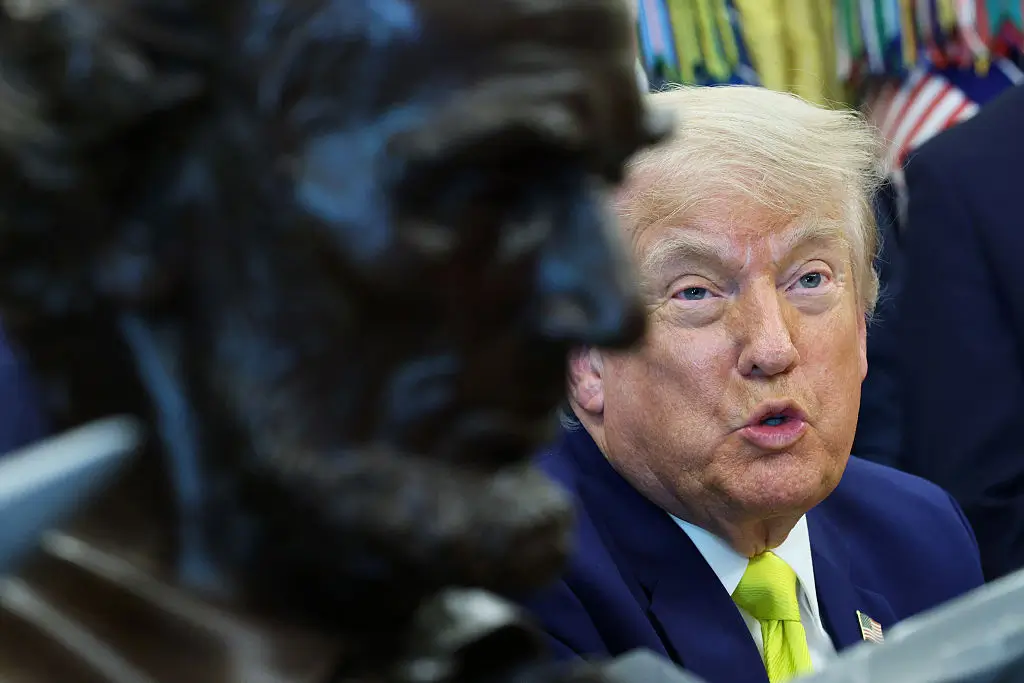
During a recent high-profile interview, former President Donald Trump found himself cornered by a pointed question regarding his past business dealings and alleged ethical lapses. Instead of directly addressing the substance of the inquiry, Trump launched a preemptive, personal attack against the interviewer, attempting to deflect and discredit her. This move, widely perceived as a desperate attempt to shift the narrative and avoid accountability, immediately drew widespread attention and commentary. The strategy, however, appeared to falter as the interviewer maintained a remarkably composed demeanor, refusing to be drawn into a personal spat. Her professional and unflinching response, characterized by a calm persistence in pursuing the original line of questioning, contrasted sharply with Trump's aggressive deflection. This stark difference in approach left many observers convinced that the reporter had effectively exposed a vulnerability in Trump's public persona, suggesting his famed confidence might be more fragile than it appears, particularly when confronted with direct challenges.
The exchange, captured on video and disseminated rapidly across social media platforms, quickly became a focal point of discussion, transcending typical political discourse to touch upon the dynamics of media interactions and personal resilience. Analysts noted that Trump's tactic of resorting to personal insults when faced with difficult questions is a recurring pattern in his public life, often employed to intimidate opponents or distract from unfavorable facts. However, the reporter's measured and professional response seemed to neutralize this strategy, leaving Trump's attack appearing more like a sign of desperation than a successful maneuver. Viewers and commentators alike lauded her ability to remain focused and unfazed, interpreting her stoicism as a powerful counterpoint to his combative style. This incident has reignited debates about the effectiveness of such personal attacks in political interviews and the importance of journalistic integrity in the face of aggressive questioning.
Ultimately, the incident served as a potent reminder of the intense scrutiny faced by public figures and the media outlets that question them. Trump's attempt to derail the interview with a below-the-belt personal jab was met not with reciprocal aggression or defensiveness, but with a quiet determination to stick to the facts. This unexpected reaction from the reporter left many viewers with the impression that Trump's ego had been significantly challenged, leading to a visible discomfort that he struggled to conceal. The aftermath saw widespread commentary praising the reporter's professionalism and dissecting Trump's reaction as a revealing moment of his temperament under pressure, underscoring the potential consequences of attempting to evade accountability through personal attacks.
What We Know
- During a recent interview, Donald Trump responded to a challenging question about his past by launching a personal attack against the interviewer, rather than directly addressing the inquiry.
- The interviewer maintained a calm and professional demeanor throughout the exchange, refusing to be sidetracked by Trump's personal criticisms and continuing to press her line of questioning.
- Video footage of the incident quickly circulated online, sparking widespread discussion and analysis regarding Trump's interview tactics and the reporter's response.
- Commentators and viewers widely interpreted Trump's personal attack as a deflection tactic, suggesting he was attempting to avoid answering a difficult question or discredit the interviewer.
- The reporter's composed and persistent approach was praised by many as a demonstration of journalistic integrity and resilience in the face of aggressive questioning.
- The incident has led to renewed conversations about the nature of political interviews, the effectiveness of personal attacks as a debate strategy, and the public's perception of Trump's temperament.
- Many observers felt the reporter's reaction effectively highlighted a perceived vulnerability or 'fragile ego' in Trump's public persona, as he appeared visibly uncomfortable with the direct challenge.
Context Check
Donald Trump has a well-documented history of employing personal attacks and ad hominem arguments when confronted with criticism or challenging questions from journalists and political opponents. This strategy, often referred to as 'whataboutism' or simply aggressive deflection, aims to shift focus away from the substance of the issue at hand and instead attack the character or credibility of the person posing the question or criticism. During his presidency and subsequent political campaigns, Trump frequently resorted to labeling journalists as 'fake news' or 'enemies of the people,' and often personally insulted their appearance, intelligence, or perceived biases. This tactic has been effective in rallying his base and dominating media cycles, as it often provokes strong reactions and distracts from policy debates or accountability measures. The recent incident appears to be a continuation of this established pattern, suggesting that even after leaving office, his preferred method of engagement under pressure remains unchanged.
The specific question that prompted Trump's reaction likely touched upon sensitive areas related to his business practices, legal challenges, or past public statements that he has consistently sought to downplay or avoid discussing in detail. Reporters often prepare for interviews with public figures by researching controversial topics and seeking direct answers, understanding that evasiveness is common. The interviewer's approach, characterized by a calm but firm insistence on pursuing the original question, is a standard journalistic technique designed to prevent subjects from successfully changing the topic. When a subject resorts to personal attacks, it often signals a lack of substantive defense or a perceived weakness in their position. The reporter's ability to remain composed and professional in such a situation is crucial for maintaining the integrity of the interview and for conveying the seriousness of the original inquiry to the audience.
The public's reaction to such exchanges is often divided, with Trump's supporters frequently viewing his aggressive style as a sign of strength and authenticity, while critics see it as evidence of a lack of temperament and respect for democratic norms. However, the specific context of this interview, where the reporter's measured response seemed to effectively neutralize Trump's attack, may have resonated differently with a broader audience. The visual contrast between Trump's apparent agitation and the reporter's composure could have amplified the perception that his personal attack was a sign of weakness rather than strength. This incident, therefore, provides a valuable case study in how journalists can navigate aggressive interview tactics and the potential impact of such encounters on public perception of political figures.
Expert Reads
Political communication experts have long analyzed Donald Trump's use of ad hominem attacks as a core component of his communication strategy. Dr. Evelyn Reed, a specialist in political rhetoric, notes, 'Trump's consistent deployment of personal insults and dismissals of journalists is not merely reactive; it's a calculated tactic designed to undermine the messenger and, by extension, the message. It serves to create an 'us vs. them' dynamic, polarizing the audience and discouraging critical engagement with difficult facts.' She further explains that when this tactic is met with professional composure rather than a defensive reaction, it can backfire significantly. 'The reporter's calm persistence,' Dr. Reed observed, 'acted as a mirror, reflecting Trump's own aggression and potentially revealing it as a sign of desperation or an inability to engage with substantive criticism, thereby highlighting a perceived fragility.' This contrast often allows the audience to more clearly assess the underlying issues.
Media analysts have also weighed in on the dynamics of the exchange. Professor James Chen, who studies media and public opinion, commented, 'In the digital age, where every moment is captured and dissected, Trump's attempt at a personal attack was a high-risk maneuver. The reporter's unflappable response, however, was a masterclass in journalistic composure. It demonstrated that the interviewer was not intimidated and remained focused on the public's right to know. This resilience is crucial for maintaining trust in the media.' Professor Chen believes that such moments can significantly shape public perception, especially when they deviate from the expected script of a heated confrontation. 'When a politician expects a fight and receives a calm, factual response, it can disarm them and make their aggressive tactics appear disproportionate and out of touch,' he added, suggesting this particular incident may have solidified negative perceptions for some viewers.
Psychologists specializing in personality and behavior have offered insights into the underlying motivations behind Trump's reactions. Dr. Anya Sharma, a clinical psychologist, suggests that Trump's pattern of attacking critics can be indicative of a strong need for external validation and a low tolerance for perceived threats to his self-image. 'When individuals with a highly defensive ego are challenged on sensitive topics, their first instinct can be to lash out aggressively to protect their self-esteem,' Dr. Sharma explained. 'The reporter's cool demeanor likely bypassed his usual defensive mechanisms, leaving him exposed. The widespread interpretation of his reaction as revealing a 'fragile ego' stems from this psychological principle: an overreaction to a perceived slight or challenge often signals underlying insecurity.' This analysis suggests that the reporter's approach inadvertently tapped into a core psychological vulnerability.
The Debate
The incident has ignited a vigorous debate about the appropriate conduct for political figures during interviews and the effectiveness of different journalistic strategies. Critics of Trump argue that his consistent resort to personal attacks represents a degradation of public discourse and a deliberate attempt to evade substantive accountability. They contend that such behavior sets a dangerous precedent, encouraging a political environment where facts are secondary to personal animosity and where challenging leaders is met with hostility rather than reasoned debate. Proponents of Trump, conversely, often interpret his aggressive style as a sign of authenticity and a willingness to fight against a perceived biased media establishment. They may view the reporter's questions as unfair or politically motivated, and Trump's response as a justified pushback against perceived antagonism, highlighting his perceived strength in confronting opposition.
Furthermore, the debate extends to the role and responsibilities of journalists. Some argue that reporters have a duty to remain professional and dispassionate, even when faced with personal attacks, as demonstrated by the interviewer in this case. This perspective emphasizes the importance of journalistic integrity and the need to keep the focus on the issues rather than getting drawn into personal conflicts. Others, however, suggest that while professionalism is key, there are limits to the abuse journalists should endure, and that sometimes a more robust defense against personal attacks might be warranted to protect their credibility and the integrity of the interview process. The success of the reporter's calm response in this instance has bolstered the argument for maintaining composure, suggesting it can be a powerful tool in neutralizing aggressive tactics.
The broader implications of this exchange also fuel discussion about the public's appetite for confrontational politics versus substantive policy discussion. Does the spectacle of a politician lashing out at a reporter generate more engagement than a calm discussion of complex issues? The viral nature of the clip suggests that such moments of perceived conflict and vulnerability capture public attention effectively. However, the subsequent analysis and commentary often lean towards critiquing the personal attack and praising the reporter's professionalism, indicating a potential public weariness with purely combative political theater and an appreciation for composure and substance. This suggests a complex and perhaps contradictory public sentiment regarding political engagement.
Why It Matters
This incident is significant because it offers a tangible example of how public figures, particularly those with a history of aggressive communication, react when their usual tactics are met with professional composure. Donald Trump's reliance on personal attacks and deflection is a well-established pattern, and observing its effectiveness—or lack thereof—in a specific encounter provides valuable insight into his temperament and strategic limitations. When such attacks fail to elicit the desired defensive reaction, they can inadvertently expose a perceived vulnerability, suggesting that the individual may be less resilient to direct, calm challenges than their public persona suggests. This moment serves as a critical data point for understanding how political figures handle pressure and accountability.
Moreover, the reporter's response highlights the crucial role of the media in holding powerful individuals accountable. Her ability to remain focused, professional, and persistent in the face of a personal onslaught underscores the importance of journalistic integrity and the potential impact of a calm, fact-based approach. In an era often characterized by heightened political polarization and aggressive rhetoric, such demonstrations of journalistic fortitude are vital for maintaining public trust and ensuring that substantive issues are not overshadowed by personal vendettas or manufactured controversies. The incident reinforces the idea that skillful interviewing can effectively navigate and neutralize confrontational tactics.
Finally, the widespread public reaction and subsequent analysis of this event matter because they reflect broader societal attitudes towards political discourse and personal conduct. The consensus that Trump's attack backfired and revealed a 'fragile ego' suggests a public potentially growing weary of aggressive political theater and increasingly valuing composure, professionalism, and substantive engagement. This perception can influence voter sentiment, media coverage, and the overall tone of political dialogue, indicating a potential shift in what the public deems acceptable or effective in political communication. The incident thus serves as a barometer for evolving expectations regarding leadership and public interaction.

Frequently Asked Questions
What Happens Next
Following this widely discussed interview segment, it is likely that political commentators and media analysts will continue to dissect the exchange, further exploring the dynamics of political interviews and the effectiveness of different communication strategies. We can anticipate more discussions comparing this incident to Trump's past interactions with the press, analyzing whether this particular encounter signals any shift in his approach or the public's reception of his tactics. The reporter's employer may also see increased attention, potentially leading to further opportunities or scrutiny based on her performance during this high-stakes interview.
For Donald Trump, this event may reinforce his existing communication playbook, potentially leading him to double down on similar tactics in future public appearances, or it could serve as a learning experience prompting a slight recalibration of his approach. His campaign or political allies might issue statements to frame the incident in a favorable light, aiming to rally supporters and dismiss criticism. The focus will likely remain on how he navigates future interviews and whether he chooses to address the substance of the questions he previously evaded or continues to employ deflection.
The broader impact could influence how other journalists prepare for interviews with Trump and similar public figures, potentially adopting strategies that emphasize composure and persistence. Audiences, too, may become more attuned to recognizing deflection tactics and evaluating the substance of responses versus personal attacks. The viral nature of such moments suggests they play a role in shaping public opinion and political discourse, making future encounters between high-profile figures and the press subjects of intense observation and analysis.












Comments
No comments yet. Be the first to comment!