
What We Know
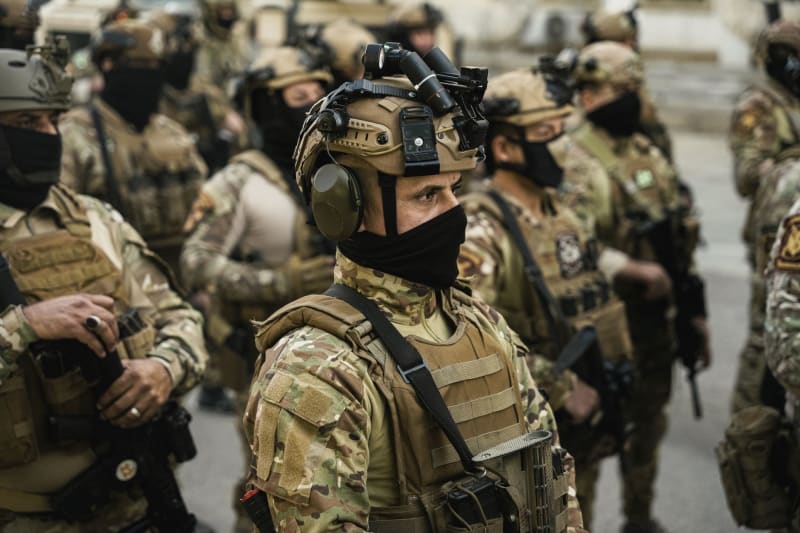
- Iraq's government faces immense pressure to assert its monopoly on force, a fundamental pillar of state sovereignty, yet powerful Shia armed groups continue to operate outside full state control, maintaining their own arsenals and command structures.
- These groups, many with deep historical ties to Iran and significant political influence within Iraq, present a formidable challenge to any disarmament efforts, often citing their role in combating ISIS as justification for their continued existence.
- The Iraqi Prime Minister has publicly committed to integrating all armed factions into the state's security apparatus, a policy aimed at consolidating national authority and preventing the proliferation of independent militias that undermine governmental control.
- Despite official pronouncements, tangible progress on disarming these groups remains elusive, leading to widespread skepticism about the government's capacity or willingness to enforce its own directives against such entrenched interests.
- The continued existence of these armed groups outside state control contributes significantly to political instability, fuels sectarian tensions, and complicates Iraq's efforts to rebuild and attract foreign investment necessary for economic recovery.
- International observers and key allies of Iraq consistently emphasize the critical need for the Iraqi government to establish undisputed control over all armed actors within its borders to ensure long-term stability and prevent regional proxy conflicts.
What We Do Not Know Yet
- The precise timeline and detailed strategy the Iraqi government intends to employ for the full disarmament and integration of all Shia armed groups remains largely undefined, creating uncertainty about the path forward.
- The extent of Iran's direct influence and potential intervention in obstructing or facilitating the disarmament process is not fully transparent, making it difficult to predict the efficacy of any Iraqi government initiatives.
- The specific incentives or coercive measures the Iraqi government plans to offer or impose on these groups to encourage their compliance are unclear, raising questions about the practicality of achieving voluntary disarmament.
- How the international community, particularly the United States and other key allies, will respond if disarmament efforts fail or if the situation escalates into direct confrontation between state forces and militias is an open question.
- The level of internal consensus within the Shia political bloc regarding the necessity and feasibility of disarmament is ambiguous, with various factions holding differing views that could either support or undermine government efforts.
- Whether the Iraqi security forces possess the necessary operational capacity, political will, and unified command structure to effectively confront and disarm recalcitrant militias, should such a decisive action become unavoidable, is a critical unknown.
Background
Iraq's political landscape has been profoundly shaped by the emergence and entrenchment of numerous armed groups, particularly after the 2003 invasion and the subsequent rise of ISIS. These groups, often referred to as Popular Mobilization Forces (PMF) or Hashd al-Shaabi, initially formed to combat the existential threat posed by ISIS, playing a pivotal role in the country's defense. However, their success in repelling the terrorist group paradoxically cemented their power and influence, creating a complex challenge for the post-ISIS Iraqi state. While some factions have formally integrated into the state security apparatus, many retain a significant degree of autonomy, operating outside the strict command and control of the central government, possessing their own distinct leadership, financial networks, and arsenals, which fundamentally undermines the state's monopoly on legitimate force.
The legal and constitutional status of these armed groups has been a contentious issue. In 2016, the Iraqi Parliament passed a law recognizing the PMF as an official part of the Iraqi security forces, ostensibly placing them under the Prime Minister's command. Yet, this legal framework has been inconsistently applied, with many factions continuing to operate with a degree of independence that defies central authority. This duality creates a precarious situation where groups nominally under state control can still pursue their own agendas, often clashing with state policy or engaging in activities that destabilize the country. The lack of full integration and disarmament means that Iraq effectively operates with multiple armed actors, each with varying loyalties and objectives, making comprehensive national security planning and enforcement incredibly difficult.
The intricate web of political, economic, and regional interests further complicates any disarmament efforts. Many Shia armed groups are deeply embedded within Iraq's political system, with their leaders holding significant government positions or controlling powerful political parties. They also benefit from extensive financial networks, including state salaries, illicit trade, and foreign patronage, particularly from Iran. This deep integration makes any attempt at disarmament a direct challenge to a powerful, well-resourced, and politically connected elite. Furthermore, regional dynamics, especially the ongoing rivalry between the United States and Iran, often play out on Iraqi soil, with these militias frequently acting as proxies, further entrenching their existence and complicating the Iraqi government's ability to assert its sovereign control without triggering wider regional repercussions.
Why It Matters
The continued existence of armed groups outside the state's full control directly threatens Iraq's sovereignty and its fragile democratic institutions. A state cannot function effectively when it lacks a monopoly on force; this fundamental principle is essential for maintaining law and order, protecting citizens, and enforcing national policies. When militias operate independently, they can challenge government decisions, engage in extrajudicial actions, and even provoke conflicts without state authorization, thereby eroding public trust in state institutions and creating a climate of fear and instability. This fragmentation of power prevents the government from asserting its authority across the entire national territory, leaving vast areas vulnerable to the whims of non-state actors and undermining the very foundation of a unified, sovereign nation.
Beyond sovereignty, the unchecked power of these groups has profound implications for Iraq's long-term stability and economic recovery. Political instability deters foreign investment, which is desperately needed to rebuild infrastructure, create jobs, and diversify the economy away from oil. The presence of armed factions can lead to localized conflicts, disrupt trade routes, and create an environment of unpredictability that makes it impossible for businesses to thrive. Moreover, the diversion of state resources to support these groups, either through official channels or illicit means, siphons funds away from essential public services like healthcare, education, and infrastructure development, perpetuating a cycle of underdevelopment and hardship for the Iraqi populace. This creates a vicious cycle where instability feeds economic stagnation, further exacerbating social grievances.
The issue of militia disarmament also has significant regional and international ramifications. Many of these groups are perceived as proxies for regional powers, particularly Iran, and their actions can easily draw Iraq into broader geopolitical conflicts. Attacks on international forces or diplomatic missions, often attributed to these groups, strain Iraq's relationships with key allies and can invite retaliatory actions, further destabilizing the country. For the international community, a stable and sovereign Iraq is crucial for regional security, counter-terrorism efforts, and global energy markets. The failure to disarm these groups means Iraq remains a potential flashpoint, a battleground for proxy wars, and a persistent source of concern for global stability. Therefore, resolving this issue is not just an internal Iraqi matter but a critical component of broader international security.
Timeline of Events
- **2003 Invasion of Iraq:** The U.S.-led invasion dismantles the Iraqi state and military, creating a power vacuum that allows for the proliferation of various armed groups, many with sectarian affiliations, to emerge and fill the security void.
- **2014 - Rise of ISIS:** The rapid territorial gains by ISIS in Iraq lead to the formation of the Popular Mobilization Forces (PMF), or Hashd al-Shaabi, largely composed of Shia militias, in response to a fatwa from Grand Ayatollah Ali al-Sistani, playing a crucial role in defending the country.
- **2016 - PMF Legalization:** The Iraqi Parliament passes a law integrating the PMF into the official security forces, theoretically placing them under the command of the Prime Minister, a move intended to bring them under state control but with mixed results in practice.
- **2017 - ISIS Defeat Declared:** Iraq declares victory over ISIS, but the question of disarming and fully integrating the PMF becomes the paramount challenge, as many groups resist relinquishing their arms and independent command structures, citing continued security threats.
- **2018-Present - Ongoing Tensions:** Subsequent Iraqi governments, including the current administration, repeatedly pledge to assert state control over all armed groups and confiscate illegal weapons, yet face significant political and security obstacles in implementing these policies, leading to continued skirmishes and challenges to state authority.
- **Recent Incidents:** Periodic attacks on U.S. interests, diplomatic missions, and oil facilities, often attributed to rogue elements within the PMF or Iranian-backed militias, highlight the persistent threat posed by armed groups operating outside strict governmental oversight and control.
Rapid-Fire Q&A
What Is Coming
- Expect continued rhetorical commitments from the Iraqi government to disarm and integrate all armed groups, likely accompanied by sporadic, limited enforcement actions designed to demonstrate state authority without provoking a full-scale confrontation.
- Increased diplomatic pressure from international partners, particularly the United States, on Baghdad to assert its sovereignty and curb the influence of non-state armed actors, which may include conditional aid or security assistance.
- Ongoing political maneuvering and negotiations between the Iraqi government and militia leaders, potentially involving offers of political integration, financial incentives, or security roles within the state apparatus in exchange for disarmament.
- The potential for continued low-level clashes or targeted actions between state security forces and recalcitrant militia factions, particularly in disputed territories or areas where the militias' economic interests are directly challenged.
- Heightened regional tensions, as any significant move by Iraq to curb Iranian-backed militias could be met with resistance or counter-measures from Tehran, further complicating Iraq's delicate balancing act between its neighbors.
- A prolonged period of uncertainty regarding Iraq's ability to fully consolidate state control, with the issue of armed groups remaining a central and destabilizing factor in the country's political and security landscape for the foreseeable future.




Comments
No comments yet. Be the first to comment!