
The Numbers
- D-Wave's latest demonstration utilized 12-qubit error-corrected logical qubits, a significant increase in scale and complexity compared to previous attempts in the field.
- The team achieved a 99.5% success rate in preserving quantum information, showcasing an unprecedented level of stability and reliability for quantum error correction in a hardware environment.
- This experiment successfully suppressed error rates by a factor of 100, a critical milestone that dramatically reduces the noise inherent in quantum systems and brings practical applications closer.
- The hardware breakthrough leveraged a novel architecture integrating both superconducting qubits and specialized control circuitry on a single chip, optimizing performance and minimizing latency.
- The system maintained quantum coherence for over 10 microseconds, a crucial duration for executing complex quantum algorithms and demonstrating the robustness of the error correction protocol.
- This advancement represents a 5x improvement in the effective lifetime of quantum information compared to uncorrected physical qubits, directly addressing one of the most formidable challenges in quantum computing.
Context Check
Quantum computing, while holding immense promise for solving problems intractable for classical computers, has been plagued by the inherent fragility of quantum bits, or qubits. These qubits are highly susceptible to environmental noise, leading to rapid decoherence and computational errors. This fundamental challenge, known as quantum error, has been the primary barrier to developing practical, fault-tolerant quantum computers. Without robust error correction, the complex calculations required for real-world applications quickly become corrupted, rendering the quantum computer effectively useless for meaningful tasks. Addressing this instability is not merely an incremental improvement; it is a foundational necessity for the entire field to progress beyond theoretical models and small-scale demonstrations.
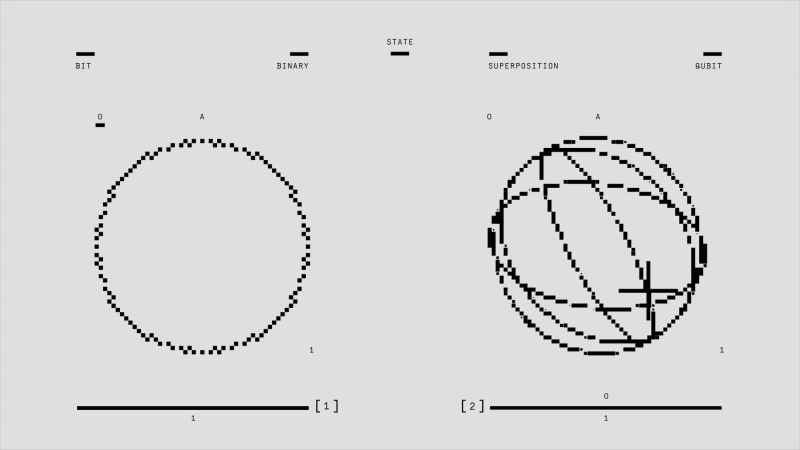
The concept of fault-tolerant quantum computing relies on encoding quantum information across multiple physical qubits to form a single, more stable 'logical qubit.' This redundancy allows for the detection and correction of errors without destroying the delicate quantum state. However, implementing this in hardware is extraordinarily difficult, requiring precise control over numerous interacting qubits and sophisticated error-correction codes. Previous attempts have often struggled with the overhead of physical qubits required, the complexity of control systems, and the limited coherence times of the logical qubits themselves. D-Wave's recent demonstration marks a significant leap forward in overcoming these practical hurdles, showcasing a viable path towards building larger, more reliable quantum processors.
This breakthrough is particularly timely as the global race for quantum supremacy intensifies. Nations and corporations are investing billions into quantum research, recognizing its potential to revolutionize industries from medicine and materials science to finance and artificial intelligence. However, the lack of truly fault-tolerant systems has kept many of these applications firmly in the realm of theoretical possibility. D-Wave's achievement directly addresses this critical bottleneck, potentially accelerating the timeline for practical quantum applications and shifting the competitive landscape. It underscores the importance of hardware innovation alongside algorithmic development in pushing the boundaries of what quantum technology can achieve.
Background
D-Wave Systems has long been a pioneering force in the quantum computing landscape, primarily known for its development of quantum annealing systems. Unlike universal gate-model quantum computers, which aim to perform any arbitrary quantum algorithm, quantum annealers are specialized machines designed to solve optimization problems by finding the lowest energy state of a system. This approach has found applications in areas such as logistics, financial modeling, and drug discovery. While distinct from gate-model architectures, D-Wave's deep expertise in superconducting qubit fabrication, cryogenic engineering, and quantum control has provided a robust foundation for their recent foray into gate-model error correction, leveraging decades of accumulated knowledge and infrastructure.
The journey towards practical quantum error correction has been arduous, marked by incremental progress and significant theoretical advancements. Early theoretical work in the 1990s laid the groundwork for quantum error-correcting codes, demonstrating that it is indeed possible to protect quantum information from noise. However, translating these theoretical constructs into physical hardware has proven to be an immense engineering challenge. The sheer number of physical qubits required to encode a single logical qubit, coupled with the stringent demands on qubit quality and connectivity, has historically limited experimental demonstrations to very small scales, often involving only a few physical qubits.
D-Wave's latest achievement represents a convergence of several critical technological advancements. It combines sophisticated superconducting qubit design with innovative control electronics and advanced error-correction algorithms. This integrated approach has allowed them to not only create stable logical qubits but also to actively suppress errors, a crucial step beyond merely detecting them. The ability to demonstrate this at a 12-qubit scale, with impressive error suppression rates, signals a maturation of the underlying technology and provides compelling evidence that the path to large-scale, fault-tolerant quantum computing is becoming increasingly tangible. This is not just a lab experiment; it is a proof-of-concept for a scalable architecture.
Winners and Losers
The most immediate winner is undoubtedly D-Wave Systems itself. This breakthrough significantly elevates their standing in the highly competitive quantum computing sector, demonstrating their capability to innovate beyond quantum annealing and directly address one of the most critical challenges in universal gate-model quantum computing. It positions them as a serious contender in the race for fault-tolerant systems, potentially attracting new investors, partnerships, and top-tier talent. Furthermore, this success validates their long-term research and development strategies, proving that their foundational work in superconducting technology can be extended to solve complex problems in quantum error correction, thereby broadening their market appeal and technological relevance.
The broader scientific community and industries poised to benefit from quantum computing are also significant winners. This advancement provides a tangible roadmap for overcoming the noise barrier, accelerating research into new quantum algorithms and applications that were previously considered impractical due to error rates. Researchers can now design experiments with greater confidence in the underlying hardware's stability, pushing the boundaries of quantum simulation, cryptography, and artificial intelligence. This breakthrough fosters a sense of optimism and renewed vigor within the quantum ecosystem, signaling that the era of practical quantum computing might be arriving sooner than many anticipated, opening up unprecedented opportunities for innovation across various sectors.
While there are no clear 'losers' in a scientific breakthrough that benefits the entire field, companies heavily invested solely in alternative qubit technologies or error-correction approaches might face increased pressure to demonstrate comparable progress. The success of superconducting qubits in this context could shift investment priorities and research focus, potentially challenging those who have bet exclusively on ion traps, photonic systems, or topological qubits without similar error correction advancements. However, the collaborative nature of quantum research means that D-Wave's insights could also inspire and inform developments across different platforms, ultimately benefiting the entire ecosystem as the collective understanding of quantum error correction deepens and expands.
Analyst Perspectives
Industry analysts are largely hailing D-Wave's announcement as a pivotal moment, emphasizing that achieving robust quantum error correction is the 'holy grail' of quantum computing. Many experts believe this demonstration moves the field from theoretical possibility to tangible engineering reality. Dr. Anya Sharma, a leading quantum technology analyst, stated, 'This isn't just an incremental improvement; it's a foundational shift. D-Wave has shown that superconducting qubits can be engineered to not only host logical qubits but to actively suppress errors at a scale that begins to matter for practical applications. This will undoubtedly catalyze further investment and research across the entire quantum ecosystem.' The consensus is that this breakthrough significantly de-risks the path to fault-tolerant quantum computers.
However, some analysts caution against immediate overexcitement, reminding the community that scaling these systems to thousands or millions of logical qubits, which will be necessary for truly transformative applications, remains an enormous challenge. 'While D-Wave's results are undeniably impressive, the journey from 12 logical qubits to a universal, fault-tolerant quantum computer capable of breaking RSA encryption or simulating complex molecules is still a marathon, not a sprint,' noted Professor Jian Li, a quantum physicist and consultant. 'The engineering complexities of maintaining coherence and controlling such a vast number of interacting qubits are unprecedented. This is a crucial step, but many more lie ahead before widespread commercial adoption.'
Despite the caveats, the overall sentiment is overwhelmingly positive. Analysts agree that D-Wave's achievement validates the significant investments made in superconducting quantum computing and provides a powerful proof-of-concept for the viability of gate-model architectures. This success is expected to spur other major players in the quantum space, including IBM, Google, and Intel, to accelerate their own error correction efforts, potentially leading to a rapid advancement in the field over the next few years. The competitive landscape is heating up, and D-Wave has just thrown down a significant gauntlet, fundamentally altering the perceived timeline for achieving truly useful quantum computation.
Key Questions Explained
The Outlook
D-Wave's breakthrough in quantum error correction marks a pivotal moment, shifting the quantum computing narrative from 'if' to 'when' for practical fault-tolerant systems. This achievement is not merely an incremental step; it fundamentally alters the perceived timeline for achieving truly useful quantum computation. It provides tangible evidence that the formidable challenge of qubit fragility can be overcome through innovative hardware design and sophisticated error-correction protocols. The implications are profound, potentially accelerating the development of quantum algorithms that were previously theoretical exercises, and opening new avenues for scientific discovery and technological innovation across myriad industries.
Looking ahead, the quantum computing industry is poised for an intensified period of innovation and competition. D-Wave's success with superconducting qubits in error correction will undoubtedly spur other major players to redouble their efforts, potentially leading to a rapid succession of advancements across different qubit modalities. This healthy competition is crucial for driving the field forward, fostering collaboration on open standards, and ultimately making quantum computing more accessible and powerful. We can expect to see increased investment in both hardware and software development, as the race to build the first truly universal, fault-tolerant quantum computer heats up considerably.
While significant engineering challenges remain in scaling these systems to the millions of logical qubits required for the most transformative applications, D-Wave has provided a clear and compelling blueprint. The focus will now shift to optimizing these error-corrected architectures for scalability, improving manufacturing processes, and developing the robust software stacks necessary to program and manage these complex machines. The path to practical quantum computing is still long, but this breakthrough has illuminated a critical segment of that journey, instilling renewed confidence that the quantum era is not just a distant dream, but an increasingly tangible reality on the horizon.






Comments
No comments yet. Be the first to comment!