
What We Know
- Israeli researchers have developed an artificial intelligence system capable of identifying intracranial hemorrhages, commonly known as brain bleeds, with remarkable speed and accuracy.
- This cutting-edge AI can detect these critical conditions even before human medical professionals, including highly trained radiologists, are able to make a definitive diagnosis.
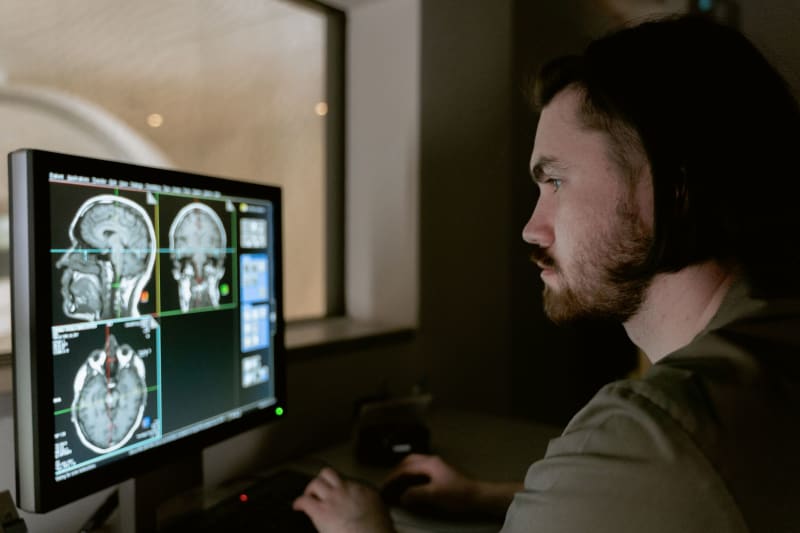
- The technology operates by analyzing medical imaging data, specifically CT scans, to pinpoint subtle indicators of bleeding that might be imperceptible or easily overlooked by the human eye under pressure.
- Early detection of brain bleeds is paramount for patient survival and minimizing long-term neurological damage, as every minute counts in these time-sensitive medical emergencies.
- The AI's rapid diagnostic capability holds the potential to significantly reduce the time from patient admission to treatment initiation, which is a crucial factor in improving patient outcomes.
- This innovation represents a substantial leap forward in medical diagnostics, particularly in emergency medicine where swift and precise decisions are often the difference between life and death.
What We Do Not Know Yet
- The exact timeline for the widespread clinical implementation and regulatory approval of this AI system in various healthcare systems globally remains unclear.
- Specific details regarding the AI's performance metrics, such as its false positive and false negative rates across diverse patient populations and imaging qualities, have not been fully disclosed.
- How this AI will integrate seamlessly into existing hospital workflows and emergency room protocols, and what training will be required for medical staff to effectively utilize it, is still being explored.
- The cost implications of deploying this advanced AI technology in hospitals, particularly for smaller facilities or those in developing regions, are yet to be thoroughly assessed and understood.
- Whether the AI can differentiate between various types of intracranial hemorrhages with the same level of precision, and if its efficacy varies based on the bleed's location or size, requires further investigation.
- The long-term impact on the role of human radiologists and emergency physicians, and how their expertise will evolve alongside such powerful diagnostic tools, is a subject of ongoing discussion and future study.
Background
Intracranial hemorrhage, commonly known as a brain bleed, is a devastating medical emergency that occurs when blood vessels within the skull rupture, leading to bleeding inside the brain tissue or surrounding spaces. This condition can be caused by various factors, including head trauma, high blood pressure, aneurysms, or arteriovenous malformations. The rapid accumulation of blood creates pressure on the brain, leading to cell damage, neurological deficits, and potentially death if not treated promptly. The urgency of diagnosis and intervention cannot be overstated; every minute that passes without treatment increases the risk of irreversible brain damage and mortality.
Traditional diagnosis of brain bleeds relies heavily on medical imaging, primarily Computed Tomography (CT) scans. While CT scans are highly effective, their interpretation requires skilled radiologists, who must meticulously examine numerous slices of brain tissue for subtle signs of hemorrhage. This process, though accurate, can be time-consuming, especially in busy emergency departments where radiologists are often managing a high volume of cases. The human element, while invaluable, introduces variability and potential for delay, which is precisely what this new AI aims to mitigate.
The development of this AI system by Israeli researchers is part of a broader global trend in leveraging artificial intelligence for medical diagnostics. AI's ability to process vast amounts of data and identify patterns at speeds far exceeding human capacity makes it an ideal candidate for tasks requiring rapid analysis of complex images. This particular innovation builds upon years of research in machine learning and neural networks, fine-tuning algorithms to recognize the nuanced visual signatures of brain bleeds, even those that are extremely small or located in challenging anatomical areas. The goal is not to replace human experts, but to augment their capabilities, providing an invaluable tool in the critical moments following a suspected neurological event.
Why It Matters
The ability of AI to detect brain bleeding faster than human doctors represents a monumental shift in emergency medicine. In cases of intracranial hemorrhage, time is literally brain. A delay of even a few minutes can mean the difference between a full recovery and severe, irreversible neurological damage or even death. This AI system could drastically shorten the diagnostic window, allowing clinicians to initiate life-saving treatments like surgery or medication much sooner, thereby improving patient prognoses and reducing long-term disability rates.
Beyond the immediate clinical benefits, this technology could revolutionize how emergency departments operate, especially in underserved areas or during mass casualty events where medical resources are stretched thin. By providing an instant, reliable second opinion or even a primary alert, the AI can help prioritize cases, ensuring that patients with critical conditions receive immediate attention. This efficiency gain is not just about speed; it's about optimizing resource allocation and enhancing the overall capacity of healthcare systems to handle acute neurological emergencies effectively.
Furthermore, this development underscores the transformative potential of artificial intelligence in healthcare, moving beyond theoretical discussions to tangible, life-saving applications. It highlights how advanced computational power, when applied to complex medical challenges, can overcome human limitations in perception and processing speed. This innovation sets a new benchmark for AI in diagnostics and will undoubtedly inspire further research and development in other critical medical fields, pushing the boundaries of what is possible in patient care and outcomes.
Timeline of Events
- Early 2010s: Initial research begins on applying machine learning algorithms to medical image analysis, with a focus on pattern recognition in CT and MRI scans for various pathologies.
- Mid-2010s: Development of more sophisticated deep learning models, particularly convolutional neural networks (CNNs), shows promise in identifying subtle features in complex medical images that are difficult for humans to discern.
- Late 2010s: Israeli research teams, among others, begin to specifically target intracranial hemorrhage detection, recognizing the critical need for faster diagnostics in this area.
- Early 2020s: Prototype AI models are trained on vast datasets of anonymized CT scans, meticulously labeled by expert radiologists, to learn the intricate visual characteristics of brain bleeds.
- Mid-2023: Researchers announce significant breakthroughs, demonstrating that their AI system can identify brain hemorrhages with accuracy and speed surpassing human experts in controlled environments.
- Late 2023: Initial reports and publications emerge, detailing the AI's capabilities and the methodology behind its development, garnering significant attention from the medical and technological communities.
- Present: The AI system undergoes further rigorous testing, validation, and refinement, moving closer to clinical trials and eventual regulatory approval for real-world application in emergency settings.
- Future: Anticipated integration into hospital systems, potentially as an assistive diagnostic tool, to augment the capabilities of emergency physicians and radiologists, improving patient outcomes globally.

Rapid-Fire Q&A
What Is Coming
- Further rigorous clinical trials are anticipated to validate the AI's performance across diverse patient populations and healthcare settings, ensuring its reliability and generalizability.
- Regulatory bodies, such as the FDA in the US and EMA in Europe, will begin the process of evaluating the AI system for medical device approval, a critical step before widespread adoption.
- Developers will likely focus on refining the AI's interface and integration capabilities, making it seamless for hospitals to incorporate into their existing PACS (Picture Archiving and Communication Systems) and EHR (Electronic Health Record) systems.
- Training programs for radiologists, emergency physicians, and other medical staff will be developed to ensure effective and responsible utilization of the AI as an assistive diagnostic tool.
- Research will expand to explore the AI's potential in detecting other acute neurological conditions or even predicting the risk of future events, broadening its diagnostic scope.
- Discussions around ethical guidelines, data privacy, and accountability for AI-assisted diagnoses will intensify as the technology moves closer to mainstream clinical application, shaping future policy.












Comments
No comments yet. Be the first to comment!