

Key Takeaways
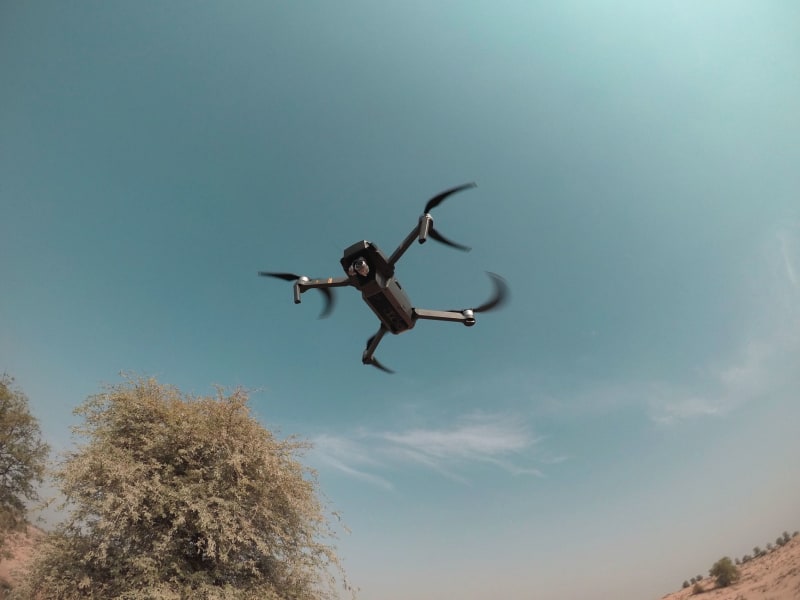
- An explosive-laden drone was recently detected near a major German airport, marking a significant and concerning escalation in potential terrorist tactics against critical infrastructure.
- Germany's Interior Minister has unequivocally stated that this incident represents a 'new level of danger,' emphasizing the urgent need for enhanced security measures and a reassessment of existing protocols.
- The event highlights a critical vulnerability in current airport security frameworks, as traditional defenses are primarily designed to counter ground-based threats, not sophisticated aerial incursions by unmanned aerial vehicles (UAVs).
- This incident necessitates a rapid and comprehensive review of counter-drone technologies and strategies, including advanced radar systems, signal jamming, and kinetic interception methods, to protect airports and other sensitive sites.
- International cooperation among intelligence agencies and aviation authorities is paramount to share threat intelligence and develop standardized, robust defenses against evolving drone-based terror threats.
- The potential for widespread disruption, economic damage, and mass casualties from a successful drone attack on an airport underscores the immense stakes involved and the imperative for proactive, preventative action.
Background
The recent detection of a drone carrying explosive materials in the vicinity of a major German airport has sent a chilling message across international security circles. This incident, while details regarding its precise nature and perpetrator remain under intense investigation, represents a profound shift in the landscape of potential terror threats. For years, security experts have warned about the theoretical possibility of weaponized drones being deployed against civilian targets, but this event marks one of the most concrete instances of such a threat manifesting near a critical piece of infrastructure in a Western European nation.
Historically, airport security has focused predominantly on threats originating from within the airport perimeter or from conventional aircraft-borne attacks. Measures like passenger screening, baggage checks, and perimeter fencing were designed to mitigate these known risks. However, the proliferation of readily available and increasingly sophisticated drone technology has introduced an entirely new vector for malicious actors. These unmanned aerial vehicles can bypass traditional security layers, operate with relative stealth, and deliver payloads with alarming precision, posing a complex challenge for defense systems not originally designed to detect or neutralize them.
This particular incident has prompted an immediate and robust response from German authorities. The swift public acknowledgement by the Interior Minister underscores the gravity of the situation and the government's commitment to addressing this emerging threat. It also serves as a stark reminder that the ingenuity of those seeking to cause harm often evolves faster than defensive capabilities, necessitating constant vigilance, technological innovation, and a proactive approach to security strategy. The world is now watching to see how Germany and its allies will adapt to this 'new level of danger.'
Why It Matters
This incident is not merely an isolated security breach; it is a profound wake-up call that fundamentally alters the calculus of aviation security worldwide. The potential for a drone carrying explosives to penetrate the airspace around a major international airport exposes a critical vulnerability that could have catastrophic consequences. A successful attack could lead to mass casualties, severe damage to infrastructure, and widespread panic, disrupting global travel and commerce on an unprecedented scale. The economic fallout alone from a prolonged airport shutdown or a major incident would be immense, impacting supply chains, tourism, and investor confidence.
Furthermore, the psychological impact of such an event cannot be overstated. The public's trust in the safety of air travel, already fragile due to past terror attacks, would be severely eroded. This erosion of confidence could have long-term implications for the aviation industry, potentially leading to reduced passenger numbers and increased operational costs as airports scramble to implement new, more stringent, and often more expensive security measures. The incident forces a re-evaluation of what constitutes a 'secure' airport environment in an era where aerial threats are no longer confined to manned aircraft.
Beyond the immediate physical and economic risks, this event signals a dangerous evolution in terrorist tactics. The accessibility and relative affordability of drone technology mean that sophisticated attacks are no longer the exclusive domain of state-sponsored actors or well-funded organizations. Smaller, less organized groups or even lone wolves could potentially leverage this technology, making detection and prevention even more challenging. This 'new level of danger,' as articulated by the German Interior Minister, demands an urgent, coordinated, and innovative response from governments, intelligence agencies, and technology developers globally to counter this rapidly emerging threat effectively.
Ground Reality
On the ground, the immediate aftermath of such an incident involves a heightened state of alert and intense scrutiny of all incoming and outgoing air traffic. Security forces are likely to implement stricter protocols, including increased patrols, expanded surveillance zones, and potentially temporary flight restrictions, leading to significant operational disruptions. Passengers may experience longer wait times and more thorough checks, impacting travel efficiency and overall airport experience. The practical challenge lies in balancing robust security with the need to maintain the smooth flow of millions of travelers and tons of cargo daily.
The detection of an explosive drone underscores a critical gap in existing defense mechanisms. While airports often have sophisticated radar systems for manned aircraft, many are not optimized to detect small, low-flying drones, especially those made of non-metallic materials. Furthermore, the sheer volume of legitimate drone activity, from hobbyists to commercial deliveries, complicates the identification of malicious intent. Distinguishing a harmless recreational drone from a weaponized one in real-time within a complex urban or airport environment presents an immense technological and operational hurdle that current systems are struggling to overcome.
In response, there's an immediate push to deploy and test advanced counter-drone technologies. This includes sophisticated radar and acoustic sensors, radio frequency (RF) jammers to disrupt drone control signals, and even kinetic interception systems like net-firing drones or laser defenses. However, these technologies are often expensive, require specialized training, and face regulatory hurdles regarding their deployment in civilian airspace. The ground reality is a race against time to implement effective solutions before the next, potentially more devastating, incident occurs, requiring significant investment and rapid innovation.
What Experts Are Saying
Security analysts are unanimously agreeing that this incident represents a pivotal moment in the evolution of terrorist threats. Dr. Evelyn Harris, a leading expert in drone warfare at the Royal United Services Institute, stated, 'This isn't a theoretical exercise anymore; it's a tangible, immediate threat. The ease with which commercially available drones can be weaponized means we're facing a democratization of air power, putting sophisticated attack capabilities into the hands of a wider range of actors.' Her assessment highlights the concerning accessibility of this technology.
Many experts are emphasizing the need for a multi-layered defense strategy, moving beyond single-point solutions. Professor Markus Richter, head of aviation security studies at the University of Bonn, commented, 'Relying on one type of counter-drone technology is insufficient. We need a comprehensive system integrating detection, identification, tracking, and neutralization capabilities, coupled with robust intelligence gathering to anticipate threats.' He stressed that the solution must involve both technological advancements and improved human intelligence to be truly effective against evolving adversaries.
Furthermore, there's a strong consensus on the necessity of international collaboration. A joint statement from several European counter-terrorism think tanks urged, 'This threat transcends national borders. Information sharing, joint research and development, and harmonized regulatory frameworks across nations are no longer optional; they are absolutely essential to build a collective defense against this global menace.' The experts believe that only a unified front can effectively tackle the cross-border nature of drone-based terrorism and prevent future incidents.

Frequently Asked Questions
What Happens Next
In the immediate aftermath, expect an intensified investigation by German federal authorities to identify the perpetrators behind this alarming incident. This will involve forensic analysis of any recovered drone fragments, digital forensics to trace potential flight paths or control signals, and a deep dive into intelligence networks to uncover any links to known extremist groups. The focus will be on understanding the intent, capabilities, and operational methods of those responsible to prevent future attempts and bring them to justice. This investigation will likely be highly classified due to its sensitive nature.
Beyond the criminal investigation, there will be an urgent and comprehensive review of Germany's, and likely Europe's, airport security protocols. This will involve expert consultations, stress tests of existing systems, and rapid procurement of advanced counter-drone technologies. Governments will face immense pressure to demonstrate that they are taking this 'new level of danger' seriously, potentially leading to significant budgetary allocations for security upgrades and research into next-generation defense systems. The regulatory landscape for drones may also see drastic changes, with stricter controls on sales, registration, and flight zones.
Internationally, this incident will undoubtedly spark renewed calls for enhanced global cooperation on aviation security. Expect discussions at major international forums, such as ICAO (International Civil Aviation Organization) and Interpol, focusing on standardized threat assessments, intelligence sharing protocols, and the development of common technological solutions. The incident serves as a stark reminder that security vulnerabilities in one nation can have far-reaching implications for global air travel, necessitating a unified and proactive approach to safeguard the skies. The trajectory of drone technology, both legitimate and illicit, will be a central theme in these ongoing discussions.
















Comments
No comments yet. Be the first to comment!