

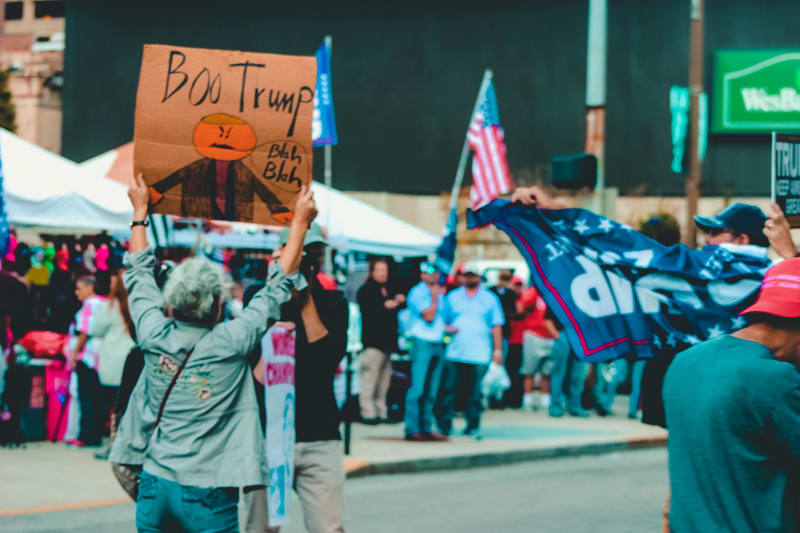
The Story in Brief
- A growing number of Republican lawmakers are expressing reservations and openly challenging aspects of Donald Trump's policy agenda, indicating a significant fracture in party unity.
- These internal disagreements span various policy areas, including trade, foreign policy, and fiscal matters, suggesting a deeper ideological divergence than previously apparent.
- While Trump's influence remains strong with a core base, this emerging dissent from within his own party raises critical questions about the future direction and cohesion of the Republican platform.
- The implications of this internal friction could impact legislative priorities, electoral strategies, and the overall narrative of the Republican party moving forward.
- Analysts are closely monitoring these developments for signs of a lasting shift in Republican political alignment and the potential for bipartisan cooperation or further polarization.
- This evolving landscape within the GOP presents a complex challenge for party leadership seeking to maintain a unified front ahead of crucial upcoming elections.
The Human Face
The once-unshakeable facade of Republican unity around Donald Trump's agenda is showing visible cracks, with a growing chorus of elected officials voicing concerns and even outright opposition to key policy proposals. This isn't just a matter of policy disagreements; it's a reflection of shifting political landscapes and the evolving priorities of different factions within the party. Some lawmakers, particularly those representing more moderate districts or those with long-standing conservative principles, find themselves increasingly at odds with the direction dictated by Trump's vision. They grapple with constituent pressures, ideological commitments, and the pragmatic realities of governance, leading to a more independent and sometimes critical stance. This internal friction creates a complex dynamic, forcing a re-evaluation of what it means to be a Republican in the current political climate and challenging the traditional party loyalty.
For many rank-and-file Republicans, the dissonance between Trump's pronouncements and the actions or statements of their representatives can be disorienting. They elected these individuals to uphold certain values and advance specific policies, and when those representatives deviate, it can lead to feelings of betrayal or confusion. This is particularly true for those who see Trump's agenda as intrinsically linked to the party's identity. Conversely, other Republicans may welcome this divergence, viewing it as a sign of healthy debate and a necessary correction to ensure the party remains grounded in core conservative principles rather than solely adhering to one individual's platform. The challenge for these lawmakers is to articulate their positions effectively without alienating the Trump loyalists who remain a powerful force within the electorate, a delicate balancing act that defines much of the current political maneuvering.
The personal toll on lawmakers caught in this ideological crossfire is also significant. They face intense scrutiny from both sides of the political spectrum, with accusations of disloyalty from Trump supporters and praise from those who welcome their independence. This pressure cooker environment can strain relationships, impact legislative effectiveness, and even affect their political futures. For some, the decision to break ranks is a calculated risk, an attempt to carve out a distinct identity and appeal to a broader base. For others, it's a matter of deep conviction, a refusal to compromise on principles they believe are fundamental to the nation's well-being. The human element of these political battles often gets lost in the broader policy debates, yet it is crucial to understanding the motivations and challenges faced by those navigating this complex internal party dynamic.
How We Got Here
The current fissures within the Republican party are not spontaneous but rather the culmination of years of evolving political dynamics and strategic decisions. Following Donald Trump's rise to prominence and his subsequent presidency, the party underwent a significant transformation. His populist appeal and unconventional approach to politics reshaped the GOP's platform and voter base, often prioritizing loyalty to him over traditional conservative orthodoxy. This created an environment where dissent was often discouraged, and adherence to Trump's directives became a litmus test for party acceptance. Many lawmakers who initially aligned with Trump did so out of political expediency or a belief that his agenda could advance their own goals, but the long-term implications of this consolidation of power were not fully apparent at the time.
The period following Trump's presidency, particularly after the 2020 election and the events of January 6th, 2021, further exacerbated these internal tensions. While Trump maintained a strong grip on a significant portion of the Republican electorate, a segment of the party began to re-evaluate their alignment. This re-evaluation was driven by a variety of factors, including concerns about Trump's rhetoric, his challenges to democratic norms, and a desire to return to more traditional conservative principles. Lawmakers found themselves increasingly pressured to choose between loyalty to Trump and their own political convictions or the needs of their constituents. This created a stark divide, separating those who remained steadfastly aligned with Trump from those who sought to distance themselves or chart a different course for the party.
Furthermore, the legislative agenda itself has become a battleground for these internal conflicts. As Republicans have sought to regain and maintain political power, disagreements have emerged over how best to achieve their goals and what those goals should fundamentally be. Issues such as the national debt, foreign alliances, and the role of government intervention in the economy have become points of contention. Some Republicans argue for a return to fiscal conservatism and traditional foreign policy, while others continue to champion Trump's more protectionist and nationalist stances. This ideological tug-of-war, played out in congressional debates and public statements, highlights the deep-seated divisions that have been brewing beneath the surface for years, now becoming increasingly visible and impactful.
Why This Cannot Be Ignored
The growing internal dissent within the Republican party concerning Donald Trump's agenda carries profound implications for the future of American governance and policy. When a significant portion of a major political party begins to question or reject the core tenets of its de facto leader's platform, it signals a potential for legislative gridlock, policy incoherence, and electoral unpredictability. This isn't merely an internal party squabble; it directly impacts the ability of the government to function effectively, address pressing national issues, and maintain international credibility. The erosion of party discipline and the rise of ideological fragmentation can lead to a paralysis of action, where consensus-building becomes nearly impossible, and the nation's ability to respond to crises is severely hampered.
Moreover, these divisions within the GOP directly influence the political landscape and the choices available to voters. If the Republican party cannot present a unified front or a coherent vision, it raises questions about its capacity to govern and lead. This fragmentation can empower opposing parties, alter the dynamics of elections, and potentially lead to unexpected outcomes. For voters who identify as Republican, the lack of a clear, unified message can be alienating, forcing them to choose between candidates or factions that may not fully represent their views. The health of a two-party system relies, to some extent, on the ability of each party to coalesce around a set of principles and present a viable alternative for governance, a process that is clearly being tested within the current GOP.
The international implications are also substantial. A divided or unpredictable major political party in the United States can create uncertainty on the global stage, affecting diplomatic relationships, trade negotiations, and national security alliances. Allies may question the reliability of U.S. commitments, while adversaries might seek to exploit perceived weaknesses. The consistent and predictable application of foreign policy is crucial for global stability, and internal party strife that leads to policy reversals or indecision can have far-reaching and negative consequences. Therefore, understanding and addressing these internal Republican dynamics is not just an academic exercise; it is essential for the stability and effective functioning of both domestic and international affairs.
Possible Paths Forward
One potential path forward for the Republican party involves a strategic recalibration, where a significant faction seeks to re-emphasize traditional conservative principles, focusing on fiscal responsibility, limited government, and a strong national defense, while downplaying the more populist and personality-driven aspects of the Trump era. This approach would likely involve a concerted effort to rebuild bridges with moderate voters and suburban constituencies that may have been alienated by recent political rhetoric. It would require leaders to articulate a clear, forward-looking vision that appeals to a broader base, moving beyond the grievances of the past and focusing on pragmatic solutions to contemporary challenges. Such a shift could involve a more robust engagement with policy debates on Capitol Hill, demonstrating a capacity for effective governance and legislative achievement.
Alternatively, the party could continue its deep integration with Donald Trump's political brand, doubling down on his base of loyal supporters and focusing on the issues that resonate most strongly with them, such as immigration control, trade protectionism, and cultural grievances. This path prioritizes maintaining the enthusiasm of the core Trump electorate, viewing them as the most reliable voting bloc. It would likely involve continued loyalty tests for candidates and a focus on challenging established institutions and narratives. While this strategy could ensure strong turnout among a dedicated base, it risks further alienating moderate Republicans and independent voters, potentially limiting the party's appeal in general elections and making bipartisan cooperation exceedingly difficult.
A third, perhaps more complex, scenario involves a prolonged period of internal negotiation and compromise, where different factions within the GOP attempt to find common ground on key issues, leading to a more pluralistic and perhaps less ideologically rigid party. This would necessitate open dialogue, a willingness to concede on certain points, and the development of new leadership that can bridge the divides. It might result in a party platform that is less defined by a single personality and more reflective of a diverse range of conservative thought. This path is fraught with challenges, as deep ideological differences and personal animosities can be difficult to overcome, but it offers the potential for a more sustainable and broadly appealing Republican party in the long term.
Questions People Are Actually Asking
What to Watch
- Monitor upcoming primary elections for signs of Republican voters favoring candidates who align with or break from Donald Trump's agenda.
- Observe legislative debates and voting patterns in Congress for continued evidence of Republican lawmakers diverging on key policy initiatives.
- Track public statements and media appearances by prominent Republicans to gauge shifts in rhetoric and emphasis regarding Trump's influence.
- Analyze polling data and focus group results to understand how these internal party dynamics are affecting voter sentiment and party identification.
- Pay attention to endorsements and campaign funding from influential figures within the GOP to see which factions are gaining or losing momentum.
- Watch for any formal organizational efforts or statements from groups seeking to either reinforce Trump's dominance or chart a new course for the Republican party.


















Comments
No comments yet. Be the first to comment!