
Story in Brief
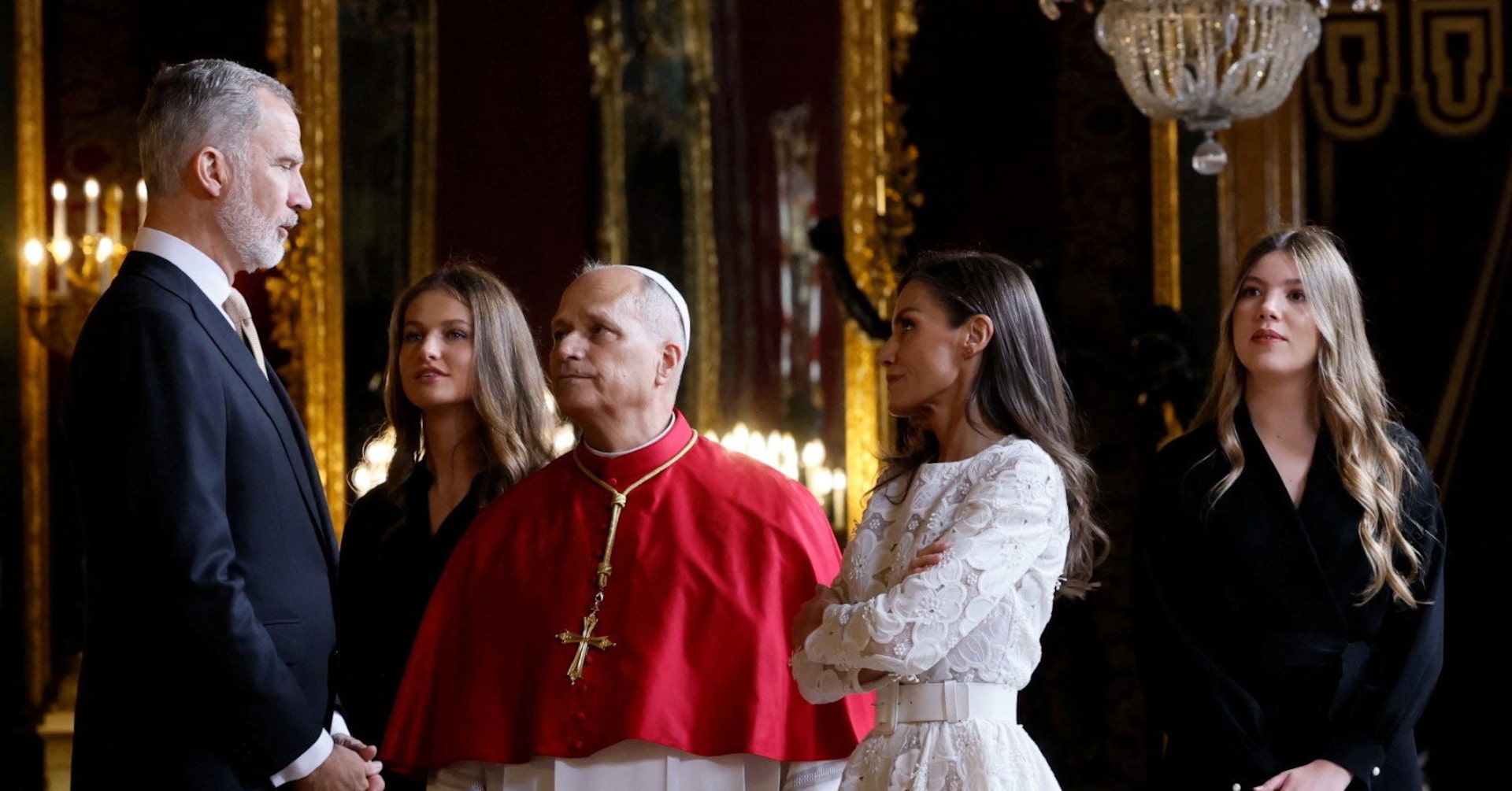
Pope Francis concluded his impactful visit to Spain with a resounding call for unity, directly challenging leaders to cease the divisive rhetoric that fractures societies. His engagement with migrants and young people underscored his commitment to those on the margins, highlighting their inherent dignity and the urgent need for compassionate policies. The Pontiff's words carried significant weight, urging a global shift away from polarization towards empathy and shared responsibility, particularly in addressing humanitarian challenges and fostering inclusive communities. This visit served as a potent reminder of the Vatican's enduring influence in advocating for peace and social justice on an international stage, setting a moral compass for political discourse.
Throughout his time in Spain, the Pope met with diverse groups, listening to their stories and offering solace and encouragement. These encounters were not merely symbolic gestures but profound moments of connection, emphasizing the human element often lost in political debates. He specifically addressed the plight of migrants, advocating for their rights and integration, and spoke passionately to the youth about building a future grounded in hope and mutual respect. The Pope's message transcended religious boundaries, resonating with anyone concerned about the increasing fragmentation of societies and the erosion of common ground. His leadership provides a vital counterpoint to the prevailing trends of nationalism and isolationism.
The Pontiff's itinerary was carefully curated to highlight key social issues facing Spain and the wider world, including poverty, unemployment, and the integration of vulnerable populations. By choosing to engage directly with those most affected by these challenges, Pope Francis amplified their voices and placed them at the forefront of global attention. His critique of political division was sharp and unambiguous, urging leaders to prioritize the common good over partisan interests. This visit reinforced the Catholic Church's role as a moral arbiter, capable of fostering dialogue and inspiring action towards a more just and equitable world. The urgency of his message cannot be overstated in a climate marked by geopolitical instability and social unrest.
Key Takeaways
- Pope Francis issued a strong condemnation of political division, urging leaders across Spain and globally to abandon polarizing tactics and instead foster unity and reconciliation for the betterment of all societies.
- The Pontiff placed a significant emphasis on the dignity and rights of migrants, calling for greater compassion, effective integration policies, and a rejection of xenophobia in all its forms during his interactions.
- Young people were central to the Pope's message, inspiring them to be agents of change, build a future based on hope and solidarity, and actively resist the forces of apathy and division within their communities.
- His address highlighted the interconnectedness of global challenges, stressing that issues like poverty, inequality, and displacement require collaborative solutions rooted in empathy and a shared commitment to human dignity.
- The visit served as a powerful reminder of the moral imperative for leaders to prioritize the common good, listen to the voices of the marginalized, and work towards building bridges rather than walls.
- Pope Francis's discourse underscored the vital role of faith and ethical leadership in navigating complex social and political landscapes, offering a spiritual framework for addressing contemporary crises.
Policy Snapshot
- The Pope's discourse implicitly advocates for policies that support the humane reception and integration of migrants, challenging nations to uphold international refugee conventions and provide robust social support systems.
- His emphasis on youth empowerment suggests a call for educational reforms and economic opportunities that equip young people with the skills and resources needed to thrive and contribute positively to society.
- The Pontiff's critique of division points towards a need for political reforms that encourage cross-party dialogue, consensus-building, and a focus on national unity over partisan gain.
- Francis's message on social justice implies support for policies aimed at reducing poverty and inequality, ensuring fair labor practices, and providing access to essential services like healthcare and housing for all citizens.
- The Vatican's stance, as articulated by the Pope, often encourages policies that promote peace, diplomacy, and international cooperation, advocating for non-violent conflict resolution and humanitarian aid.
- His environmental advocacy suggests a push for policies that address climate change and promote sustainable development, recognizing the interconnectedness of ecological health and human well-being.
The Policy History
The Catholic Church, under Pope Francis's leadership, has consistently championed a message of inclusion and solidarity, particularly concerning migrants and refugees. This stance is rooted in core Christian teachings emphasizing the inherent dignity of every human person, regardless of origin or status. Historically, the Church has provided extensive humanitarian aid and advocated for the rights of displaced populations worldwide. Pope Francis has made this a cornerstone of his papacy, frequently visiting refugee centers, meeting with migrants, and speaking out against policies that dehumanize or marginalize them. His encyclicals, such as 'Laudato Si'' on care for our common home and 'Fratelli Tutti' on fraternity and social friendship, provide a theological and ethical framework for these positions, urging a global shift towards empathy and shared responsibility.
The Pope's critique of political division and polarization is not new; it reflects a growing concern within the Church about the rise of nationalism, populism, and identity politics that often pit groups against each other. Francis has repeatedly warned against the dangers of ideological 'walls' that prevent dialogue and understanding, advocating instead for a culture of encounter and fraternity. This perspective challenges the prevailing political discourse in many Western nations, including Spain, where debates around immigration, national identity, and economic policies have often become highly contentious. The Church's historical role as a mediator and advocate for peace positions it to offer a counter-narrative that prioritizes human connection and the common good over divisive agendas.
The specific context of Spain, with its history of internal divisions and its geographical position as a major entry point for migrants from Africa, makes the Pope's message particularly relevant. Spain has grappled with significant challenges related to managing migration flows, integrating newcomers, and navigating political debates that often become polarized. The Church in Spain has been actively involved in providing support to migrants and advocating for more humane policies. Pope Francis's visit, therefore, serves not only as a spiritual encouragement but also as a call to action for political leaders and civil society to address these complex issues with greater compassion and a commitment to social cohesion, building upon decades of Church engagement in social issues.
Who Is Affected
The Pope's message directly impacts migrants and refugees, who often face precarious living conditions, discrimination, and political marginalization. By amplifying their voices and advocating for their rights, Francis seeks to ensure they are treated with dignity and compassion, benefiting from policies that facilitate integration and access to essential services. This includes asylum seekers, undocumented individuals, and those fleeing conflict or poverty, whose lives are profoundly shaped by the political decisions made regarding borders, humanitarian aid, and social inclusion efforts. The urgency of their situation demands immediate attention and a shift in public and political attitudes away from fear and towards solidarity.
Young people are another key demographic profoundly affected by the Pope's call to action. Facing uncertain futures marked by economic instability, climate change, and social fragmentation, they are inspired by his message of hope and empowerment. Francis encourages them to become active participants in building a more just and sustainable world, resisting cynicism and division. This affects their educational paths, career choices, and engagement with civic life, urging them to leverage their energy and idealism to foster positive change and challenge outdated systems that perpetuate inequality.
Political leaders and policymakers are directly addressed by the Pope's critique of division. His words challenge them to reconsider their strategies, prioritize the common good over partisan gains, and engage in more constructive dialogue. This affects the legislative agenda, the tone of public discourse, and the very fabric of democratic governance. Leaders are urged to implement policies that promote social cohesion, address systemic inequalities, and foster a sense of shared national purpose, moving away from divisive rhetoric that alienates segments of the population and undermines trust.
Society as a whole is impacted by the Pope's emphasis on unity and fraternity. Divisive political climates can erode social trust, increase polarization, and hinder collective progress on critical issues. By advocating for empathy and understanding, Francis aims to foster a more cohesive and compassionate society where diverse groups can coexist peacefully and work together towards shared goals. This affects community relations, the quality of public debate, and the overall well-being of citizens who often bear the brunt of political infighting and social fragmentation.
The Case For Unity
The imperative for unity, as championed by Pope Francis, stems from the fundamental recognition of shared humanity and interconnectedness. In an increasingly globalized world, national borders and ideological divides become less relevant when faced with common challenges such as pandemics, climate change, and economic instability. Fostering unity allows societies to pool resources, share knowledge, and collaborate effectively on solutions that benefit everyone. Division, conversely, leads to wasted energy on internal conflicts, hinders progress, and exacerbates suffering, particularly for the most vulnerable populations who lack the means to navigate fractured systems.
Politically, unity strengthens a nation's resilience and capacity for effective governance. When leaders prioritize the common good over partisan interests, they can build broader consensus, implement more sustainable policies, and foster greater public trust. A united populace is better equipped to face external pressures and internal crises, as it operates from a foundation of shared purpose and mutual support. The Pope's call challenges the divisive tactics often employed in modern politics, arguing that true leadership lies in bridging divides and creating inclusive societies where all voices are heard and valued.
From a moral and ethical standpoint, unity is essential for building a just and compassionate world. The principles of fraternity and social friendship, central to Pope Francis's teachings, call for actively reaching out to others, especially those on the margins. This involves recognizing the inherent dignity of every person, regardless of their background, and working to dismantle systems of oppression and exclusion. Embracing unity means moving beyond 'us versus them' mentalities and cultivating empathy, understanding, and a genuine commitment to the well-being of all members of the human family.
The Case Against Division
The corrosive effects of political division are starkly evident in the erosion of social trust and the breakdown of constructive dialogue. When societies are polarized, citizens become increasingly entrenched in their own echo chambers, viewing opposing viewpoints not as valid perspectives but as existential threats. This polarization paralyzes effective governance, making it difficult to address pressing issues like economic inequality, healthcare access, or environmental protection, as consensus becomes nearly impossible to achieve. The constant conflict distracts from the real needs of the people and fosters cynicism towards institutions and leadership.
Division often fuels discrimination and xenophobia, particularly against marginalized groups such as migrants and minorities. Political leaders may exploit these divisions for short-term gain, scapegoating certain populations to rally their base, which leads to increased social tension, hate crimes, and human rights abuses. The Pope's critique highlights how such tactics dehumanize individuals, stripping them of their dignity and rights, and ultimately undermine the moral fabric of society. This creates a climate of fear and insecurity, making integration and mutual understanding exceedingly difficult.
Economically, persistent division can lead to instability and hinder growth. When political infighting dominates the agenda, long-term investments in infrastructure, education, and innovation may be neglected. Furthermore, societies fractured by internal conflict are less attractive to international investment and collaboration. The energy and resources that could be directed towards productive endeavors are instead consumed by political battles, ultimately diminishing the overall prosperity and well-being of the nation and its citizens.

Policy Questions Answered
Implementation Watch
Following Pope Francis's powerful address in Spain, the focus now shifts to how political leaders and civil society will respond to his calls for unity and compassion. Key indicators to watch include legislative actions concerning migrant integration policies, the adoption of more inclusive language in political discourse, and initiatives aimed at bridging ideological divides. Observers will be scrutinizing parliamentary debates, government statements, and grassroots movements for tangible shifts away from polarization and towards collaborative problem-solving. The effectiveness of these responses will determine whether the Pope's visit translates into lasting societal change or remains a moment of moral exhortation.
Specific attention will be paid to Spain's handling of migration, a central theme of the Pope's visit. Will there be increased investment in support services for newly arrived migrants, or a tightening of border controls? Furthermore, the Pope's engagement with youth raises expectations for policies that address youth unemployment and foster greater civic participation. Progress in these areas, such as new job creation programs or enhanced educational opportunities, will be crucial measures of impact. The commitment to these vulnerable groups will be a litmus test for the sincerity of responses to the papal message.
The long-term success of the Pope's message hinges on sustained efforts to counteract divisive narratives and promote a culture of dialogue. This requires ongoing commitment from religious institutions, educational bodies, media outlets, and community organizations. Monitoring the prevalence of hate speech, the level of intergroup cooperation, and the public's perception of social cohesion will provide insights into the deeper, more enduring effects of the visit. Ultimately, the true measure of success will be a demonstrable reduction in societal fragmentation and a strengthened commitment to the common good.














Comments
No comments yet. Be the first to comment!