
The Numbers
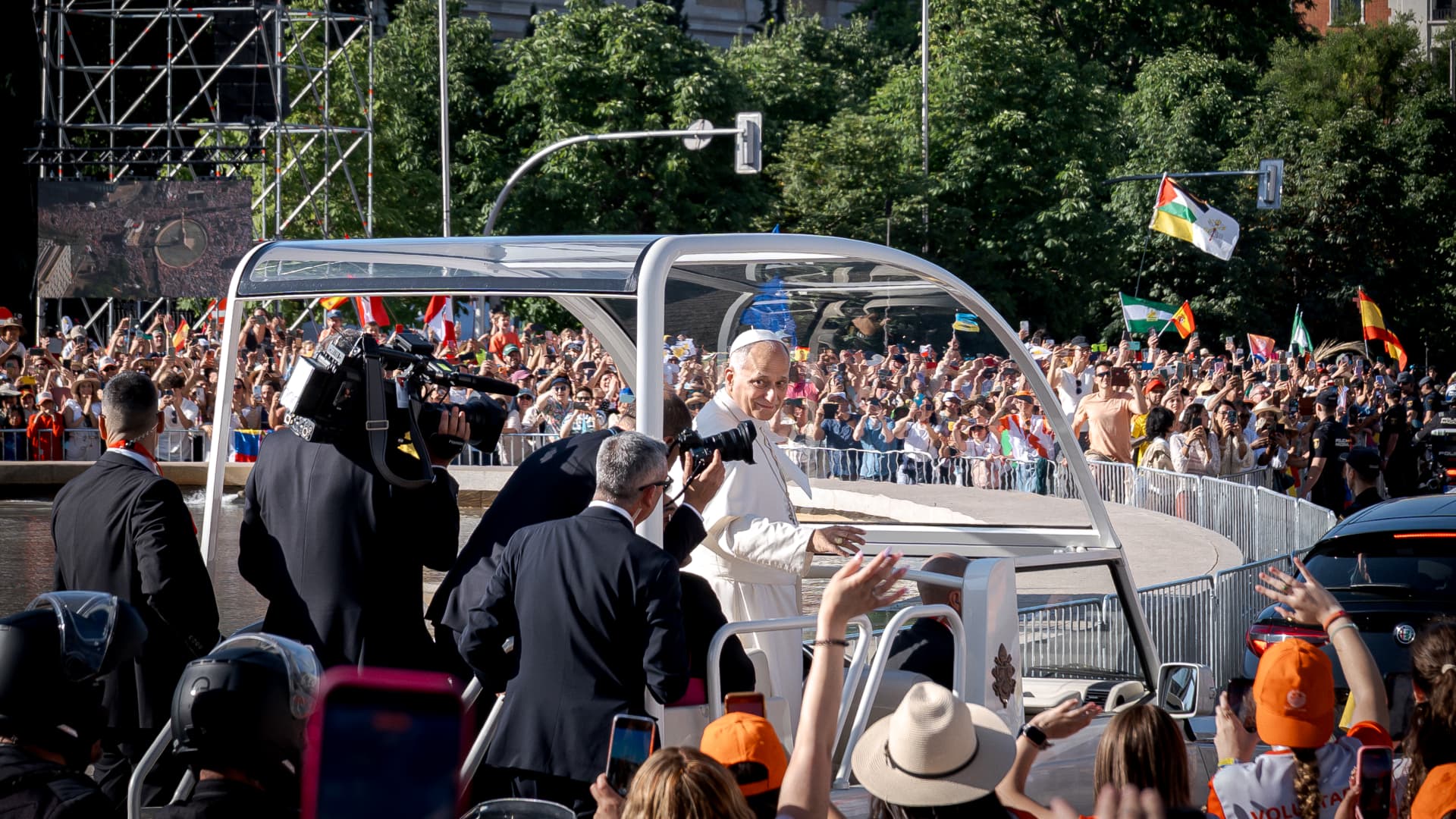
- Over 1.2 million faithful converged in Madrid, demonstrating immense collective spiritual engagement and the significant reach of papal addresses.
- The gathering represented a powerful display of faith, with attendees traveling from diverse regions to hear Pope Francis's message firsthand.
- This massive turnout underscores the enduring influence of religious leadership and the profound desire for spiritual guidance in contemporary society.
- The event's scale highlights the logistical coordination required for such large-scale religious assemblies, involving extensive planning and resource allocation.
- A significant portion of attendees were young people, indicating a vibrant and engaged youth demographic within the Catholic Church.
- The economic impact on Madrid was substantial, with the influx of pilgrims contributing significantly to local businesses and hospitality sectors during the event.
Context Check
Pope Francis's address in Madrid occurred against a backdrop of escalating global economic inequality and widespread social unrest. Many nations are grappling with widening wealth gaps, persistent poverty, and the social consequences of rapid technological change and globalization. The pontiff's consistent emphasis on the plight of the poor and marginalized is not a new theological stance but a reinforcement of core Christian tenets, amplified by his position as a global spiritual leader. His message directly confronts the prevailing economic philosophies that often prioritize profit over human dignity, urging a fundamental shift in perspective and action.
The choice of Madrid for this significant gathering was strategic, placing the Pope's message at the heart of a continent historically shaped by Catholic tradition yet facing modern secularization and economic challenges. Spain itself has experienced periods of economic austerity and social division, making the message of solidarity particularly resonant. The sheer scale of the attendance, exceeding expectations, signals a deep-seated yearning for spiritual connection and ethical guidance amidst complex societal issues. This event transcends a single religious ceremony; it acts as a global pulpit for advocating social justice and economic fairness, challenging listeners to consider their role in addressing systemic poverty.
Understanding the context requires acknowledging the historical role of the papacy in social commentary and advocacy. Pope Francis, often dubbed the 'Pope of the Poor,' has consistently used his platform to highlight the struggles of those left behind by economic progress. His speeches and encyclicals frequently critique consumerism and the unfettered pursuit of wealth, advocating instead for a more equitable distribution of resources and a greater emphasis on community and compassion. This Madrid address is a powerful continuation of that narrative, aimed at galvanizing millions and prompting reflection on the moral implications of economic policies and societal structures.
Background
The Catholic Church has a long-standing theological and ethical framework centered on the preferential option for the poor, a concept deeply rooted in scripture and tradition. This principle asserts that God has a special concern for the poor and oppressed, and that believers are called to stand with them, advocate for their rights, and work towards their liberation from unjust social and economic conditions. Throughout history, popes and theologians have interpreted and applied this principle in various ways, responding to the specific challenges of their times. Pope Francis has made this a cornerstone of his pontificate, consistently drawing attention to the global reality of poverty, displacement, and marginalization.
Pope Francis's papacy, beginning in 2013, has been marked by a distinctive focus on social justice, environmental stewardship, and interfaith dialogue. He has often contrasted his vision with the perceived excesses of global capitalism and consumer culture, calling for a more humane and sustainable world. His encyclical 'Laudato Si'' addressed environmental degradation and climate change, linking it to social inequality, while 'Evangelii Gaudium' (The Joy of the Gospel) explicitly critiqued economic systems that create vast disparities. The Madrid gathering serves as a powerful platform to reiterate these core messages to a massive audience, reinforcing his commitment to the Church's social teachings.
The specific event in Madrid was part of a broader pastoral visit aimed at strengthening the faith of Catholics in Spain and addressing contemporary challenges facing the Church and society. Large public gatherings are a traditional and effective means for popes to connect with vast numbers of the faithful, deliver key messages, and inspire collective action. The scale of the event, drawing over a million people, highlights the enduring appeal of papal leadership and the deep spiritual needs that such occasions aim to fulfill. It provides a tangible demonstration of faith and a moment for collective reflection on the values Pope Francis champions.
Winners and Losers
From Pope Francis's perspective, the primary 'winners' are the poor, the marginalized, and all those who strive for justice and compassion. His message offers spiritual validation and hope to individuals and communities facing economic hardship, social exclusion, and systemic oppression. By emphasizing God's solidarity with the suffering, he empowers them, reminding them that their dignity is inherent and divinely recognized, not dependent on their economic status or societal standing. Furthermore, those who actively work towards building a more just and equitable society, whether through charitable actions, advocacy, or policy reform, can find renewed inspiration and affirmation in his words.
Conversely, the 'losers' in this framing are those who perpetuate or benefit from systems of injustice, exploitation, and indifference towards the poor. This includes individuals and institutions that prioritize profit over people, engage in excessive wealth accumulation at the expense of others, or remain complacent in the face of widespread suffering. Pope Francis's critique implicitly targets the structures and ideologies that create and sustain poverty, such as unchecked financial speculation, exploitative labor practices, and policies that neglect social welfare. The message serves as a moral challenge, urging a reevaluation of priorities for those who hold power and influence in economic and political spheres.
The broader societal impact suggests a potential shift in collective consciousness. If the message resonates and inspires action, the 'winners' could eventually include entire communities and nations that move towards greater social cohesion and economic fairness. Conversely, societies that resist these calls for change risk deepening divisions and perpetuating cycles of poverty and unrest. The ultimate outcome depends on the willingness of individuals, institutions, and governments to translate the Pope's spiritual and ethical exhortations into tangible actions that address the root causes of inequality and suffering.
Analyst Perspectives
Sociologists and theologians observe that Pope Francis's consistent focus on the poor is a deliberate strategy to reorient the Church's mission and challenge global economic paradigms. His rhetoric is designed not merely to offer comfort but to provoke a critical examination of wealth distribution and social responsibility. Analysts note that while such messages resonate deeply with many faithful, their practical impact hinges on translating spiritual conviction into concrete political and economic action, which often faces significant resistance from established interests. The sheer scale of the Madrid event amplifies the potential for this message to gain traction, but its long-term influence remains contingent on sustained advocacy and systemic reform efforts.
Economists specializing in development and inequality often view papal pronouncements through the lens of their potential to influence public opinion and policy debates. While the Pope does not propose specific economic policies, his moral authority can lend weight to calls for greater social protection, fairer wages, and more equitable global trade practices. Experts acknowledge that achieving substantial change requires more than just moral appeals; it necessitates structural reforms, international cooperation, and a willingness to challenge entrenched economic systems. The Madrid address, by mobilizing millions, creates a powerful constituency that could potentially pressure policymakers to address poverty and inequality more effectively.
Political scientists analyze the Pope's role as a global soft power influencer. His ability to draw massive crowds and command international media attention allows him to set moral agendas and shape discourse on critical issues like poverty, migration, and climate change. While the Vatican does not wield direct political power, its moral suasion can impact public sentiment and, indirectly, political decision-making. The Madrid gathering demonstrates the enduring capacity of religious figures to mobilize large populations, serving as a potent reminder of the intersection between faith, ethics, and socio-economic realities in the 21st century.

Key Questions Explained
The Outlook
The enduring message from Pope Francis's Madrid address is a powerful call to action that transcends the immediate event. Its long-term impact will depend on how effectively individuals, communities, and institutions internalize and act upon the principles of solidarity and justice. The pontiff's consistent emphasis on the plight of the poor suggests this will remain a central theme of his papacy, continually challenging global leaders and citizens to re-examine their priorities and commitments. The momentum generated by such large gatherings can inspire grassroots movements and policy shifts, but sustained effort is crucial to effect meaningful change.
From a socio-economic perspective, the outlook remains complex. While the Pope's words offer moral guidance, the entrenched nature of global inequality and the powerful forces driving it present significant obstacles. Future developments will likely involve ongoing tension between calls for greater equity and the prevailing economic structures. The challenge lies in translating the spiritual fervor ignited in Madrid into concrete, sustainable solutions that alleviate poverty and foster inclusive growth, requiring collaboration across religious, political, and economic sectors.
The continued visibility of Pope Francis as a global advocate for the marginalized ensures that issues of poverty and social justice will remain prominent on the international agenda. His ability to mobilize millions highlights the persistent human need for ethical leadership and spiritual grounding in an often-unsettling world. The hope is that this message will continue to resonate, fostering a global culture of greater empathy, responsibility, and action towards building a world where the dignity of every person is recognized and upheld, particularly those most vulnerable.













Comments
No comments yet. Be the first to comment!