

At a Glance
- Beijing has officially banned four New Zealand lawmakers from entering mainland China, citing their recent visits to Taiwan as the primary reason for this punitive measure.
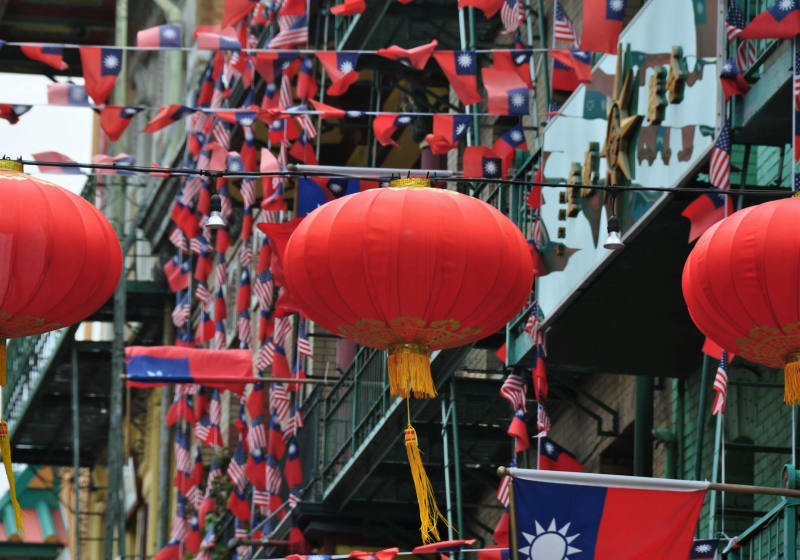
- The decision signifies a firm assertion of China's sovereignty claims over Taiwan and a strong disapproval of any international engagement that could be interpreted as legitimizing Taiwan's independent status.
- This move escalates diplomatic friction between China and New Zealand, potentially impacting future bilateral relations and trade, especially given Taiwan's strategic importance in global supply chains.
- The lawmakers in question are members of parliamentary friendship groups with Taiwan, highlighting the role of informal diplomatic channels in navigating complex international relationships.
- New Zealand's government has expressed disappointment and concern over the ban, emphasizing its commitment to maintaining open dialogue with China while upholding its own foreign policy principles.
- The incident serves as a stark reminder of the sensitivities surrounding cross-strait relations and China's assertive approach to foreign policy, particularly concerning its territorial integrity claims.
The Record
The Chinese Ministry of Foreign Affairs confirmed the entry ban on four specific New Zealand Members of Parliament, stating that their actions had "seriously interfered in China's internal affairs" by visiting Taiwan. This declaration directly links the punitive measure to the lawmakers' itinerary, framing it as a violation of Beijing's established diplomatic protocols and territorial red lines. The ministry's statement was unambiguous, leaving no room for interpretation regarding the cause of the ban. It emphasized that China's resolve to protect its sovereignty and territorial integrity is unwavering, and any attempts to challenge this will be met with firm opposition. This official pronouncement sets the stage for understanding the gravity of the situation from Beijing's perspective, highlighting a zero-tolerance approach to actions perceived as undermining its core national interests. The specific individuals targeted have been vocal in their support for Taiwan and have participated in parliamentary delegations that engage directly with Taiwanese officials, activities that Beijing views with extreme suspicion and hostility.
New Zealand's Ministry of Foreign Affairs and Trade acknowledged the development, expressing regret and stating that they are seeking further clarification from Chinese authorities regarding the decision. The government reiterated its long-standing one-China policy, which recognizes the People's Republic of China as the sole legal government of China, while also maintaining robust unofficial relations with Taiwan. This dual approach reflects a delicate balancing act that many countries engage in, aiming to foster economic ties with Beijing without completely severing connections with Taipei. However, the current incident suggests that Beijing is increasingly less tolerant of this nuanced approach, particularly when it involves direct parliamentary engagement. The government's response underscores the diplomatic tightrope New Zealand walks, aiming to preserve its relationship with a major trading partner while upholding its democratic values and international engagement principles. The emphasis on seeking clarification indicates a desire to de-escalate the situation and understand the precise triggers for Beijing's strong reaction, potentially opening avenues for dialogue or protest.
The targeted New Zealand lawmakers, who are members of the New Zealand Parliament's Trans-Tasman Relations and Foreign Affairs Committee, have defended their visits to Taiwan. They argue that such exchanges are crucial for understanding regional dynamics, promoting democratic values, and fostering open dialogue in the Indo-Pacific. Their stance highlights a fundamental difference in perspective regarding international diplomacy and the nature of cross-strait relations. While Beijing views any official or semi-official contact with Taiwan as a provocation, these lawmakers see it as a necessary component of responsible foreign policy and parliamentary oversight. Their public statements suggest a belief that engagement, even with sensitive issues, is more productive than isolation. This clash of perspectives underscores the growing ideological divide and the challenges in navigating diplomatic norms in an era of heightened geopolitical competition, where actions are often interpreted through the lens of broader strategic rivalries.
How We Got Here
China's stance on Taiwan has remained consistent for decades: the island is an inalienable part of its territory, and reunification, by force if necessary, is a core national objective. This principle, often referred to as the "One China Principle," forms the bedrock of Beijing's foreign policy and its diplomatic engagements with other nations. Any country seeking diplomatic relations with the People's Republic of China must acknowledge and, in most cases, explicitly endorse this principle, which typically involves severing official ties with Taiwan. Over the years, Beijing has become increasingly assertive in enforcing this policy, particularly as Taiwan's own democratic identity has strengthened and its international engagement has grown. This has led to a pattern of diplomatic pressure, economic coercion, and military signaling aimed at isolating Taiwan and deterring other nations from engaging with it in ways that could be perceived as conferring legitimacy.
New Zealand, like most countries, officially adheres to the "One China" policy, recognizing the People's Republic of China and acknowledging Beijing's position on Taiwan. However, New Zealand also maintains robust unofficial relations with Taiwan, including trade, cultural exchanges, and parliamentary delegations. These unofficial ties are conducted through representative offices that function similarly to embassies but without formal diplomatic recognition. This approach allows New Zealand to benefit from economic ties with mainland China while engaging with Taiwan on issues of mutual interest, such as democracy, human rights, and regional stability. The recent visits by the New Zealand lawmakers to Taiwan represent an extension of these unofficial engagements, aimed at fostering deeper understanding and dialogue between parliamentary bodies. Beijing's reaction suggests a growing intolerance for such engagements, viewing them as a subtle form of diplomatic recognition that undermines its core policy.
The specific parliamentary visits that triggered Beijing's ire were part of broader efforts by lawmakers from various countries to engage with Taiwan's democratic institutions and discuss pressing regional issues. These delegations often include discussions on trade, security, technological cooperation, and human rights. For the lawmakers involved, these visits are seen as essential parliamentary diplomacy, allowing them to gain firsthand insights into the complex geopolitical situation in the Indo-Pacific and to express solidarity with Taiwan's democratic system. However, in the current climate of heightened US-China competition and increasing cross-strait tensions, such visits are often interpreted by Beijing through a more confrontational lens. China views these exchanges as attempts by external forces to interfere in its internal affairs and bolster Taiwan's de facto independence, thereby challenging its sovereignty claims and territorial integrity. This has led to a more stringent enforcement of its red lines, with punitive measures like entry bans becoming a tool to deter such interactions.
Context Check
The ban on New Zealand lawmakers is not an isolated incident but part of a broader pattern of China's assertive foreign policy aimed at enforcing its "One China" principle globally. Beijing has previously imposed similar measures, including visa denials and sanctions, on foreign politicians, academics, and activists who have engaged with Taiwan or criticized China's human rights record. These actions are strategically deployed to signal displeasure, deter future engagement, and reinforce Beijing's narrative on sovereignty and territorial integrity. The timing of such measures often coincides with significant political events in Taiwan or shifts in international relations, suggesting a calculated approach to managing its geopolitical environment and projecting strength. This consistent application of punitive measures underscores China's determination to control the narrative and the boundaries of international interaction concerning Taiwan, making it a sensitive flashpoint in global diplomacy.
The geopolitical landscape surrounding Taiwan has become increasingly tense, marked by heightened military activity from China in the Taiwan Strait and strong diplomatic support for Taiwan from the United States and its allies. This environment creates a higher risk for any nation or individual engaging with Taiwan, as actions are scrutinized through the lens of great power competition. For countries like New Zealand, which prioritize maintaining stable trade relations with China while upholding democratic values, navigating this complex terrain requires careful diplomacy. The ban on its lawmakers highlights the shrinking space for nuanced engagement and the increasing pressure to align with one side or the other. It forces a re-evaluation of how to balance economic interests with foreign policy principles in an era of escalating geopolitical friction, where even seemingly minor interactions can have significant diplomatic repercussions.
The principle of parliamentary sovereignty and the right of elected representatives to engage in foreign policy discussions and fact-finding missions are fundamental tenets in democratic nations like New Zealand. Lawmakers often undertake such visits to gather information, build relationships, and represent their constituents' interests on the international stage. Beijing's decision to impose entry bans challenges this principle by attempting to dictate who New Zealand parliamentarians can meet and where they can travel, even in unofficial capacities. This raises questions about national sovereignty and the extent to which external powers can influence a democratic country's internal decision-making processes regarding its foreign engagements. The incident underscores the ongoing tension between China's authoritarian model of governance and the democratic values upheld by Western nations, particularly concerning issues of freedom of association and expression.
Why It Matters
This diplomatic spat between Beijing and Wellington has significant implications for the broader relationship between China and Western nations, particularly those in the Indo-Pacific region. It underscores the increasing assertiveness of China's foreign policy and its willingness to use economic and diplomatic pressure to enforce its geopolitical red lines. For countries like New Zealand, which rely heavily on trade with China, such incidents pose difficult choices between economic imperatives and foreign policy principles. The ban serves as a potent reminder that maintaining a stable relationship with Beijing requires careful navigation of sensitive issues, particularly concerning Taiwan, and that missteps can lead to swift and significant repercussions. This dynamic could lead to a chilling effect on international dialogue and engagement with Taiwan, potentially isolating it further despite growing democratic support.
The incident directly impacts the principles of parliamentary diplomacy and the ability of elected officials to conduct international relations freely. When a country's lawmakers are barred from entering another nation due to their legitimate engagement with a third party, it sets a concerning precedent for international discourse and cooperation. It suggests that diplomatic access can be weaponized, becoming a tool to punish or coerce nations into conforming to a specific geopolitical agenda. This can stifle open communication, hinder the development of mutual understanding, and ultimately undermine the very foundations of international relations that rely on dialogue and engagement, even on contentious issues. The ability of parliamentarians to travel and engage is crucial for informed policymaking and fostering goodwill, and its restriction has far-reaching consequences.
Furthermore, the ban on New Zealand lawmakers highlights the growing complexity of global supply chains and the strategic importance of Taiwan in the technology sector, particularly semiconductors. Any escalation of tensions in the region, or disruption to trade relations between China and its partners, can have ripple effects across the global economy. New Zealand, as a trading nation, is particularly sensitive to these dynamics. The incident prompts a reassessment of economic dependencies and the need for diversification and resilience in the face of geopolitical uncertainties. It underscores the interconnectedness of global politics and economics, where diplomatic disputes can quickly translate into tangible economic consequences for businesses and consumers worldwide.
Your Questions Answered
What Happens Next
New Zealand will likely continue to seek dialogue with China through official diplomatic channels to understand the full implications of this ban and to express its concerns. The government may also re-evaluate its parliamentary delegation protocols to Taiwan to mitigate future diplomatic friction, while still seeking to maintain essential unofficial relations. This could involve more discreet engagements or ensuring that any public-facing activities are carefully framed to avoid provoking Beijing. The incident may prompt a broader discussion within New Zealand about its foreign policy strategy towards China, particularly concerning the balance between economic interests and values-based diplomacy in an increasingly polarized world.
The targeted lawmakers themselves may continue to speak out about their experiences and the importance of engaging with Taiwan, potentially using their restricted access to China as a platform to highlight their concerns about diplomatic freedoms and international relations. Their public statements could further shape public opinion in New Zealand and internationally regarding China's foreign policy tactics. It is also possible that other countries with similar unofficial ties to Taiwan will face increased scrutiny from Beijing, potentially leading to more instances of diplomatic pressure or punitive measures as China seeks to consolidate its position and deter perceived challenges.
Economically, the impact on New Zealand-China trade may be minimal in the short term, as bans on individuals rarely translate directly into broad trade sanctions. However, the incident contributes to an overall climate of uncertainty and potential risk for businesses operating between the two countries. It reinforces the need for risk management and diversification strategies for New Zealand's export markets. The long-term implications will depend on how both nations manage this diplomatic challenge and whether it signals a broader shift in the nature of their bilateral relationship, potentially affecting investment flows and market access.














Comments
No comments yet. Be the first to comment!