
At a Glance
- The United States military has executed precision strikes against multiple strategic targets within Iran, marking a significant and direct escalation of regional hostilities.
- These retaliatory strikes represent the second consecutive day of intense military engagement, directly challenging the fragile stability of the broader Middle East.
- The U.S. military's actions have unequivocally shattered the painstakingly negotiated ceasefire agreement, pushing the region to the precipice of a wider and more destructive conflict.
- Regional tensions are now escalating at an alarming and unprecedented pace, with analysts warning of potential miscalculations leading to a full-scale confrontation involving numerous actors.
- The international community has expressed profound and urgent concern over these dangerous developments, calling for immediate de-escalation and a return to diplomatic pathways to avert catastrophe.
- Further retaliatory actions are widely anticipated from all involved parties, creating a volatile and unpredictable environment where the risk of a broader war looms large.
The Record
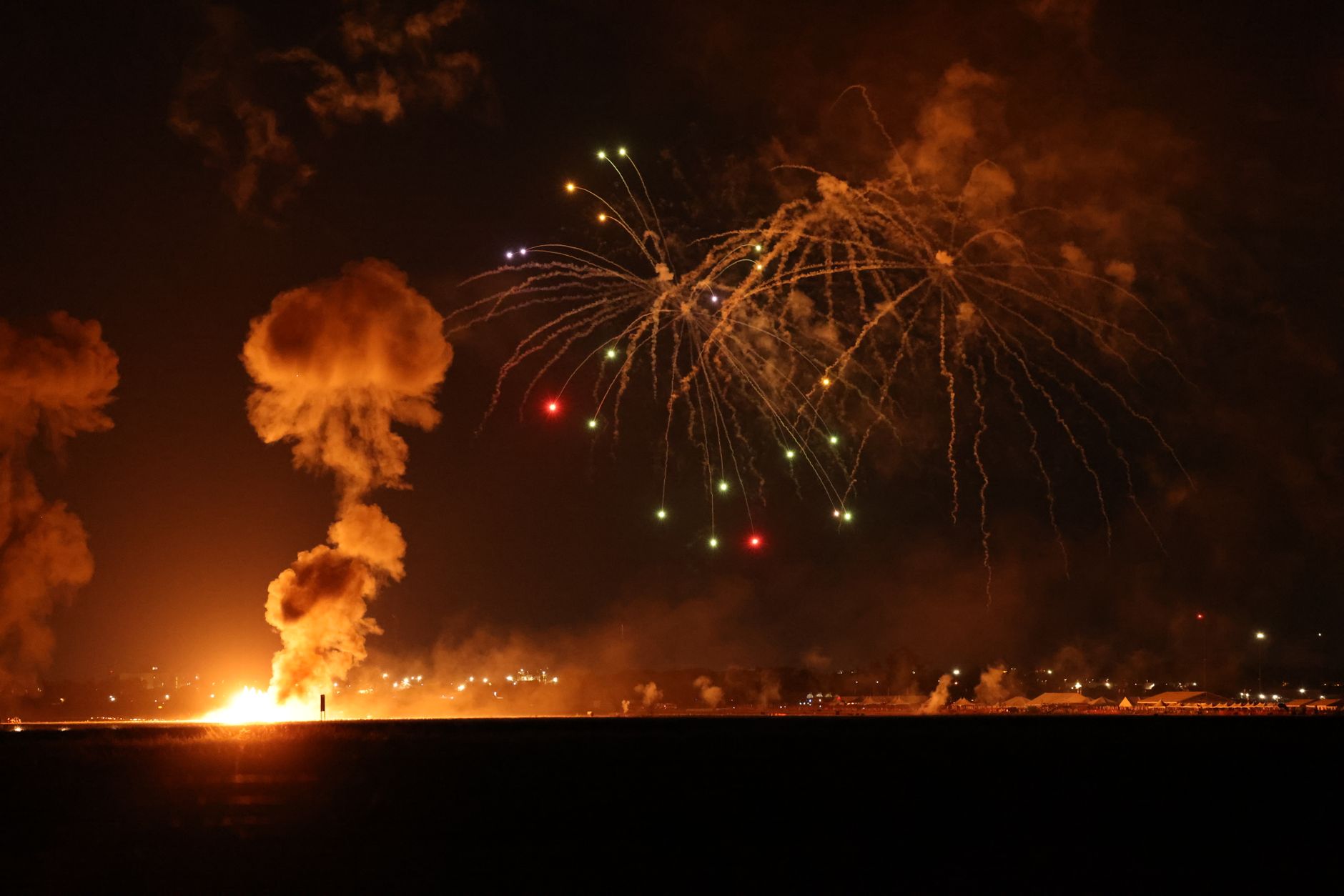
Yesterday, the U.S. military confirmed it conducted precision strikes against several key targets within Iran. These operations were described as defensive measures in response to escalating aggression in the region. The Pentagon stated that the targets included infrastructure used by Iranian-backed militias responsible for recent attacks on U.S. personnel and interests. This marks a significant escalation in the ongoing regional conflict, moving beyond proxy engagements to direct military action against Iranian soil, a development that has long been feared by international observers.
The strikes followed a day of intense hostilities, which saw multiple drone and missile attacks attributed to Iranian-aligned groups. These attacks specifically targeted U.S. bases and allied facilities in neighboring countries, prompting immediate condemnation from Washington. The U.S. administration had previously warned of severe consequences for any actions threatening American forces, and these latest strikes appear to be a direct fulfillment of that pledge, signaling a firmer stance against regional provocations. The situation remains highly volatile, with both sides indicating a readiness for further engagement if necessary.
Sources close to diplomatic efforts indicate that the fragile ceasefire, which had been painstakingly negotiated, is now on the brink of collapse. The agreement, intended to de-escalate tensions and pave the way for broader peace talks, has been severely undermined by this two-day volley of attacks and counter-attacks. Analysts suggest that restoring any semblance of stability will require immediate and robust diplomatic intervention, as the current trajectory points towards a wider, more destructive conflict that could engulf the entire Middle East. The international community is bracing for potential fallout, urging all parties to exercise maximum restraint.
Who Knew and When
Intelligence agencies had been tracking increased activity from Iranian-backed groups for weeks leading up to the recent escalation. Reports indicated a significant build-up of drone capabilities and missile stockpiles, suggesting a coordinated plan for potential strikes against U.S. and allied interests. These intelligence assessments were shared with key U.S. allies, raising alarms about the deteriorating security situation in the Gulf region. The warnings, while specific about potential threats, did not pinpoint the exact timing or scale of the attacks that ultimately transpired, leaving room for surprise regarding the intensity of the recent hostilities. Diplomatic channels were reportedly active, attempting to de-escalate, but the momentum towards conflict proved too strong.
Senior U.S. defense officials were reportedly briefed on the impending retaliatory strikes hours before they were executed. The decision-making process involved extensive consultations with military commanders and national security advisors, weighing the risks of escalation against the imperative to protect American personnel and deter future attacks. The White House confirmed that President Biden was kept informed throughout the process and authorized the strikes, emphasizing the defensive nature of the operation. This level of coordination underscores the gravity of the situation and the careful, albeit rapid, consideration given to military responses in a highly sensitive geopolitical landscape. The speed of response indicates a pre-planned contingency for such scenarios.
The international community, particularly the United Nations and European Union, was notified shortly after the U.S. strikes commenced. These notifications were primarily aimed at managing diplomatic fallout and preventing miscalculation by other regional powers. While expressing concern, many international bodies acknowledged the complex security environment, urging all parties to exercise restraint and return to the negotiating table. However, the immediate reaction from some nations, particularly those with strong ties to Iran, was one of condemnation, accusing the U.S. of further destabilizing an already volatile region. This divergence in international response highlights the deep divisions and differing perspectives on the root causes and appropriate reactions to the ongoing conflict, making a unified diplomatic front challenging.
Voices from the Ground
Residents in border towns near the strike zones reported widespread panic and fear following the explosions. Many described the sound of incoming missiles and subsequent blasts as terrifying, forcing families to seek shelter in basements or flee their homes. One local shopkeeper, Fatima Al-Hassan, recounted, 'We just want peace. Every time we think things are getting better, another round of violence erupts. Our children are growing up in constant fear, and the economy is shattered. How can we rebuild our lives when we are always looking over our shoulders?' Her words echo the sentiments of countless civilians caught in the crossfire, whose daily existence is dominated by uncertainty and the looming threat of conflict. The psychological toll on these communities is immense and often overlooked in geopolitical analyses.
Humanitarian organizations operating in the region have issued urgent appeals for increased aid and protection for civilians. They report a surge in displaced persons and a critical need for medical supplies, food, and shelter. Dr. Ahmed Khan, a field coordinator for Doctors Without Borders, stated, 'Our clinics are overwhelmed. We are seeing injuries not just from direct conflict, but also from people panicking, trying to escape. The infrastructure is crumbling, and access to basic necessities is becoming increasingly difficult. The international community must prioritize humanitarian corridors and ensure the safety of aid workers.' This dire situation underscores the catastrophic human cost of military escalation, where innocent lives are invariably the first and most severely impacted. The fragility of existing support networks is now glaringly apparent.
Political analysts within the region express a mix of resignation and anger. Many feel that external powers are using their countries as battlegrounds, with little regard for the long-term stability or sovereignty of the affected nations. Dr. Layla Mansour, a political science professor at a regional university, commented, 'This isn't about our people's aspirations; it's about a proxy war that has now gone direct. The ceasefire was always tenuous, a band-aid over a gaping wound. Until the underlying issues of regional hegemony and foreign interference are addressed, these cycles of violence will continue indefinitely.' Her perspective highlights a deep-seated frustration with the geopolitical dynamics that perpetuate conflict, suggesting that true peace requires a fundamental shift in approach rather than temporary ceasefires. The voices from the ground consistently demand genuine, lasting solutions.
The Debate
The U.S. strikes have ignited a fierce debate among international relations experts regarding their legality and effectiveness. Proponents argue that the actions were a necessary deterrent, demonstrating Washington's resolve to protect its assets and personnel. They contend that failing to respond would embolden aggressors and invite further attacks, thereby undermining regional stability in the long run. 'A strong response is the only language some actors understand,' remarked a former Pentagon official, emphasizing the importance of projecting power to maintain a credible deterrent posture. This viewpoint often prioritizes immediate security concerns and the principle of self-defense in a volatile environment, suggesting that inaction carries greater risks than calibrated military engagement. The debate often centers on the 'cost of doing nothing' versus the 'cost of intervention'.
Critics, however, warn that the strikes risk a dangerous escalation, potentially dragging the region into a full-blown war. They argue that military action, even if framed as defensive, often leads to cycles of retaliation, making a peaceful resolution increasingly difficult. Concerns are also raised about the potential for civilian casualties and the erosion of international law if such strikes are conducted without broader international consensus or UN Security Council approval. 'This is a perilous path,' warned a prominent human rights advocate, 'every strike fuels another, and the primary victims are always the innocent.' This perspective emphasizes the humanitarian consequences and the long-term destabilizing effects of military interventions, advocating for diplomatic solutions and de-escalation as primary tools. The debate also touches upon the legal frameworks governing such cross-border military actions.
The efficacy of the ceasefire itself is also under scrutiny. Some argue that the initial ceasefire was too weak, lacking robust enforcement mechanisms and failing to address the fundamental grievances of all parties involved. Others maintain that while imperfect, it represented the best chance for dialogue and that its collapse is a tragic setback. The question now is whether diplomacy can be salvaged, or if the region is destined for prolonged conflict. The international community remains divided, with some nations calling for immediate de-escalation and others tacitly supporting the U.S. actions as a necessary evil. The path forward is fraught with challenges, and the outcome will depend heavily on the willingness of key players to prioritize long-term stability over short-term gains, a difficult balance to strike in such a complex geopolitical landscape. The future of regional security hangs precariously in the balance.
Your Questions Answered
What Accountability Looks Like
Establishing clear accountability in a rapidly escalating conflict like this is incredibly complex, involving multiple state and non-state actors. For the U.S., accountability for its strikes will be measured by their stated objectives: deterring future attacks and degrading the capabilities of hostile militias. However, critics will also scrutinize the proportionality of the response and its adherence to international law, particularly concerning civilian protection. The U.S. administration will face pressure to justify its actions to both its domestic audience and the international community, providing evidence of the threats posed and the necessity of military intervention. Transparency regarding targets and collateral damage will be key to maintaining any semblance of credibility, especially as the narrative war intensifies alongside the physical conflict.
On the Iranian side, accountability extends to the actions of its state apparatus and the various proxy groups it supports. The international community will be pressing Tehran to cease its alleged support for militias conducting destabilizing attacks and to engage constructively in de-escalation efforts. The challenge lies in the opaque nature of these relationships and the difficulty in attributing specific actions directly to the Iranian government. However, the consistent pattern of attacks linked to Iranian-backed entities places a significant burden of responsibility on Tehran to rein in these groups if it genuinely seeks regional stability. Without concrete steps to curb proxy aggression, Iran will continue to be held accountable for the broader instability its network fosters.
Ultimately, true accountability will require a commitment from all parties to uphold international law, protect civilians, and pursue diplomatic solutions over military confrontation. This includes robust investigations into any alleged war crimes or violations of human rights, ensuring that those responsible are held to account regardless of their affiliation. International bodies and independent observers will play a crucial role in documenting events and advocating for justice. Without a clear pathway to accountability, the cycle of violence is likely to persist, eroding trust and making any future peace efforts increasingly difficult. The long-term stability of the region hinges on a collective willingness to prioritize justice and adherence to established norms, even amidst intense geopolitical rivalry.











Comments
No comments yet. Be the first to comment!