

What We Know
- Researchers have successfully bioprinted human kidney and liver tissue in microgravity, marking a monumental first in the field of space medicine and regenerative biology.
- The experiment utilized the International Space Station (ISS) as its unique laboratory, leveraging the microgravity environment to achieve results not possible under Earth's gravitational pull.
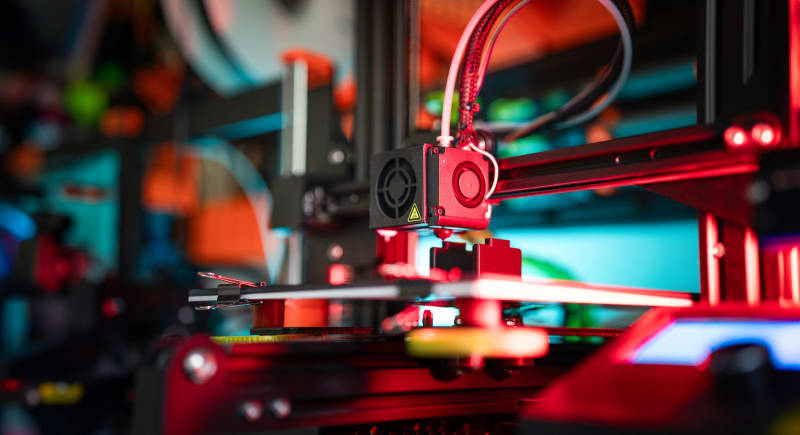
- This breakthrough involved the use of a specialized 3D bioprinter designed to function effectively in the challenging conditions of space, demonstrating robust engineering and scientific innovation.
- The bioprinted tissues, while not fully functional organs, represent significant steps towards creating viable, complex biological structures for therapeutic applications.
- This achievement has profound implications for the future of long-duration space missions, where the ability to generate replacement tissues or organs could be life-saving for astronauts.
- The success also opens new avenues for research into how microgravity influences tissue development and cellular behavior, potentially leading to novel insights for Earth-based medical treatments.
- The project was a collaborative effort, combining expertise from various scientific and engineering disciplines, highlighting the interdisciplinary nature of cutting-edge space research.
What We Do Not Know Yet
- The precise long-term viability and functionality of these bioprinted tissues in a sustained microgravity environment, and how they compare to tissues developed on Earth, remain to be fully evaluated.
- The specific challenges and optimal parameters for scaling up this bioprinting process to create larger, more complex organ structures suitable for transplantation are still under investigation.
- Whether the microgravity environment offers unique advantages for tissue maturation or cellular differentiation that cannot be replicated on Earth is an area requiring further in-depth study.
- The regulatory pathways and ethical considerations for utilizing bioprinted tissues or organs in space, particularly for human implantation, are yet to be fully defined and established.
- The economic feasibility and logistical complexities of routinely bioprinting organs in space for either space-based or Earth-based applications need comprehensive analysis.
- The full extent of genetic or epigenetic changes, if any, induced in the cells during the bioprinting process in microgravity, and their implications for tissue health, are not yet understood.
- How these bioprinted tissues will respond to different radiation levels encountered in deep space missions, beyond the ISS's protective orbit, is a critical unknown for future exploration.
Background
The dream of bioprinting functional human organs has long captivated scientists, representing a potential panacea for the critical shortage of donor organs and a revolution in personalized medicine. On Earth, however, the process faces significant hurdles, primarily due to gravity. Gravity causes delicate cellular structures to collapse or deform during the printing process, making it incredibly difficult to create the intricate vascular networks essential for nutrient delivery and waste removal in complex tissues. This gravitational interference often results in tissues that lack the necessary structural integrity and biological functionality for therapeutic applications, limiting progress to simpler tissue constructs.
Recognizing these terrestrial limitations, researchers began to explore the unique environment of microgravity. The International Space Station (ISS) offers a persistent, low-gravity setting where the forces that hinder Earth-based bioprinting are significantly diminished. In microgravity, cells and biomaterials can aggregate and fuse more uniformly, potentially allowing for the construction of more robust and architecturally precise tissue scaffolds. This environment mitigates the issues of sagging and distortion, offering a novel paradigm for assembling biological structures layer by layer, free from the constraints of gravitational pull. The concept of leveraging space for advanced manufacturing, particularly in biotech, has gained considerable traction in recent years.
This latest experiment builds upon years of incremental advancements in both 3D bioprinting technology and space-based biological research. Previous studies on the ISS have explored various aspects of cell growth and tissue culture in microgravity, laying foundational knowledge for more complex bioprinting endeavors. The development of specialized bioprinters capable of operating autonomously and reliably in space has been a critical engineering challenge, requiring robust design and precise control systems. The successful printing of kidney and liver tissues represents a culmination of these efforts, pushing the boundaries of what is medically and technologically possible beyond Earth's atmosphere.
Why It Matters
This breakthrough is not merely a scientific curiosity; it represents a monumental leap forward for long-duration human spaceflight. As humanity sets its sights on Mars and beyond, the health and safety of astronauts become paramount. The ability to bioprint replacement tissues or even organs on demand could be a game-changer, addressing medical emergencies like organ damage from radiation exposure, injury, or disease, which would be impossible to treat with current logistical constraints. Imagine a future where a damaged kidney or liver could be repaired or replaced by a bioprinted counterpart, ensuring mission continuity and astronaut survival far from Earth's medical facilities. This capability transforms the paradigm of space medicine, moving from reactive treatment to proactive, on-site regenerative solutions.
Beyond the immediate applications for space exploration, the implications for Earth-based medicine are equally profound. The insights gained from bioprinting in microgravity could unlock new techniques and understanding that revolutionize organ transplantation and regenerative medicine here on our home planet. If microgravity proves to be a superior environment for creating complex, functional tissues, it could lead to the development of commercial space-based bioprinting facilities, producing organs that are currently impossible to engineer on Earth. This could dramatically reduce organ waitlists, offer personalized organ solutions, and even provide better models for drug testing and disease research, accelerating the pace of medical innovation for millions.
Furthermore, this achievement underscores the immense value of international collaboration and investment in space research. It demonstrates how pushing the boundaries of human endeavor in space can yield unexpected and transformative benefits for all of humanity. The knowledge acquired from optimizing bioprinting processes in microgravity could inform novel approaches to tissue engineering, material science, and even fundamental biology. It challenges our assumptions about the optimal conditions for life and cellular development, potentially leading to a deeper understanding of biological processes that could improve human health and extend our reach into the cosmos. This is a testament to the power of scientific inquiry unconstrained by terrestrial limitations.
Timeline of Events
- **Early 2000s:** Initial research begins on the effects of microgravity on cell growth and tissue culture, with early experiments conducted on parabolic flights and the International Space Station (ISS) to understand cellular responses to altered gravity environments.
- **Mid-2010s:** Development of rudimentary 3D bioprinting technologies on Earth starts to show promise, but challenges related to gravitational forces causing tissue collapse and lack of vascularization become apparent, limiting the complexity of printed structures.
- **Late 2010s:** Concepts for space-based bioprinting emerge, proposing that microgravity could overcome the structural integrity issues faced on Earth. Initial proposals and funding secured for developing specialized bioprinters capable of operating in space.
- **2018-2020:** First generation of space-compatible bioprinters undergoes rigorous testing and development. Early experiments on the ISS focus on printing simpler structures and validating the bioprinter's functionality and material compatibility in microgravity.
- **2021:** A specialized 3D bioprinter, designed for complex tissue fabrication in microgravity, is launched to the International Space Station, equipped with bio-inks containing human kidney and liver cells.
- **2022:** Astronauts on the ISS initiate the bioprinting experiment, carefully loading bio-inks and executing the pre-programmed printing sequences for kidney and liver tissue constructs under remote supervision from Earth.
- **Early 2023:** The bioprinted tissue samples are successfully returned to Earth for comprehensive analysis, confirming the structural integrity and cellular viability of the microgravity-fabricated tissues.
- **Mid-2023:** Researchers announce the groundbreaking success of bioprinting human kidney and liver tissue in microgravity for the first time, validating the hypothesis that space offers unique advantages for complex tissue engineering.

Rapid-Fire Q&A
What Is Coming
- Further detailed analysis of the returned bioprinted tissues will be conducted on Earth to assess their long-term viability, cellular differentiation, and structural integrity at a microscopic level, providing crucial data for future iterations.
- Researchers will begin optimizing bioprinting parameters, experimenting with different bio-ink formulations, cell types, and printing techniques to enhance the complexity and functionality of the tissues created in microgravity.
- Future experiments on the International Space Station are planned to focus on achieving vascularization within the bioprinted tissues, a critical step for creating larger, more viable organ constructs that can receive nutrients and remove waste.
- Efforts will be made to scale up the bioprinting process, moving from small tissue samples to larger, more complex structures that more closely resemble full organs, addressing the challenges of size and intricate architecture.
- Investigations into the unique advantages of microgravity for tissue maturation and cellular behavior will intensify, potentially leading to the discovery of novel biological processes that could be leveraged for medical advancements.
- Discussions and collaborations will expand to address the ethical, regulatory, and logistical frameworks required for the eventual use of space-bioprinted organs, both for space missions and potential terrestrial applications.
- The development of next-generation space bioprinters, capable of greater autonomy, precision, and a wider range of bioprinting capabilities, will continue, pushing the technological frontier of in-space manufacturing.













Comments
No comments yet. Be the first to comment!