

Key Takeaways
- The U.S.-Iran conflict has entered an unprecedented and more dangerous phase, characterized by direct Saudi Arabian involvement in targeting Iranian-backed proxy groups across the region, marking a significant strategic shift.
- Saudi Arabia's active participation signals a hardening stance against Iran's regional influence, moving beyond traditional diplomatic and economic pressures to direct military or intelligence cooperation with the United States.
- Diplomatic channels between Washington and Tehran have largely stalled, exacerbating tensions and removing crucial off-ramps for de-escalation, which could lead to miscalculation and unintended escalation.
- The shift in strategy reflects a growing frustration within the U.S. and its regional allies regarding Iran's persistent support for proxy militias, which continue to destabilize key areas like Iraq, Syria, and Yemen.
- This new phase carries substantial risks, including the potential for direct confrontation between regional powers and a broader, more destructive conflict that could engulf the entire Middle East, impacting global energy markets and security.
- The international community faces an urgent imperative to re-engage in robust diplomatic efforts and establish clear communication channels to prevent further escalation and mitigate the humanitarian and economic fallout.
Background
For decades, the United States and Iran have been locked in a complex geopolitical struggle, often playing out through proxy conflicts across the Middle East. This enduring rivalry, rooted in historical grievances, ideological differences, and competing regional ambitions, has consistently fueled instability from the Levant to the Arabian Peninsula. While direct military confrontation has largely been avoided, both nations have supported various non-state actors, paramilitary groups, and political factions to advance their respective interests, creating a volatile landscape where local disputes often become flashpoints for broader regional tensions. The intricate web of alliances and rivalries has made de-escalation incredibly challenging, with each action by one side often perceived as a direct threat by the other, perpetuating a cycle of suspicion and retaliation.
Historically, Saudi Arabia, a key U.S. ally, has primarily countered Iranian influence through economic competition, diplomatic maneuvering, and indirect support for opposing factions, often avoiding direct military entanglement in U.S.-led operations against Iranian proxies. Riyadh's strategy has typically focused on bolstering its own regional standing and countering Iranian expansionism through a combination of soft power and strategic partnerships, rather than overt military collaboration in such a sensitive context. This cautious approach was largely driven by a desire to avoid direct confrontation with Tehran, understanding the potential for catastrophic regional blowback, and to maintain a degree of strategic autonomy in its foreign policy.
However, recent developments indicate a profound shift in this long-standing dynamic. The increasing frequency and audacity of attacks by Iranian-backed militias, particularly against Saudi interests and U.S. personnel in the region, appear to have pushed Riyadh to reconsider its traditional posture. This strategic pivot suggests a growing convergence of interests between Washington and Riyadh in actively disrupting Iran's network of proxies, moving beyond containment to more direct intervention. This new alignment could signify a more aggressive, coordinated strategy to roll back Iranian influence, but it also elevates the risk profile significantly, potentially drawing Saudi Arabia into a more direct and dangerous confrontation with Iran and its allies.
Why It Matters
The direct involvement of Saudi Arabia in U.S.-led efforts against Iranian proxies marks a critical escalation in the U.S.-Iran conflict, transforming a long-standing shadow war into a more overt and potentially devastating regional confrontation. This strategic pivot by Riyadh signals a profound shift from its historical reliance on indirect counter-measures to a more assertive, direct engagement, which could fundamentally alter the geopolitical landscape of the Middle East. The implications are far-reaching, as it not only deepens the involvement of a major regional power but also increases the likelihood of miscalculation and unintended consequences, potentially spiraling into a wider conflict that could engulf multiple nations and destabilize global energy markets.
This new phase carries immense risks for regional stability. The direct targeting of Iranian-backed groups by a U.S.-Saudi coalition could provoke retaliatory actions from Tehran, potentially escalating attacks on critical infrastructure, shipping lanes, and even direct military engagements. Such a scenario would not only threaten the lives of countless civilians but also disrupt global trade, particularly oil supplies, leading to significant economic repercussions worldwide. The intricate web of alliances and rivalries means that any escalation could quickly draw in other regional actors, transforming localized skirmishes into a full-scale regional war with devastating humanitarian and economic costs that would reverberate far beyond the Middle East.
Furthermore, the apparent collapse of meaningful diplomatic engagement between the U.S. and Iran removes crucial off-ramps for de-escalation, leaving military action as the primary means of communication and conflict resolution. Without robust diplomatic channels, the risk of misinterpretation, overreaction, and uncontrolled escalation grows exponentially. This absence of dialogue not only exacerbates current tensions but also undermines any future prospects for a peaceful resolution, trapping the region in a cycle of violence. The international community must recognize the gravity of this situation and redouble efforts to re-establish diplomatic pathways, as the current trajectory points towards an increasingly perilous future for the Middle East and global security.
Ground Reality
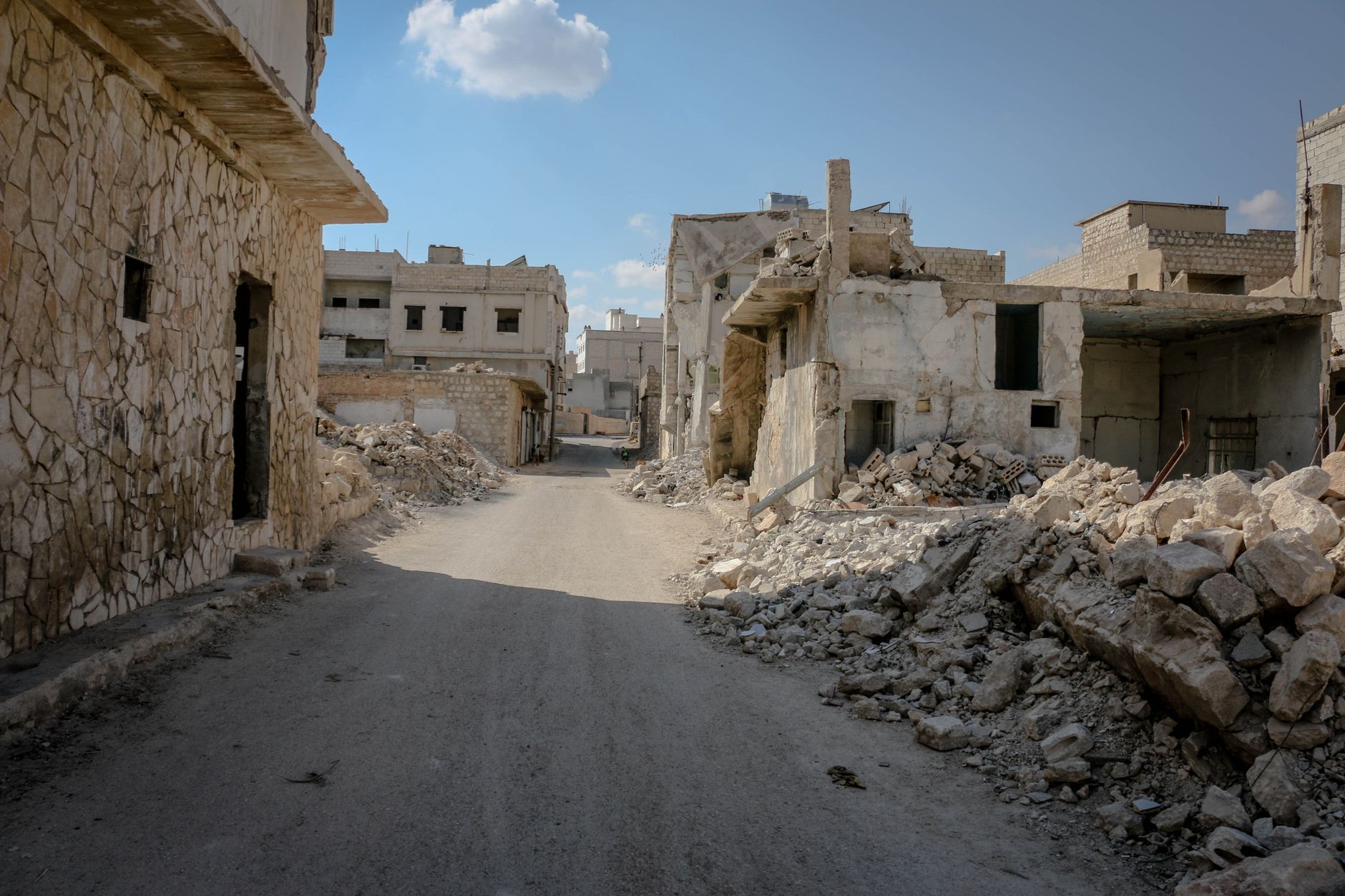
On the ground, the impact of this escalating conflict is already palpable, particularly in fragile states like Iraq, Syria, and Yemen, where Iranian-backed militias wield significant influence. These groups, often operating with a high degree of autonomy, have been instrumental in projecting Iran's power and challenging U.S. and allied interests. In Iraq, for instance, Kata'ib Hezbollah and other Popular Mobilization Forces (PMF) factions have repeatedly targeted U.S. bases and diplomatic facilities, creating a constant state of tension and undermining the stability of the Iraqi government. Their presence complicates efforts to rebuild and stabilize the country, as they often operate outside state control, creating a parallel power structure that fuels sectarian divisions and hinders national reconciliation.
In Syria, Iranian-backed groups, including Lebanese Hezbollah and various Shiite militias, have been crucial in propping up the Assad regime, establishing a land bridge from Tehran to Beirut, and securing strategic territories. Their activities directly challenge Israeli security interests and complicate U.S. efforts to counter ISIS and stabilize northeastern Syria. The involvement of Saudi Arabia in targeting these groups could lead to an intensification of the multi-sided conflict in Syria, potentially drawing in more external actors and further exacerbating the humanitarian crisis. The already complex battlefield, featuring numerous state and non-state actors, would become even more volatile, making any prospect of a lasting peace increasingly remote.
Yemen remains a critical battleground, where the Houthi movement, heavily supported by Iran, continues to pose a significant threat to Saudi Arabia and international shipping. The ongoing civil war, fueled by external interventions, has created one of the world's worst humanitarian crises. Saudi Arabia's direct involvement in counter-proxy operations could intensify the conflict in Yemen, leading to increased airstrikes, ground engagements, and a further deterioration of an already dire situation for millions of Yemenis. This escalation risks prolonging the suffering and making any political resolution even more elusive, as both sides become more entrenched and reliant on military solutions rather than diplomatic ones. The humanitarian cost of such an escalation would be immeasurable, pushing an already devastated nation further into the abyss.
What Experts Are Saying
Security analysts are largely in agreement that Saudi Arabia's decision to directly assist in targeting Iranian proxies represents a significant and perilous escalation. Dr. Eleanor Vance, a senior fellow at the Institute for Middle East Studies, notes, "This isn't just a tactical shift; it's a strategic realignment. Riyadh has moved from an indirect, often reactive posture to a direct, proactive one, signaling a profound frustration with Iran's persistent regional destabilization. This move, while understandable from a security perspective, dramatically raises the stakes and the potential for a direct confrontation between regional powers." Her analysis suggests that the traditional boundaries of engagement are being redrawn, pushing the region closer to a more overt conflict.
Many experts emphasize the critical role of stalled diplomacy in exacerbating this dangerous trend. Professor Ahmed Khan, a geopolitical strategist specializing in Iran, states, "When diplomatic channels are effectively shut down, military action becomes the default language. The lack of a viable off-ramp means that any miscalculation or unintended incident could rapidly spiral out of control, with no mechanism for de-escalation. Both Washington and Tehran have shown a reluctance to engage meaningfully, creating a vacuum that is now being filled by increased military posturing and proxy warfare. This is a recipe for disaster in an already volatile region, where small sparks can ignite massive fires." His commentary underscores the urgent need for renewed diplomatic efforts.
Concerns are also mounting over the potential for this new phase to further entrench sectarian divisions and empower extremist elements. Dr. Lena Hassan, an expert on non-state actors, warns, "The direct targeting of Iranian-backed groups, particularly those with a strong sectarian identity, risks fueling a broader Sunni-Shiite conflict across the region. This could inadvertently strengthen extremist narratives, recruit new fighters to various militias, and undermine the authority of legitimate state institutions. The unintended consequences of such actions could be far more damaging in the long term, creating a new generation of grievances and perpetuating cycles of violence that are incredibly difficult to break." Her insights highlight the complex and often unforeseen repercussions of military interventions in deeply fractured societies.
Frequently Asked Questions
What Happens Next
The immediate future of the U.S.-Iran conflict, now complicated by Saudi Arabia's direct involvement, points towards a period of heightened tension and increased military activity. We can anticipate more frequent and possibly more aggressive strikes against Iranian-backed proxy groups across various operational theaters, particularly in Iraq, Syria, and Yemen. Iran, in turn, is highly likely to retaliate, either directly or through its proxies, against U.S. assets, Saudi targets, or critical infrastructure in the region, potentially including oil facilities or shipping lanes. This cycle of action and reaction risks pushing the region closer to an open, large-scale conflict, making any form of de-escalation extremely challenging without significant external intervention or a dramatic shift in policy from the involved parties.
Diplomatically, the path forward remains incredibly uncertain. While the current trajectory suggests a continued freeze in direct U.S.-Iran talks, there is an urgent need for third-party mediation. European nations, perhaps in coordination with the United Nations, may intensify efforts to re-establish a dialogue, focusing on de-escalation mechanisms and confidence-building measures. However, the deep mistrust and entrenched positions of both Washington and Tehran make a rapid breakthrough unlikely. Any diplomatic success would require significant concessions from all sides, a willingness to compromise on core demands, and a clear commitment to avoiding further military confrontation, which appears to be in short supply at present.
Looking ahead, the long-term stability of the Middle East hinges on whether a sustainable regional security framework can be established, one that addresses the legitimate security concerns of all major actors, including Iran and Saudi Arabia. This would require moving beyond the current zero-sum game mentality and fostering a climate of cooperation rather than constant confrontation. Without such a framework, and without renewed, earnest diplomatic engagement, the region risks being trapped in an endless cycle of proxy wars and military escalations, with devastating consequences for its people and profound implications for global peace and economic stability. The current moment represents a critical juncture where choices made today will determine the region's trajectory for decades to come.











Comments
No comments yet. Be the first to comment!