

Key Takeaways
- A conservative presidential candidate in Colombia is adopting a populist, Trump-esque strategy, aiming to fundamentally alter the nation's political trajectory by rejecting its recent leftist leanings.
- The candidate's platform centers on dismantling established social programs, strengthening law and order through potentially controversial measures, and fostering closer ties with traditional economic allies.
- This electoral contest is viewed as a critical referendum on Colombia's progressive reforms, with significant implications for peace accords, environmental policies, and international relations.
- Opponents express grave concerns that the candidate's rhetoric and proposed policies could exacerbate social divisions, undermine democratic institutions, and jeopardize hard-won peace agreements.
- The election outcome is expected to significantly influence Colombia's economic model, potentially shifting away from social welfare initiatives towards more market-driven, conservative fiscal policies.
- International observers are closely monitoring the race, recognizing that Colombia's political direction has far-reaching consequences for regional stability and global economic partnerships.
Background
Colombia stands at a pivotal moment, grappling with the legacy of decades of progressive governance that sought to address deep-seated inequalities and foster social inclusion. For years, successive administrations have championed policies aimed at expanding healthcare, improving education, and pursuing peace initiatives, particularly following the landmark 2016 peace accord with the FARC rebels. These efforts, while commendable, have also faced persistent challenges, including economic volatility, ongoing security concerns in certain regions, and a deeply polarized electorate. The political landscape has been a complex tapestry, with a strong desire for stability and economic growth often clashing with demands for greater social justice and environmental protection. This dynamic has created fertile ground for populist movements on both the left and the right, each promising radical solutions to the nation's enduring problems. The current electoral cycle is unfolding against this backdrop, with voters weighing the merits of continuing along a progressive path versus a sharp pivot towards more conservative, traditional governance.
The rise of a hardline conservative candidate, employing a rhetoric strikingly similar to that of former U.S. President Donald Trump, signals a significant shift in the political discourse. This candidate's campaign is not merely about policy differences; it's a direct challenge to the established order and the ideological direction Colombia has taken in recent years. By framing the election as a battle against a perceived 'leftist era,' the candidate taps into anxieties about economic stagnation, crime, and the perceived failures of social programs. This narrative resonates with a segment of the population yearning for a return to perceived traditional values and a more assertive stance on national security. The strategy involves mobilizing a base that feels disenfranchised by progressive policies, promising a return to strong leadership, border security, and a more nationalistic economic approach. This populist appeal, characterized by direct communication, rallies, and a focus on 'law and order,' aims to disrupt the political status quo and capture the imagination of voters seeking decisive change.
Understanding Colombia's political evolution requires acknowledging the deep historical divisions and the complex socio-economic challenges that have shaped its identity. The country has long been characterized by a stark contrast between urban centers and rural areas, between wealth and poverty, and between regions with varying degrees of state presence and security. The peace process, while a monumental achievement, has not fully eradicated violence or brought lasting stability to all communities, leaving many feeling abandoned by the state. Furthermore, economic development has often been uneven, with reliance on commodity exports making the nation vulnerable to global market fluctuations. Environmental concerns, particularly regarding deforestation and resource extraction, have also become increasingly prominent in public debate. Against this intricate backdrop, the current political moment represents a critical juncture where voters are being presented with starkly different visions for the nation's future, forcing a national conversation about identity, progress, and the very definition of Colombian society.
Why It Matters
The outcome of this election carries profound implications not only for Colombia but also for the broader Latin American region. A victory for the hardline candidate could signal a significant shift in regional political alignments, potentially weakening existing alliances and fostering new ones based on more conservative ideologies. This could impact international cooperation on issues ranging from trade and investment to environmental protection and regional security. Colombia's role as a key U.S. ally and a major player in global markets means its political direction has ripple effects far beyond its borders. A move away from progressive policies could alter investment flows, influence trade agreements, and reshape diplomatic relationships, creating a domino effect across neighboring countries grappling with similar political and economic challenges.
Domestically, the election represents a critical test for Colombia's democratic institutions and its commitment to social progress. The candidate's promise to dismantle established social programs and potentially roll back rights gained through years of activism could lead to significant social unrest and deepen existing societal divides. The peace process, a cornerstone of recent Colombian history, faces particular peril. If the new administration adopts a confrontational stance towards former combatants or undermines reconciliation efforts, it could reignite old conflicts and destabilize fragile regions. Moreover, the candidate's focus on 'law and order' may translate into policies that disproportionately affect marginalized communities, raising concerns about human rights and civil liberties. The very fabric of Colombian society, built on efforts to overcome decades of conflict, is at stake.
Economically, a shift towards the candidate's proposed policies could dramatically alter Colombia's development model. A potential move away from social welfare spending and towards more aggressive market-oriented reforms, coupled with a focus on traditional industries, could benefit certain sectors while leaving others behind. This could exacerbate income inequality and create new economic vulnerabilities. Furthermore, the candidate's rhetoric on international trade and foreign investment might lead to a reassessment of existing agreements, potentially impacting foreign direct investment and Colombia's integration into the global economy. The long-term consequences for job creation, poverty reduction, and sustainable development hang in the balance, making this election a crucial determinant of Colombia's economic future.
Ground Reality
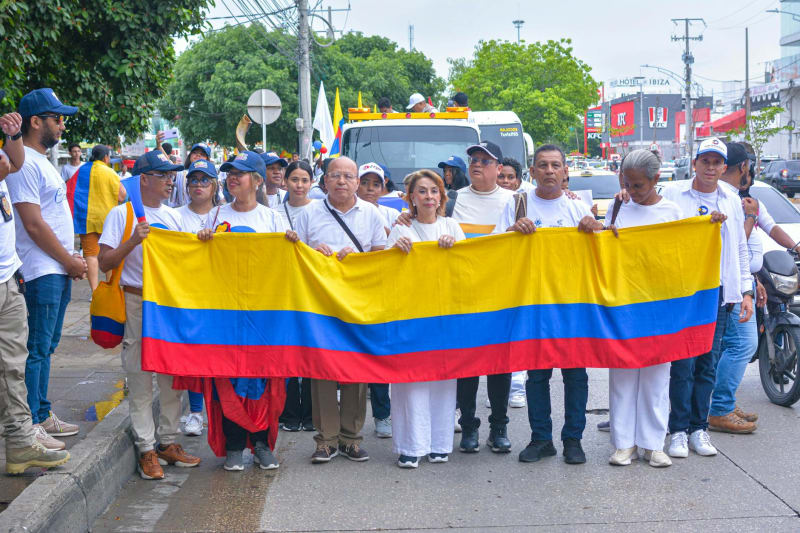
Across Colombia, the electoral fervor is palpable, with starkly contrasting visions for the nation's future clashing in public discourse and private conversations. In urban centers like Bogotá and Medellín, debates rage in cafes and public squares about economic policy, social justice, and the direction of the country. Many urban dwellers, particularly younger generations and those in professional sectors, express a desire for continued social progress and environmental sustainability, viewing the candidate's platform as a dangerous step backward. They point to advancements in renewable energy, LGBTQ+ rights, and indigenous protections as achievements that must be preserved and expanded upon. However, these progressive aspirations are met with counter-arguments from those who feel left behind by globalization and recent reforms, emphasizing concerns about rising crime rates, inflation, and perceived government inefficiency.
In rural areas and regions still recovering from decades of conflict, the situation is even more complex and often fraught with tension. Many communities that were once strongholds of leftist support now find themselves disillusioned by the slow pace of peace implementation and the persistent lack of state presence. For these populations, the hardline candidate's promises of increased security and a return to order, even if delivered with populist rhetoric, hold a powerful appeal. They are weary of violence and yearn for stability, making promises of decisive action resonate deeply. However, there is also significant apprehension among those who benefited from social programs or who fear that a rollback of progressive policies could further marginalize them, leaving them vulnerable to armed groups or economic exploitation. The legacy of the peace accords, and the hope they represent, is a fragile element in these areas, easily threatened by political shifts.
The impact of the candidate's rhetoric is also evident in the growing polarization within Colombian society. Social media platforms are awash with fervent debates, often devolving into personal attacks, reflecting the deep ideological chasm. Families and friendships are strained as political affiliations become more entrenched. The candidate's populist style, characterized by direct attacks on opponents and institutions, has emboldened supporters but also alienated significant portions of the electorate who value civility and democratic norms. This heightened division poses a challenge to national unity, regardless of the election's outcome. The ability of any future government to govern effectively will depend on its capacity to bridge these divides and foster a sense of shared purpose among a deeply fractured populace.
What Experts Are Saying
Political analysts express significant concern over the candidate's populist playbook, noting its potential to undermine democratic institutions and exploit societal divisions. Dr. Isabella Rossi, a specialist in Latin American politics at the University of Buenos Aires, warns, 'The Trump-like rhetoric, focusing on nationalism and anti-establishment sentiment, is a potent force that can erode trust in democratic processes. If successful, this candidate could usher in an era of political instability and increased polarization, making consensus-building incredibly difficult.' She highlights that such strategies often bypass nuanced policy discussions in favor of emotional appeals, which can be detrimental to long-term governance and societal cohesion. The emphasis on strongman leadership also raises red flags regarding potential authoritarian tendencies and the weakening of checks and balances essential for a healthy democracy.
Economists are divided on the potential impact of the candidate's proposed economic policies. Professor Mateo Vargas, an expert in development economics at the National University of Colombia, cautions against a drastic shift away from social spending. 'While fiscal discipline is important, dismantling programs that provide essential services to millions could have devastating consequences, particularly for vulnerable populations,' Vargas states. 'A focus on attracting foreign investment through deregulation and tax cuts might appeal to some, but it risks exacerbating inequality if not balanced with robust social safety nets and environmental protections.' Conversely, some market analysts believe that a more business-friendly approach could stimulate economic growth, arguing that current social spending is unsustainable and hindering private sector development.
International relations experts are closely watching the potential geopolitical ramifications. Dr. Anya Sharma, a senior fellow at the Council on Foreign Relations, observes, 'A hardline shift in Colombia could alter the regional balance of power. If the country moves away from its current cooperative stance on issues like migration and drug trafficking, it could create significant challenges for neighboring nations and for international efforts to address transnational crime.' She emphasizes that Colombia's role as a key partner for the United States and its influence within organizations like the Pacific Alliance mean that any significant policy change will have far-reaching diplomatic and economic consequences, potentially affecting trade flows and security cooperation across the Americas.
Frequently Asked Questions
What Happens Next
The immediate aftermath of the election will be critical in determining Colombia's path forward. Should the hardline candidate secure victory, the transition period will likely be marked by intense scrutiny from both domestic and international observers. Key policy shifts, such as changes to social programs, environmental regulations, and security strategies, could be implemented rapidly, potentially leading to significant public debate and even protests. The administration's approach to the peace process will be a central focus, with many watching closely to see if reconciliation efforts are maintained or abandoned. Furthermore, the candidate's relationship with the judiciary and other independent institutions will be tested, as will their commitment to democratic checks and balances.
If the candidate loses the election, the political landscape will remain highly polarized. The defeated candidate's movement, energized by populist fervor, is likely to remain a significant force in Colombian politics, acting as a vocal opposition. This could lead to continued political gridlock and heightened tensions between the government and a substantial segment of the electorate. The winning administration, regardless of its political leaning, will face the immense challenge of governing a deeply divided nation. Healing these divisions and finding common ground on critical issues like economic development, social inequality, and security will require skillful diplomacy and a commitment to inclusive governance, regardless of the ideological direction pursued.
Regardless of the election outcome, Colombia faces a long road toward consolidating peace and achieving sustainable development. The underlying socio-economic issues that fuel political polarization—inequality, poverty, regional disparities, and the legacy of conflict—will persist. Future governments will need to address these challenges comprehensively, fostering dialogue and seeking solutions that benefit all Colombians. The international community will likely continue to play a role, offering support for peacebuilding, economic development, and democratic strengthening, but the ultimate responsibility for charting Colombia's course rests with its own people and their elected leaders.















Comments
No comments yet. Be the first to comment!