

Key Takeaways
- SpaceX successfully launched 21 advanced data transport satellites, significantly bolstering the U.S. military's communication infrastructure and operational capabilities across the globe.
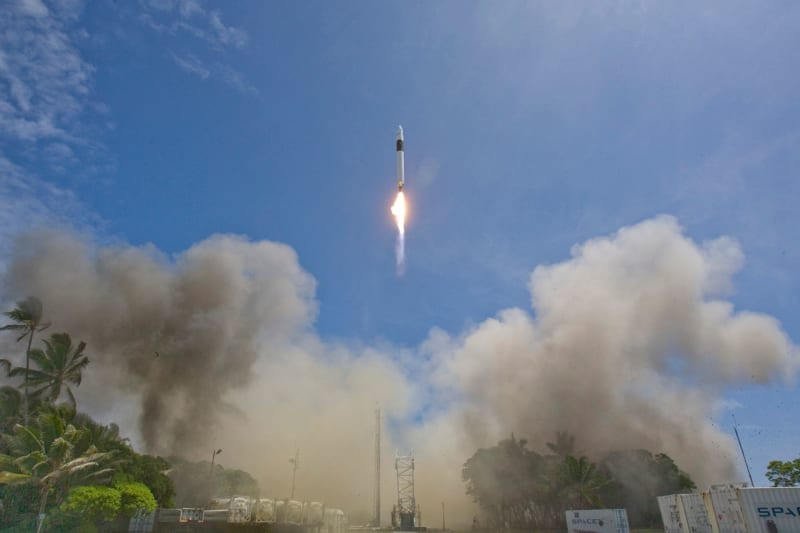
- The mission utilized a Falcon 9 rocket, marking another rapid reflight for a booster that had previously completed 10 successful missions, underscoring SpaceX's commitment to reusability and efficiency in space launches.
- These satellites are specifically designed to enhance the speed, security, and resilience of data transmission for military operations, providing a crucial upgrade to existing communication networks and ensuring robust connectivity in contested environments.
- The deployment represents a critical step in modernizing the Department of Defense's space-based assets, moving towards a more distributed and resilient architecture that can withstand potential threats and disruptions.
- This launch is part of a broader strategy to leverage commercial space capabilities for national security objectives, demonstrating a growing partnership between private industry and government agencies to achieve strategic advantages.
- The improved data transport capabilities will directly impact real-time intelligence gathering, command and control, and overall situational awareness for U.S. forces worldwide, offering a significant tactical and strategic advantage in complex operational theaters.
Background
SpaceX, under the leadership of Elon Musk, has consistently pushed the boundaries of space exploration and commercial launch services. The company's Falcon 9 rocket has become a workhorse of the space industry, renowned for its reliability and, crucially, its reusability. This particular mission, launching 21 advanced data transport satellites, further solidifies SpaceX's pivotal role in supporting critical national security infrastructure for the United States. The ability to rapidly deploy sophisticated payloads is a testament to the company's engineering prowess and operational efficiency, setting new benchmarks for the entire aerospace sector.
The U.S. military's increasing reliance on space-based assets for communication, navigation, and intelligence gathering has necessitated a significant evolution in satellite technology. Traditional large, monolithic satellites present single points of failure, making them vulnerable to adversaries. The shift towards a more distributed and resilient constellation, utilizing smaller, more numerous satellites, is a strategic imperative. These new data transport satellites are a direct response to this evolving threat landscape, designed to provide robust and secure data links even in highly contested environments, ensuring that critical information flows unimpeded to military personnel on the ground.
This launch is not an isolated event but rather a crucial component of a larger, ongoing modernization effort by the Department of Defense. The goal is to build a resilient space architecture that can withstand sophisticated attacks, maintain global connectivity, and provide an undeniable advantage in future conflicts. By partnering with commercial entities like SpaceX, the military gains access to cutting-edge technology and rapid deployment capabilities that would be difficult to achieve through traditional procurement channels alone. This collaborative approach accelerates the development and deployment of vital space assets, ensuring the U.S. maintains its technological edge in the increasingly critical domain of space.
Why It Matters
The successful deployment of these 21 data transport satellites marks a significant leap forward in enhancing the U.S. military's global communication capabilities. In an era where information superiority is paramount, these satellites will provide faster, more secure, and more resilient data links for critical military operations worldwide. This directly translates to improved real-time intelligence, more effective command and control, and ultimately, better decision-making on the battlefield. The ability to move vast amounts of data quickly and securely is a force multiplier, ensuring that U.S. forces maintain an undeniable advantage in any operational theater.
Beyond immediate operational benefits, this launch underscores a strategic shift in how the U.S. military approaches space-based infrastructure. Moving away from a few large, vulnerable satellites towards a more numerous, distributed constellation enhances resilience against potential adversaries. If one satellite is compromised, the network can continue to function, ensuring persistent communication and data flow. This architectural change is vital for maintaining deterrence and ensuring operational continuity in an increasingly contested space domain, where rival nations are actively developing anti-satellite capabilities.
Furthermore, this mission highlights the growing synergy between commercial space innovation and national security objectives. SpaceX's ability to rapidly launch and reuse rockets provides a cost-effective and efficient means for the Department of Defense to deploy critical assets. This partnership accelerates the modernization of military space capabilities, allowing the U.S. to adapt more quickly to emerging threats and technological advancements. The continued collaboration between private industry and government agencies is essential for maintaining technological superiority and ensuring the nation's security in the 21st century and beyond.
Ground Reality
The ground reality for U.S. military operations is an ever-increasing demand for secure, high-bandwidth data transmission, often in remote or hostile environments. From drone operations requiring constant data streams to ground troops needing real-time intelligence updates, the reliance on robust satellite communication is absolute. These new data transport satellites are designed to meet these exact needs, providing a dedicated, resilient backbone for military communications that can operate independently or augment existing networks. This means less latency, greater capacity, and enhanced security for sensitive information, directly impacting the effectiveness and safety of personnel on the front lines.
The strategic importance of these satellites extends to their role in enabling joint operations and interoperability among allied forces. In complex multinational exercises and real-world scenarios, seamless data sharing is crucial for coordinated responses. By providing a common, secure platform for data transport, these satellites facilitate better communication and collaboration, strengthening alliances and improving collective defense capabilities. This advanced infrastructure helps to bridge communication gaps that could otherwise hinder effective joint military action, ensuring that all parties are operating with the most current and accurate information available.
Moreover, the deployment of these satellites directly addresses vulnerabilities identified in previous military communication architectures. Adversaries are actively developing capabilities to disrupt or deny access to space-based assets, making resilient communication networks a top priority. The distributed nature of this new constellation, combined with advanced encryption and anti-jamming technologies, makes it significantly harder for hostile actors to compromise the entire system. This enhanced resilience provides a critical layer of protection, ensuring that the U.S. military can maintain its operational tempo and strategic advantage even under duress, a vital component of modern warfare.
What Experts Are Saying
Space policy analysts are emphasizing the dual impact of this launch: a technological triumph for SpaceX and a strategic imperative for U.S. national security. "This isn't just another satellite launch; it's a critical upgrade to the nervous system of our defense," stated Dr. Evelyn Reed, a senior fellow at the Center for Strategic and International Studies. "The ability to rapidly deploy and refresh these constellations using reusable rockets like the Falcon 9 gives the U.S. a significant asymmetric advantage in maintaining space superiority and ensuring resilient communications, even in a contested environment. This modular approach to space infrastructure is a game-changer for military logistics and intelligence gathering." Her analysis highlights the long-term strategic benefits of this flexible deployment model.
Defense strategists are particularly focused on the implications for command and control. General Mark Kelly (Ret.), a former head of Space Command, commented, "The future of warfare is inextricably linked to our capabilities in space. These data transport satellites provide the necessary bandwidth and security to connect our disparate forces, from special operations teams in remote areas to naval fleets at sea, with real-time intelligence and directives. This significantly reduces decision cycles, which is a critical factor in gaining and maintaining tactical superiority. We are moving towards a truly integrated battlespace, and these satellites are a cornerstone of that integration." His remarks underscore the direct operational impact on military effectiveness.
Aerospace engineers and industry observers are also noting the sheer efficiency of SpaceX's operations. Dr. Lena Chen, an independent aerospace consultant, observed, "The rapid reflight of the Falcon 9 booster, completing its eleventh mission, is a testament to the maturity and reliability of SpaceX's reusable launch technology. This efficiency translates directly into lower costs and increased launch cadence, allowing the Department of Defense to deploy critical assets more frequently and adapt to evolving threats with unprecedented speed. This commercial partnership is not just about cost savings; it's about agility and responsiveness in a rapidly changing geopolitical landscape." Her insights highlight the economic and operational advantages of leveraging commercial space capabilities for national defense.

Frequently Asked Questions
What Happens Next
Following the successful deployment, these 21 data transport satellites will undergo a rigorous period of in-orbit testing and calibration. This crucial phase ensures that all systems are functioning optimally, and the satellites can seamlessly integrate with the existing military communication networks. Engineers and operators will meticulously verify data links, security protocols, and overall performance, ensuring that the constellation meets the stringent requirements for military operations. This integration process is complex, involving coordination across various defense agencies and ground control stations, ultimately leading to their full operational capability.
Looking ahead, this launch is just one piece of a larger, ongoing strategy to modernize and expand the U.S. military's space-based assets. Expect to see further deployments of similar or even more advanced satellites in the coming months and years, as the Department of Defense continues to build out a resilient, distributed space architecture. This iterative approach allows for continuous technological upgrades and adaptation to evolving threats, ensuring that the U.S. maintains its strategic advantage in space. The goal is to create a network that is not only powerful but also highly adaptable and resistant to disruption from adversaries.
The success of this mission will undoubtedly influence future procurement decisions and partnerships between the U.S. government and commercial space companies. The efficiency and reliability demonstrated by SpaceX in these critical launches reinforce the value of leveraging private sector innovation for national security. This trend is likely to continue, fostering further collaboration on advanced satellite technologies, launch services, and even in-orbit servicing capabilities. The symbiotic relationship between government needs and commercial capabilities will drive the next generation of space infrastructure development, pushing the boundaries of what is possible in orbital defense and communication.


















Comments
No comments yet. Be the first to comment!