

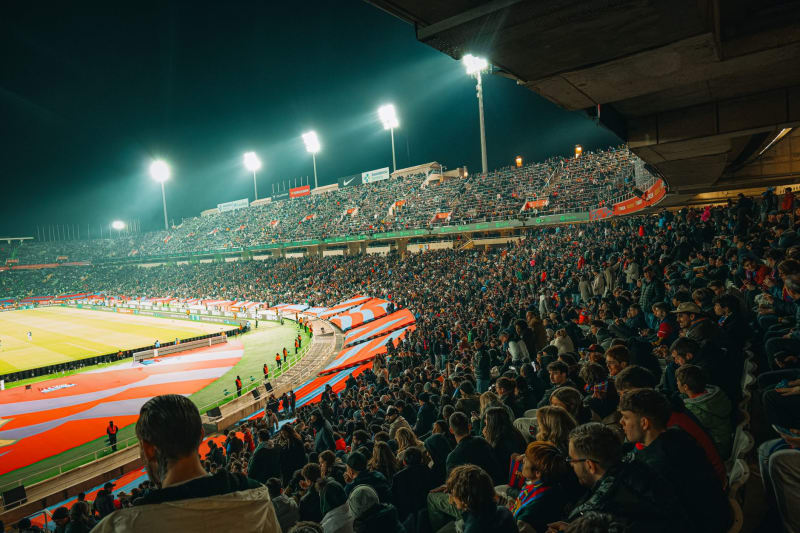
The Story in Brief
- FIFA is actively proposing a radical shift to a biennial World Cup, moving away from its traditional quadrennial cycle, a change that promises to fundamentally alter the global football calendar and generate significant new revenue streams for the organization.
- The proposal also includes an expanded Club World Cup, designed to feature 24 teams, which would further intensify the international football schedule and elevate the stakes for club competitions on a global scale.
- These ambitious plans are spearheaded by FIFA President Gianni Infantino and Arsène Wenger, FIFA's Chief of Global Football Development, who argue that these changes are essential for modernizing the sport and increasing its accessibility worldwide.
- The financial implications are staggering, with FIFA projecting an additional $4.4 billion in revenue over four years, a substantial portion of which is earmarked for distribution among member associations, potentially swaying votes in favor of the proposals.
- Strong opposition has emerged from UEFA and CONMEBOL, Europe's and South America's governing bodies respectively, citing concerns over player welfare, the dilution of the World Cup's prestige, and potential clashes with established domestic and continental competitions.
- The debate extends beyond financial gains, touching upon the very essence of football's traditions, the sustainability of player performance, and the delicate balance between international tournaments and club football's demanding schedule, creating a critical juncture for the sport's future.
The Human Face
At the heart of FIFA's ambitious proposals lies the human element: the players. For elite footballers, the current schedule is already a grueling marathon of domestic league matches, continental club competitions, and international fixtures. Introducing a biennial World Cup, alongside an expanded Club World Cup, would push their physical and mental limits to unprecedented levels. Imagine a top player, representing both a leading club and a national team, facing continuous high-stakes tournaments with minimal off-season recovery. This relentless demand raises serious questions about career longevity, injury rates, and the overall well-being of the athletes who are the lifeblood of the sport. Their voices, often sidelined in these high-level discussions, are paramount, as they are the ones who bear the direct physical and emotional toll of an increasingly congested calendar.
Beyond the superstars, the impact on players from smaller nations and less affluent leagues also warrants significant attention. While the promise of increased revenue distribution from FIFA might seem beneficial, the reality could be a double-edged sword. More international tournaments could mean more opportunities for exposure, but also greater pressure to perform without adequate support systems, training facilities, or medical care that top-tier clubs provide. The dream of playing in a World Cup could become a more frequent reality, yet the pathway to get there might become even more arduous and injury-prone for those without the resources of the global footballing elite. This creates a potential divide, where the rich get richer in terms of player care and preparation, while others are left to cope with an intensified schedule.
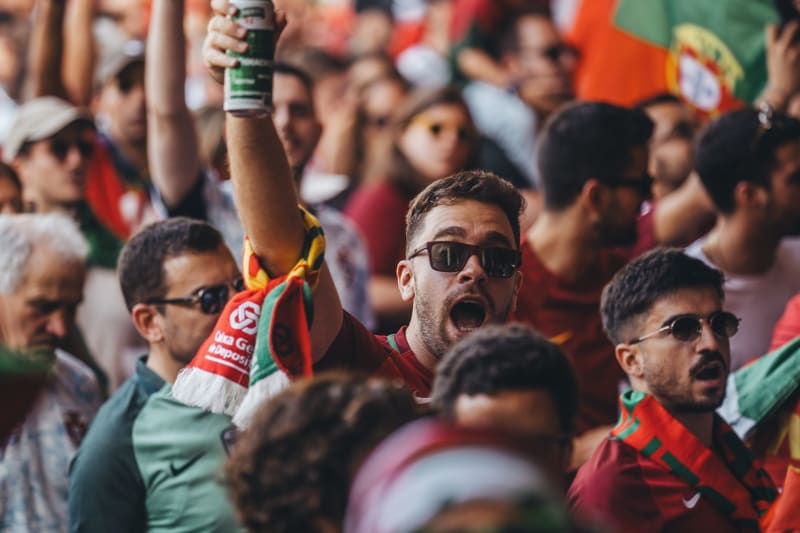
Furthermore, the proposals have a profound human impact on the fans and the cultural fabric of football. For many, the World Cup's quadrennial rhythm is sacred, a cherished tradition that builds anticipation and makes each tournament feel unique and momentous. Shortening this cycle risks diluting its special status, transforming it from a rare spectacle into a more common occurrence, potentially diminishing its emotional resonance. The World Cup is more than just a series of matches; it's a global celebration, a shared experience that unites nations. Altering its frequency could fundamentally change how fans engage with and value this iconic event, potentially eroding the very traditions that make football so deeply ingrained in cultures worldwide. The human connection to the sport, built on decades of tradition, stands at a critical juncture.
How We Got Here
The journey to FIFA's current radical proposals for a biennial World Cup and an expanded Club World Cup is rooted in a complex interplay of financial ambition, political maneuvering, and a desire to consolidate power within global football. For decades, the World Cup has been the crown jewel of international football, its quadrennial cycle a deeply ingrained tradition that built immense anticipation and prestige. However, the commercial success of the tournament, coupled with the ever-increasing demands for revenue generation in modern sports, has consistently put pressure on FIFA to explore new avenues for growth. This pressure intensified under the leadership of current FIFA President Gianni Infantino, who has consistently sought to maximize the commercial potential of FIFA's assets and expand its global influence.
A significant catalyst for these specific proposals was the appointment of Arsène Wenger as FIFA's Chief of Global Football Development. Wenger, a highly respected figure in football, was tasked with reviewing the international match calendar. His involvement lent a veneer of footballing credibility to what many critics perceive as primarily a commercial venture. Wenger's arguments often center on the idea of providing more meaningful competitive opportunities for national teams and reducing the number of 'meaningless' friendly matches. This narrative, while appealing on the surface, also conveniently aligns with FIFA's financial objectives, presenting the biennial World Cup as a logical evolution rather than a drastic departure from established norms.
The groundwork for these changes also includes FIFA's ongoing efforts to redistribute wealth more broadly across its 211 member associations. By promising substantial increases in funding to national federations, particularly those outside of Europe and South America, FIFA aims to garner the necessary votes to pass these controversial reforms. This strategy leverages the financial needs of smaller federations, creating a powerful incentive for them to support FIFA's vision, even if it means challenging the established order championed by powerful confederations like UEFA and CONMEBOL. The current debate is therefore not just about football's calendar, but a profound power struggle over the future direction and control of the world's most popular sport, with financial leverage playing a decisive role in shaping the narrative and potential outcomes.
Why This Cannot Be Ignored
The proposed changes to the World Cup and Club World Cup are not merely administrative adjustments; they represent a fundamental re-engineering of global football's architecture, with far-reaching consequences that demand immediate and serious attention. Ignoring these proposals would be to overlook a potential seismic shift in the sport's competitive balance, financial distribution, and cultural significance. The traditional quadrennial cycle of the World Cup is deeply embedded in the sport's history and fan culture, creating a unique sense of anticipation and prestige. Disrupting this rhythm risks diluting its allure, transforming a rare, monumental event into a more frequent, potentially less impactful occurrence. This isn't just about scheduling; it's about preserving the very essence and magic that makes the World Cup the pinnacle of international football.
Beyond the World Cup's prestige, the implications for player welfare are critical and cannot be overstated. Elite footballers already operate under immense physical and mental strain, navigating demanding domestic leagues, continental club competitions, and existing international fixtures. Adding more high-stakes tournaments to an already congested calendar would push athletes to their breaking point, inevitably leading to increased injury rates, burnout, and a shortened career span for many. This isn't just a concern for the players themselves, but for the quality of the game globally. Exhausted players cannot perform at their peak, diminishing the spectacle for fans and potentially impacting the competitive integrity of both club and international football. The long-term health of the players, who are the sport's most valuable asset, must be prioritized over short-term financial gains.
Furthermore, these proposals have the potential to ignite a major power struggle within football, pitting FIFA against powerful confederations like UEFA and CONMEBOL, as well as national leagues and player associations. The financial incentives offered by FIFA are substantial, but they come at the cost of disrupting established calendars, revenue streams, and the autonomy of other footballing bodies. This could lead to a fragmented international calendar, legal battles, and a significant erosion of trust among football's stakeholders. The future of football's governance, its financial ecosystem, and its ability to maintain a cohesive global structure are all at stake. The decisions made now will shape the sport for decades to come, making it imperative for all stakeholders to engage critically and understand the profound, irreversible changes these proposals could unleash.
Possible Paths Forward
One potential path forward involves a comprehensive, independent review of the entire international match calendar, moving beyond FIFA's current proposals to consider all stakeholders' perspectives. Instead of a top-down mandate, a collaborative approach could bring together representatives from FIFA, confederations (UEFA, CONMEBOL, etc.), domestic leagues, player unions (FIFPRO), and even fan organizations. Such a review would need to rigorously assess the impact of any changes on player welfare, competitive balance, fan engagement, and the financial health of all levels of the game. This path prioritizes consensus-building and long-term sustainability over immediate revenue maximization, aiming to create a calendar that is fair, manageable, and beneficial for the entire football ecosystem, rather than just one segment.
Another direction could see FIFA proceed with its proposals, but with significant concessions and a phased implementation. For instance, while a biennial World Cup might be too radical, perhaps an expanded Club World Cup could be introduced with a more manageable frequency or format that minimizes clashes with existing competitions. This path would require FIFA to genuinely listen to the concerns of UEFA, CONMEBOL, and other critics, potentially adjusting the schedule to ensure ample rest periods for players and safeguarding the integrity of domestic leagues. Such a compromise would aim to achieve some of FIFA's revenue goals while mitigating the most severe negative impacts, offering a middle ground that acknowledges the need for evolution without completely abandoning tradition and established structures.
A third, more confrontational path could emerge if FIFA pushes ahead without significant compromise, leading to a potential schism in global football. This scenario might involve powerful confederations like UEFA and CONMEBOL forming a united front, possibly even exploring alternative international competitions or boycotting FIFA's new calendar. While highly disruptive and undesirable for the sport as a whole, such a reaction would highlight the deep divisions and the high stakes involved in this debate. This path would force a fundamental re-evaluation of football's global governance, potentially leading to a fragmented landscape where different regions operate under different calendars and competitive structures. The outcome would be uncertain, but it underscores the gravity of the current situation and the potential for a complete breakdown of unity if a mutually agreeable solution is not found.
Questions People Are Actually Asking
What to Watch
- **FIFA Congress Vote:** Keep a close eye on any upcoming FIFA Congress meetings where these proposals might be put to a vote. The outcome will largely depend on whether FIFA can secure the necessary majority from its 211 member associations, many of whom are swayed by the promise of increased financial distributions.
- **UEFA and CONMEBOL's United Front:** Monitor the continued resistance and potential counter-proposals from Europe's UEFA and South America's CONMEBOL. Their combined influence and the threat of alternative competitions or boycotts could significantly impact FIFA's ability to push through its agenda.
- **Player Welfare and Union Stance:** Watch for statements and actions from player unions, notably FIFPRO, and individual high-profile players. Their concerns about an already congested calendar, increased injury risk, and potential burnout are powerful and could galvanize public and political opposition.
- **Domestic League Reactions:** Observe how major domestic leagues, particularly the English Premier League, La Liga, Serie A, and Bundesliga, react. Any moves by these leagues to protect their calendars and revenue streams could create significant friction and challenge FIFA's authority.
- **Sponsor and Broadcaster Sentiment:** Pay attention to the stance of major global sponsors and broadcasters. While they seek more content, they also need a stable and prestigious product. Any signs of dilution of the World Cup's brand or fragmentation of the football landscape could lead them to reconsider their investments.
- **Legal Challenges and Regulatory Scrutiny:** Be alert for potential legal challenges from disgruntled confederations or leagues, as well as increased scrutiny from sports regulatory bodies or even national governments, especially if antitrust or competition law concerns arise from FIFA's proposed changes.













Comments
No comments yet. Be the first to comment!