
At a Glance
- The International Olympic Committee (IOC) has provisionally lifted its ban on individual Russian athletes, allowing them to compete as neutrals, a decision that has immediately drawn sharp criticism from various international bodies and governments.
- This controversial move specifically applies to individual athletes who have not actively supported the ongoing conflict and are not affiliated with military or security agencies, attempting to create a nuanced pathway for their return.
- Lucy Frazer, the UK Culture Secretary, expressed profound dismay and described the IOC's decision as 'appalling,' highlighting the significant diplomatic and ethical concerns it raises across the international community.
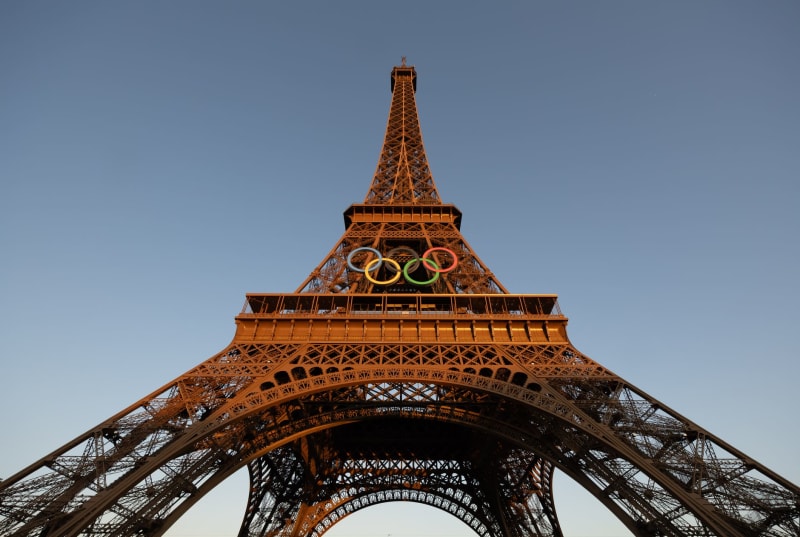
- The decision by the IOC's executive board opens the door for Russian athletes to potentially participate in the 2024 Paris Olympics, contingent on further, more detailed evaluations and adherence to strict neutrality criteria.
- Ukraine has vehemently condemned the IOC's stance, arguing that allowing Russian athletes to compete, even as neutrals, legitimizes the aggression and undermines the principles of peace and solidarity that the Olympic movement purports to uphold.
- This development intensifies the ongoing debate about the intersection of sports, politics, and human rights, forcing a re-evaluation of how international sporting bodies navigate complex geopolitical conflicts and maintain their moral authority.
The Record
The International Olympic Committee's executive board recently made the contentious decision to provisionally lift the ban on individual Russian athletes, permitting them to compete as 'neutrals.' This move, which has sent ripples of controversy across the globe, stipulates that only athletes who have not actively supported the conflict and are not associated with military or security agencies will be considered. The IOC's rationale appears to be an attempt to separate individual athletes from the actions of their government, a distinction that many critics argue is both naive and dangerous in the current geopolitical climate.
This decision marks a significant shift from the blanket ban initially imposed following the full-scale invasion, reflecting an evolving and increasingly complex stance by the IOC. The criteria for 'neutrality' are still being developed, but they are expected to be stringent, aiming to prevent any overt display of national affiliation or support for the conflict. However, the very concept of a 'neutral' athlete from a belligerent nation remains deeply problematic for many, who see it as an insufficient measure to address the profound ethical implications at play.
The potential re-entry of Russian athletes into international competitions, particularly with the 2024 Paris Olympics on the horizon, has reignited a fierce debate about the role of sports in global politics. Critics argue that the IOC's decision undermines the collective efforts of the international community to isolate Russia and hold it accountable for its actions. The move is perceived by many as a premature normalization that could inadvertently lend legitimacy to the aggressor, irrespective of the 'neutral' status assigned to individual competitors. This complex situation demands careful consideration of both athletic opportunity and moral imperative.
Who Knew and When
The discussions within the International Olympic Committee regarding the potential re-entry of Russian athletes have been ongoing for several months, intensifying behind closed doors as the 2024 Paris Olympics drew closer. While the public announcement of the provisional lifting of the ban was made recently, internal deliberations and consultations with various national Olympic committees and international federations have been a continuous process. Key figures within the IOC leadership, including President Thomas Bach, have consistently advocated for a pathway for individual athletes, citing principles of non-discrimination and the idea that athletes should not be punished for the actions of their governments. This perspective has been a driving force, shaping the eventual decision.
Reports indicate that the IOC's executive board had been exploring various scenarios and conditions for the reintegration of Russian athletes, carefully weighing the ethical dilemmas against the desire to maintain the universality of the Olympic movement. The decision was not a sudden one but rather the culmination of extensive internal debate, legal reviews, and strategic considerations about the future of international sports. Insiders suggest that there was a strong push from certain factions within the IOC to find a 'compromise' solution that would allow for some Russian participation without overtly endorsing the state's actions, leading to the 'neutral athlete' framework.
Governments and national sporting bodies, including the UK's Department for Culture, Media and Sport, have been aware of the IOC's evolving stance and the possibility of such a decision for some time. Communication channels between the IOC and various stakeholders have been active, though often fraught with disagreement. The strong reaction from figures like UK Culture Secretary Lucy Frazer indicates that while the possibility was known, the final decision to proceed with the provisional lifting of the ban still came as a profound disappointment and a source of significant concern for many who had hoped for a more robust and unwavering stance against Russian participation.
Voices from the Ground
The UK Culture Secretary, Lucy Frazer, minced no words in her condemnation, stating she was 'appalled' by the IOC's decision. Her strong reaction reflects a broader sentiment among many Western governments and human rights organizations that view the move as a significant step backward. Frazer emphasized that allowing Russian athletes to compete, even under a 'neutral' banner, sends a deeply troubling message of normalization and undermines the collective international effort to isolate Russia. She articulated a clear position that until the conflict ceases, Russia should remain excluded from the global sporting stage, highlighting the profound moral implications for the integrity of international competitions.
Ukrainian officials and athletes have voiced particularly passionate and heartbreaking objections. They argue that every medal won by a Russian athlete, regardless of their 'neutral' status, will be perceived as a victory for the aggressor state, providing a propaganda boost and diminishing the suffering of the Ukrainian people. Many Ukrainian athletes have shared harrowing accounts of training amidst air raids, losing teammates, and witnessing the destruction of their country, making the prospect of competing alongside Russians unbearable and deeply disrespectful to their ongoing struggle. Their perspective underscores the profound human cost often overlooked in discussions of sporting policy.
Conversely, some Russian athletes and sports officials have expressed a sense of cautious optimism, viewing the decision as a potential pathway back to international competition, albeit under restrictive conditions. They argue that individual athletes should not be collectively punished for political actions and that sports should remain separate from politics. However, even among those who welcome the decision, there is an acknowledgment of the immense scrutiny and potential backlash they will face. This perspective highlights the complex dilemma for athletes caught between national identity and international sporting aspirations, navigating a landscape fraught with political tension and moral judgment.
The Debate
The debate surrounding the IOC's decision is sharply divided, fundamentally questioning the very essence of sportsmanship and global responsibility. Proponents of the IOC's move often argue for the principle of individual neutrality, asserting that athletes should not be penalized for the actions of their governments. They contend that the Olympic Charter emphasizes non-discrimination and that excluding athletes based solely on their nationality, without direct evidence of their personal involvement or support for the conflict, goes against the spirit of fair play. This viewpoint suggests that sports should act as a bridge, fostering peace and understanding, rather than becoming another battleground for political disputes. They believe that isolating athletes can be counterproductive, potentially fueling resentment and further dividing nations.
On the other side, critics vehemently argue that the concept of 'neutrality' for athletes from a state actively engaged in aggression is a dangerous fiction. They maintain that sports are inextricably linked to national identity and propaganda, especially in authoritarian regimes, and that any participation by Russian athletes, regardless of their official status, will inevitably be exploited for political gain. This perspective emphasizes the moral imperative to uphold international norms and stand in solidarity with victims of aggression. They point out that allowing Russian athletes to compete undermines the collective effort to impose consequences on Russia and sends a message that such actions can be tolerated, even if indirectly, on the global stage. For these critics, the integrity of the Olympic movement is at stake, risking its moral authority if it appears to prioritize political expediency over ethical principles.
Furthermore, the debate extends to the practicalities and precedents set by this decision. What criteria truly define 'neutrality'? How can an athlete's non-support for the conflict be genuinely verified, especially when state control over information and expression is so pervasive? Opponents fear that this move sets a dangerous precedent, potentially weakening future responses to similar geopolitical crises and making it harder for international bodies to take a firm stance against aggression. The discussion also touches upon the fairness to Ukrainian athletes, who are forced to compete while their country is under attack, often with their own sporting infrastructure destroyed and their lives irrevocably altered. The stark contrast in circumstances raises profound questions about equity and the true meaning of a 'level playing field' in such a volatile global environment.
Your Questions Answered
What Accountability Looks Like
True accountability, in the context of the IOC's decision, would involve a steadfast commitment to the principles of peace and justice that the Olympic movement purports to uphold. For many, this means maintaining a complete ban on Russian and Belarusian athletes until the cessation of hostilities and a clear commitment to international law. Accountability would also entail rigorous and transparent vetting processes, ensuring that no athlete with ties to military organizations or those who have publicly supported the conflict are allowed to compete. Anything less is seen as a compromise of ethical standards and a tacit acceptance of aggression on the global stage, undermining the very moral authority of international sports organizations.
From another perspective, accountability could be framed as ensuring that individual athletes are not unfairly punished for the actions of their government, provided they demonstrate no personal complicity. This view suggests that the IOC's 'neutral athlete' framework, if strictly enforced, could be a path to accountability by isolating the state while allowing individuals to pursue their athletic dreams. However, for this to be truly accountable, the transparency of the vetting process, the independence of the decision-making body, and the ability to swiftly sanction any violations of neutrality would be paramount. Without these robust mechanisms, the 'neutral' status risks becoming a mere facade, offering little genuine accountability.
Ultimately, the measure of accountability will be judged by the global community's perception of fairness, justice, and the integrity of the Olympic Games. If the decision leads to widespread boycotts, protests, or a perception that the IOC has prioritized political expediency over moral principles, then it will be seen as a failure of accountability. Conversely, if the strict conditions for neutrality are genuinely enforced, and the international community eventually accepts this nuanced approach, it might be viewed as a difficult but necessary compromise. The immediate future, however, points towards significant challenges in achieving a consensus on what true accountability looks like in this unprecedented situation.



Comments
No comments yet. Be the first to comment!