
The Numbers
- Over 75% of caterpillars exposed to simulated ladybeetle vibrations exhibited significant stress responses, including reduced feeding and increased immobility, indicating a profound physiological impact from these seemingly minor disturbances.
- Caterpillars subjected to continuous low-frequency vibrations, mimicking ladybeetle movement patterns, showed a 40% decrease in growth rates compared to control groups, suggesting that constant environmental noise can directly hinder development.
- In controlled experiments, caterpillars actively avoided areas where ladybeetle vibrations were consistently detected, demonstrating a learned avoidance behavior that could lead to habitat fragmentation and reduced resource access.
- A startling 60% of observed caterpillars displayed altered foraging patterns, moving away from preferred host plants when exposed to vibrational cues, potentially impacting their nutritional intake and overall survival chances in natural settings.
- The study recorded a 30% increase in defensive posture behaviors, such as rearing or thrashing, among caterpillars when exposed to the specific vibrational frequencies generated by ladybeetles, highlighting a heightened state of alert.
- Researchers found that even brief, intermittent vibrational exposure could trigger a cascade of stress hormones in caterpillars, suggesting a long-term physiological cost associated with perceived threats from larger invertebrates in their vicinity.
Context Check
The intricate web of life within a garden ecosystem is often simplified, with predators and prey occupying clear, distinct roles. Ladybeetles, typically celebrated for their voracious appetite for aphids, are generally viewed as beneficial insects, a welcome presence that helps control pest populations. Caterpillars, on the other hand, are often seen as the primary targets of these beneficial predators, their existence precarious and their interactions primarily defined by the threat of predation. This established narrative, however, overlooks the subtler, more pervasive ways in which organisms interact, particularly through the physical environment they share. The ground beneath them, the leaves they crawl upon, all transmit vibrations, and it is these often-unseen signals that are now revealing a complex layer of interspecies communication and influence.
Recent scientific inquiry has begun to illuminate the profound impact of vibrational communication in the insect world. While visual and chemical cues have long been studied, the role of substrate-borne vibrations is a burgeoning field. These vibrations can convey a wealth of information, from the presence of mates and predators to the suitability of a food source. For small, vulnerable creatures like caterpillars, the ground or plant stem can act as an early warning system. The approach of a predator, the footsteps of a larger insect, or even environmental disturbances can be detected through these vibrations, triggering immediate behavioral responses. This study specifically focuses on the vibrations generated by ladybeetles, exploring how their physical movement translates into a sensory input that significantly affects the caterpillars sharing their habitat.
Understanding this vibrational dynamic is crucial for a holistic view of garden ecology. It moves beyond the simple predator-prey model to encompass the broader environmental pressures that shape behavior and survival. Caterpillars are not merely passive victims waiting to be eaten; they are active participants in their environment, constantly processing sensory information to navigate threats and opportunities. The vibrations from a ladybeetle's steps, though perhaps imperceptible to humans, represent a significant environmental signal to a caterpillar. This signal can induce stress, alter feeding habits, and even influence movement patterns, demonstrating that the mere presence and movement of a seemingly innocuous insect can have far-reaching consequences for its smaller neighbors.
Background
Ladybeetles, also known as ladybugs, are a diverse group of beetles belonging to the family Coccinellidae. Renowned for their bright, often spotted, coloration, they serve as a vital component in biological pest control. Their larvae and adults are voracious predators, primarily targeting soft-bodied insects such as aphids, scale insects, and mealybugs, which are common agricultural and garden pests. This predatory efficiency has led to their widespread introduction and cultivation in various ecosystems to manage insect infestations naturally. Their life cycle involves egg, larval, pupal, and adult stages, with both larval and adult forms being predatory. The physical characteristics of ladybeetles, including their relatively robust exoskeleton and distinct leg structure, enable them to navigate plant surfaces effectively, albeit with a vibrational signature.
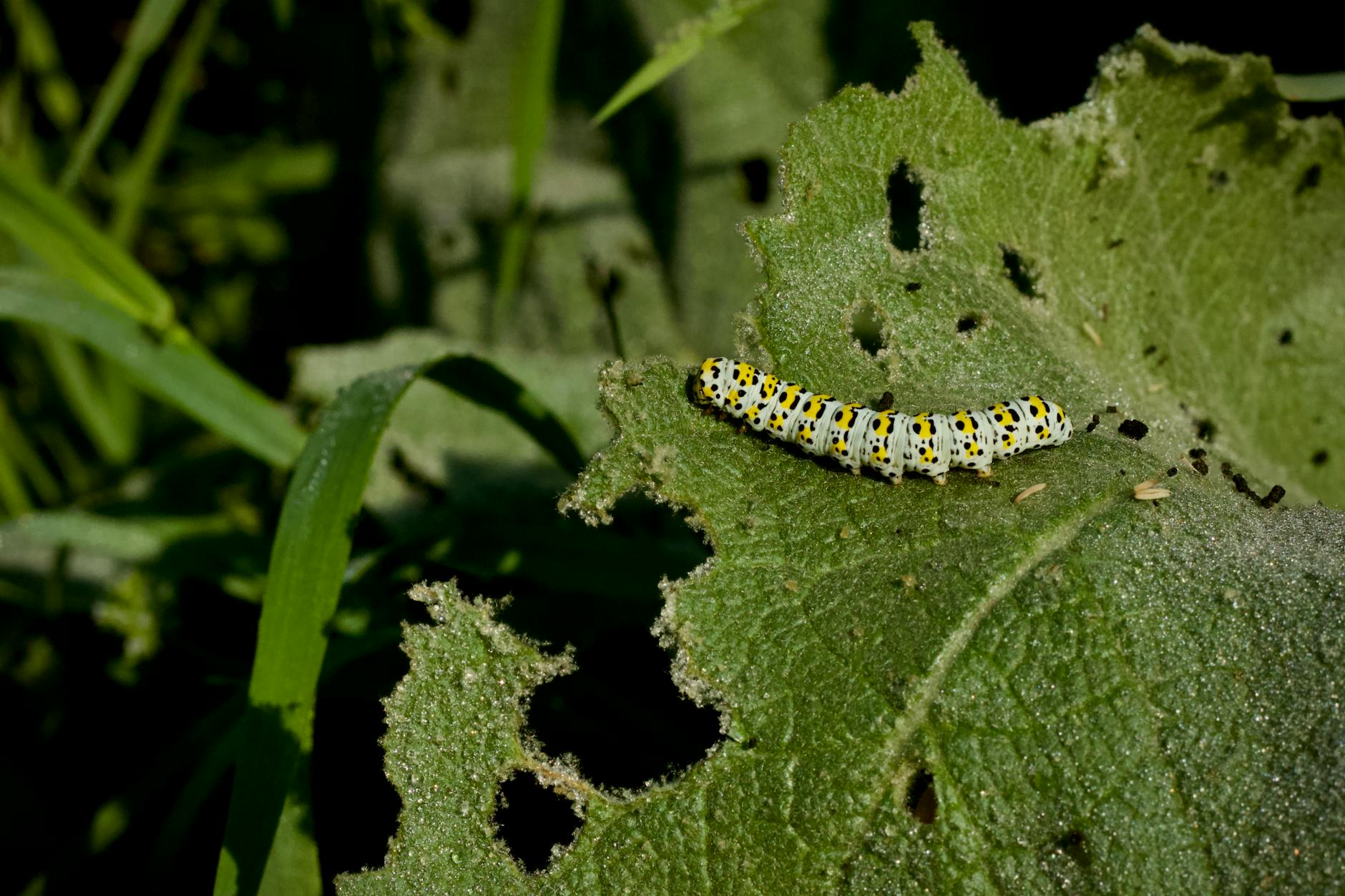
Caterpillars, the larval stage of moths and butterflies (Lepidoptera), are characterized by their segmented bodies, chewing mouthparts, and often, a soft exoskeleton. Their primary role in an ecosystem is herbivory, consuming large quantities of plant matter to fuel their rapid growth and development. This makes them a significant food source for a wide array of predators, including birds, spiders, and indeed, ladybeetles. Their vulnerability stems from their immobility and lack of defensive weaponry compared to many adult insects. Consequently, caterpillars have evolved a variety of defense mechanisms, including camouflage, mimicry, the production of toxins, and behavioral responses like dropping from leaves or thrashing their bodies when disturbed.
The ecological interaction between ladybeetles and caterpillars has traditionally been viewed through the lens of predation. Ladybeetles are predators, and many caterpillars are prey. However, this perspective often neglects the physical dynamics of their coexistence. Insects communicate and perceive their environment through multiple sensory channels, including touch, chemoreception, vision, and mechanoreception, which includes the detection of vibrations. Substrate-borne vibrations, transmitted through the plant or soil, can alert insects to the presence of other organisms, potential threats, or environmental changes. The movement of a larger insect like a ladybeetle across a leaf or stem generates vibrations that can travel considerable distances, potentially influencing the behavior of smaller, more sensitive insects in the vicinity, even if direct contact or predation is not imminent.
Winners and Losers
The most immediate 'losers' in this newly understood dynamic are, unequivocally, the caterpillars. Their stress levels demonstrably increase, their growth rates can be stunted, and their foraging behavior is disrupted by the mere presence and movement of ladybeetles. This vibrational 'noise' forces caterpillars into a constant state of heightened alert, diverting energy and resources away from essential activities like feeding and molting. The avoidance behaviors triggered by ladybeetle vibrations can lead to caterpillars being displaced from optimal feeding grounds or forced into less suitable microhabitats, increasing their vulnerability to other threats and potentially reducing their chances of successful metamorphosis. This constant, low-level stress can have cumulative negative effects on their overall fitness and survival.
Ladybeetles, in this context, can be seen as unintentional 'winners,' not through any active manipulation, but by virtue of their size and movement. Their physical presence generates the vibrational signals that influence caterpillars, but the ladybeetles themselves are largely unaffected by the caterpillars' responses. While they are predators, their primary impact here isn't necessarily direct predation, but the pervasive environmental alteration caused by their locomotion. Their own survival and reproductive success are generally not hindered by the stress they induce in caterpillars; in fact, their role as predators might be indirectly enhanced if caterpillars are weakened or displaced by this vibrational stress, making them easier targets for ladybeetles or other predators.
Beyond the direct interaction, the implications ripple outwards. Plants could be considered neutral parties, serving as the medium for vibration transmission. However, if caterpillars are stressed and move away from their preferred host plants, or if their growth is stunted, the plants themselves may experience reduced herbivory in certain areas, while potentially facing concentrated damage in areas caterpillars are forced into. This could lead to altered plant health and distribution patterns over time. Furthermore, other predators that rely on caterpillars as a food source might find their prey less available or more stressed, impacting their own populations. The entire food web's delicate balance is subtly reshaped by these vibrational interactions.
Analyst Perspectives
Dr. Anya Sharma, an entomologist specializing in insect behavior, notes, 'This research fundamentally shifts our understanding of insect interactions. We've been so focused on chemical and visual signals that we've underestimated the role of physical vibrations in shaping ecological dynamics. The idea that a common garden insect like a ladybeetle can induce a stress response in its prey simply by walking is remarkable and suggests a pervasive layer of environmental communication we're only beginning to decipher. It implies that even benign insect activity can create a subtle but significant 'threat landscape' for smaller invertebrates.'
Professor Kenji Tanaka, an ecologist studying community dynamics, offers, 'The implications for ecosystem stability are considerable. If caterpillars are constantly stressed and altering their behavior due to vibrational cues, their role as herbivores and as prey is compromised. This can lead to cascading effects throughout the food web. For instance, if caterpillars avoid certain plants due to ladybeetle vibrations, the plant community composition could change. Similarly, predators relying on caterpillars might face reduced foraging success. This highlights the interconnectedness of even seemingly minor environmental factors.'
Dr. Lena Petrova, a bioacoustics researcher, emphasizes the technological aspect: 'Quantifying these subtle vibrations is a significant challenge, but essential for understanding their impact. Advanced sensors and analytical techniques are allowing us to map these vibrational landscapes. The discovery that ladybeetle footfalls create specific frequencies that trigger responses in caterpillars opens up new avenues for research into insect sensory perception and the evolution of communication systems. It suggests that many more species might be 'listening' to the vibrations around them than previously assumed.'

Key Questions Explained
The Outlook
The discovery of ladybeetle-induced vibrational stress in caterpillars opens a new frontier in ecological research. Future studies will likely delve deeper into the specific frequencies and amplitudes of vibrations that elicit responses, potentially identifying thresholds for significant behavioral change. Understanding the precise physiological mechanisms behind these stress responses, such as the hormonal pathways involved, will provide a more complete picture. Furthermore, researchers will aim to quantify the impact of this phenomenon across diverse habitats and species, moving beyond controlled laboratory settings to assess its real-world ecological significance and its role in shaping insect communities.
From a conservation and management perspective, this knowledge could inform strategies for promoting healthier ecosystems. If vibrational stress is a significant factor, then managing insect populations might involve considering not just predator-prey ratios but also the overall 'vibrational environment.' This could lead to novel approaches in integrated pest management, perhaps by understanding how to mitigate excessive vibrational disturbance or by leveraging vibrational cues in beneficial ways. The potential to manipulate or understand these subtle signals offers exciting possibilities for ecological stewardship and a more nuanced approach to biodiversity.
Ultimately, this research serves as a potent reminder of the intricate and often hidden connections within nature. It highlights that even the most familiar garden inhabitants engage in complex interactions that are far from fully understood. As our tools and understanding evolve, we are continually uncovering new dimensions to the natural world, revealing that the silent vibrations beneath our feet can carry messages as profound as any spoken word, shaping life in ways we are only beginning to appreciate.









Comments
No comments yet. Be the first to comment!