
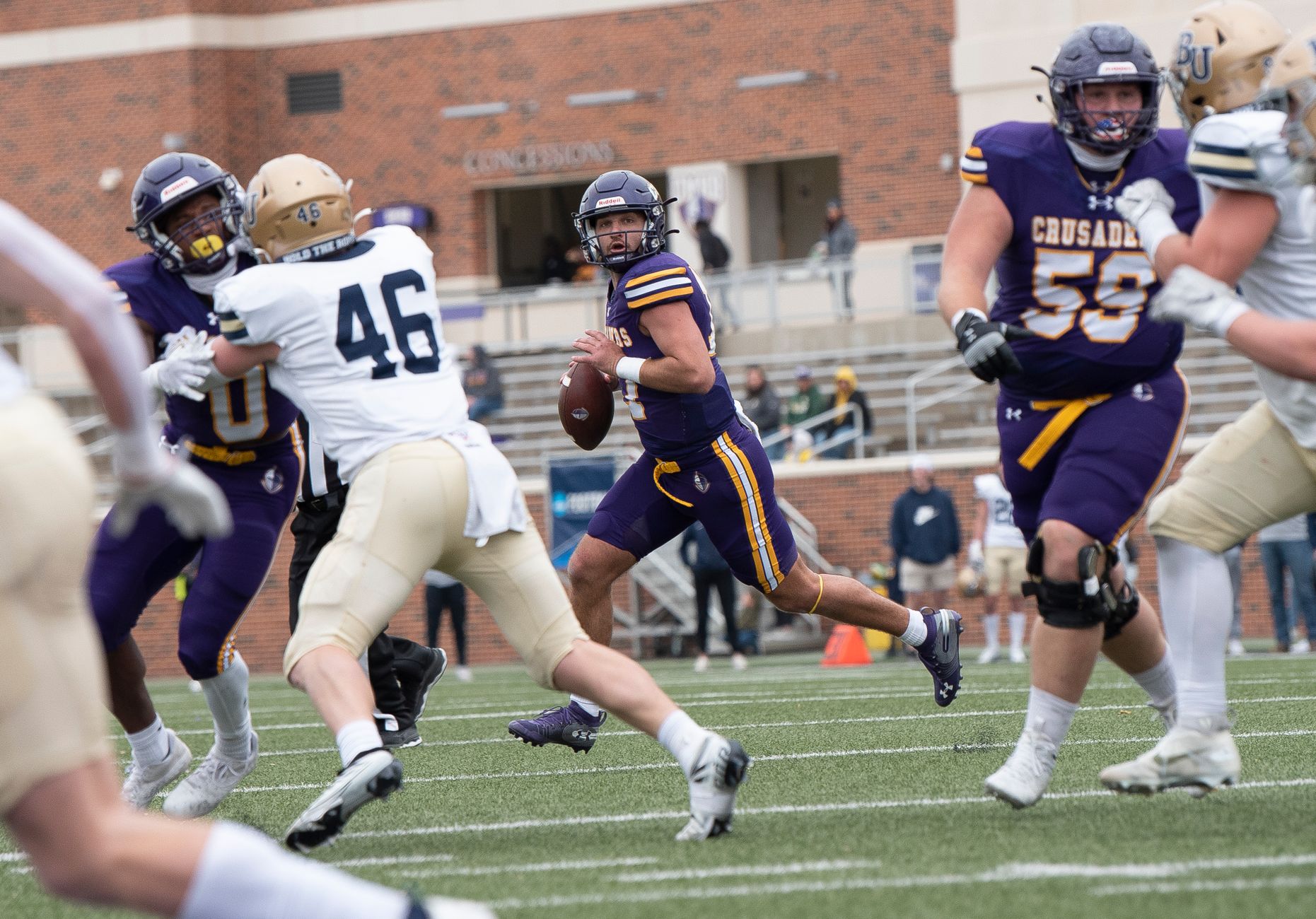

Trade Value Snapshot
- Baker Mayfield's projected trade value is a third-round pick, a valuation that has surprised many analysts and fans given his recent performance and career trajectory.
- This assessment places him significantly lower than other starting quarterbacks in the league, suggesting a nuanced understanding of his market appeal and contractual situation.
- Despite leading the Buccaneers to a division title and a playoff victory, his individual statistical output and perceived long-term ceiling appear to be factoring heavily into this valuation.
- The trade value model likely considers factors such as age, injury history, remaining contract, and the depth of the current quarterback draft class, all of which influence a team's willingness to invest significant assets.
- The Buccaneers' decision to sign Mayfield to a three-year, $100 million deal, with $50 million guaranteed, complicates any potential trade, as acquiring teams would inherit a substantial financial commitment.
- This valuation highlights the ongoing volatility and subjective nature of the NFL quarterback market, where performance, potential, and financial implications constantly shift a player's perceived worth.
Mayfield's Career Arc and Market Perception
Baker Mayfield's journey through the NFL has been a rollercoaster, marked by periods of brilliance and frustrating inconsistency. Drafted first overall by the Cleveland Browns in 2018, he initially showed immense promise, breaking rookie passing records and leading the team to its first playoff appearance in nearly two decades. His fiery leadership and gunslinger mentality endeared him to fans, but subsequent seasons saw a decline in performance, compounded by injuries and coaching changes. This fluctuating output has undeniably shaped his market perception, making him a polarizing figure when assessing his long-term value.
Following his departure from Cleveland, Mayfield had brief stints with the Carolina Panthers and the Los Angeles Rams, where he struggled to regain his form. Many analysts had written him off as a potential long-term starter in the league. However, his move to the Tampa Bay Buccaneers for the 2023 season proved to be a significant turning point. Under new offensive coordinator Dave Canales, Mayfield revitalized his career, throwing for over 4,000 yards and leading the Buccaneers to an unexpected NFC South title and a playoff win. This resurgence demonstrated his resilience and ability to perform at a high level when placed in the right system, significantly altering the narrative surrounding his capabilities.
Despite his impressive rebound season, the projected third-round pick trade value suggests that NFL evaluators are still weighing his entire career trajectory, not just his most recent success. The league's perception of a quarterback is a complex tapestry woven from consistent performance, leadership qualities, injury history, and, crucially, contract details. While his 2023 season was a strong positive, the prior years of struggle and the financial commitment of his new contract with the Buccaneers likely temper the enthusiasm of potential trade partners, leading to a more conservative valuation in the current market.
Stakeholders in the Quarterback Market
This surprising trade valuation directly impacts several key stakeholders across the NFL. Firstly, Baker Mayfield himself is affected. While he just signed a lucrative new contract with the Buccaneers, a lower perceived trade value could influence future contract negotiations or his standing in the league's hierarchy. It suggests that despite a stellar comeback season, the broader market still views him with a degree of skepticism regarding his long-term consistency and elite potential. This can be a blow to a player's ego and leverage, even if financially secure for the immediate future.
The Tampa Bay Buccaneers are also significantly impacted. If Mayfield's trade value is indeed a third-round pick, it means that if circumstances changed and they considered moving him, their return would be relatively modest for a starting quarterback who just led them to the playoffs. This valuation also reflects on their decision-making process in offering him a substantial new contract. While they clearly believe in his ability to lead the team, the market's assessment provides an external benchmark that might not align with their internal valuation, potentially influencing future roster construction and financial planning.
Beyond the immediate parties, other NFL teams, particularly those in search of a starting quarterback, are affected. A lower trade value for a proven, albeit inconsistent, starter like Mayfield could reset expectations for the cost of acquiring similar-tier quarterbacks. It might make teams more hesitant to overpay for veteran signal-callers, instead opting to develop younger talent or seek out more cost-effective options. This shift in market dynamics could have ripple effects, influencing draft strategies, free agency decisions, and the overall financial landscape for quarterbacks across the league, making it a critical data point for general managers.
Arguments for a Higher Valuation
Proponents of a higher trade valuation for Baker Mayfield often point directly to his exceptional 2023 season with the Tampa Bay Buccaneers. He not only exceeded all expectations, throwing for 4,044 yards, 28 touchdowns, and just 10 interceptions, but he also demonstrated remarkable leadership in guiding a team many had predicted to finish last in their division to a playoff berth and a decisive Wild Card victory. This performance alone, coming after a period of career uncertainty, showcases his ability to rebound and perform under pressure, a quality highly prized in the NFL. Such a comeback story should inherently elevate his market standing beyond a mere third-round pick.
Furthermore, the scarcity of competent starting quarterbacks in the NFL should naturally drive up Mayfield's value. Teams are constantly desperate for a reliable signal-caller, and many are willing to pay a premium for even average production. Mayfield, coming off a season where he was arguably above average, represents a proven commodity in a league where many teams cycle through unproven prospects or struggling veterans. His experience, combined with his recent success, makes him a far more attractive option than many quarterbacks who have commanded higher draft capital in recent trades or draft selections. The market dictates that a playoff-caliber QB should fetch more.
Consider the context of quarterback trades in recent years. Even quarterbacks with less impressive resumes or more significant question marks have often commanded second-round picks or multiple mid-round selections. The fact that Mayfield, a former No. 1 overall pick who just led his team to the divisional round, is valued at only a third-round pick seems to undervalue his tangible on-field production and the intangible leadership he brings. His ability to elevate the play of those around him, as evidenced by the Buccaneers' unexpected success, should be a significant factor in increasing his perceived worth, suggesting a clear discrepancy in the current valuation.
Factors Limiting Mayfield's Trade Value
Despite his impressive 2023 resurgence, several critical factors likely contribute to Baker Mayfield's projected third-round trade value. Foremost among these is his career inconsistency. While his recent season was stellar, it followed years of fluctuating performance across multiple teams, including a significant downturn in Cleveland and struggles in Carolina. NFL general managers often prioritize sustained excellence over single-season flashes, viewing past inconsistencies as potential red flags that could resurface. This historical variability makes teams hesitant to commit significant draft capital, fearing a return to his less productive form.
Another major limiting factor is Mayfield's new contract with the Buccaneers. A three-year, $100 million deal with $50 million guaranteed is a substantial financial commitment. Any team acquiring Mayfield via trade would inherit this contract, which significantly impacts their salary cap and future financial flexibility. Teams are generally less willing to part with high draft picks for a player who also comes with a hefty salary, especially when they could potentially find a younger, cheaper option through the draft or free agency. The financial burden effectively reduces the draft capital a team is willing to surrender.
Finally, the overall landscape of the NFL quarterback market, particularly the upcoming draft classes, plays a role. With a perceived strong class of rookie quarterbacks entering the league, teams might prefer to invest in a younger, cheaper prospect with a higher ceiling and a longer contractual runway, rather than trading for a veteran with a more established, albeit inconsistent, track record and a significant contract. This preference for youth and potential, combined with Mayfield's age and injury history, further depresses his market value, positioning him as a valuable but not elite trade asset in the current environment.

Quarterback Trade Value Explained
Future Market Implications
The surprising trade value assigned to Baker Mayfield could serve as a bellwether for future quarterback market dynamics across the NFL. If a starting quarterback coming off a playoff season with respectable statistics is only valued at a third-round pick, it suggests a recalibration of how teams assess veteran signal-callers, especially those with inconsistent career trajectories or substantial contracts. This might lead to a more conservative approach from general managers when considering trades for established quarterbacks, potentially shifting focus towards developing internal talent or prioritizing younger, cheaper options in the draft, thereby impacting the entire ecosystem of quarterback acquisition.
This valuation also puts a spotlight on the inherent risk associated with large quarterback contracts. Teams might become more hesitant to offer massive deals to players who, despite recent success, have a history of fluctuating performance. The financial commitment becomes a significant hurdle in any potential trade scenario, effectively reducing the player's market liquidity. This could lead to more structured contracts with performance incentives or shorter guaranteed periods, as teams seek to mitigate financial exposure while maintaining flexibility for future roster adjustments, a critical consideration for long-term team building.
Ultimately, the Baker Mayfield trade value ranking underscores the highly subjective and volatile nature of the NFL quarterback market. While analytics provide a framework, the human element of team needs, coaching philosophies, and perceived leadership qualities continues to heavily influence valuations. As the league evolves, we can expect continuous adjustments in how quarterback assets are assessed, traded, and compensated, making every offseason a fascinating study in supply, demand, and strategic decision-making. This particular case highlights that even a strong comeback season doesn't automatically erase past perceptions or overcome significant contractual obligations.

















Comments
No comments yet. Be the first to comment!