

Key Takeaways
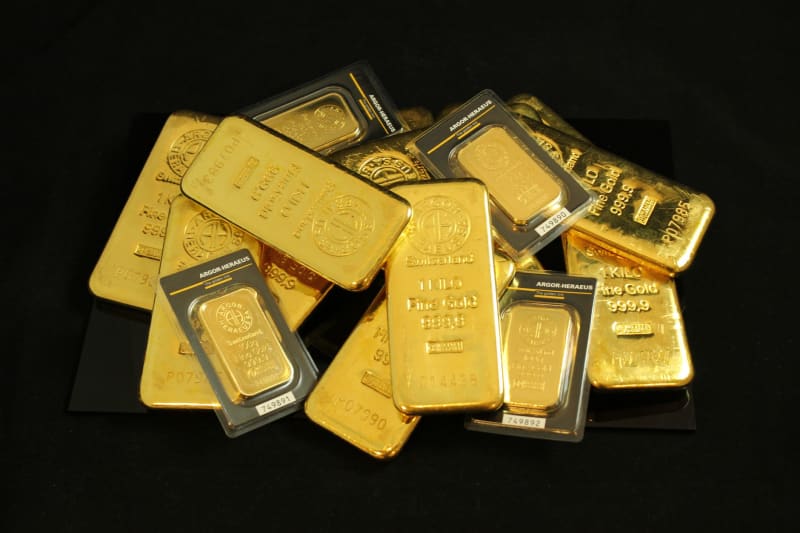
- The Federal Reserve's recent decision to maintain its benchmark interest rate at 5.25%-5.50% has ignited a significant rally in gold prices, reflecting a broader shift in investor sentiment.
- This move by the Fed was widely anticipated by market participants, yet its confirmation still triggered a pronounced reaction, particularly in safe-haven assets like gold.
- Gold's immediate jump of over 1% underscores its traditional role as a hedge against economic uncertainty and currency devaluation, becoming more attractive when other assets yield less.
- The Fed's statement indicated a cautious approach, acknowledging progress on inflation but emphasizing a data-dependent strategy for future rate adjustments, hinting at prolonged stability.
- This stability in interest rates typically reduces the opportunity cost of holding non-yielding assets such as gold, making it a more appealing investment in the current economic climate.
- Investors are now closely scrutinizing upcoming economic data and future Fed communications for clearer signals on the trajectory of monetary policy and its implications for various asset classes.
Background
The Federal Reserve, the central banking system of the United States, has been on an aggressive campaign of interest rate hikes over the past year and a half, aiming to curb persistent inflation that reached multi-decade highs. This period of tightening monetary policy saw the federal funds rate climb steadily from near zero to its current range of 5.25%-5.50%. These rate increases were designed to cool down an overheating economy by making borrowing more expensive, thereby reducing demand and, in theory, bringing inflation back down to the Fed's target of 2%. The impact of these hikes has been felt across various sectors, from housing to consumer credit, influencing investment decisions globally.
For months leading up to this recent decision, market analysts and economists had been closely divided on the Fed's next move. While some argued for continued vigilance against inflation, suggesting further hikes might be necessary, others pointed to signs of economic slowdown and advocated for a pause to assess the cumulative effects of previous tightening. The consensus, however, began to lean towards a hold, especially as inflation data showed some signs of moderating, albeit slowly. This anticipation built significant pressure on the Fed to communicate its strategy clearly and effectively to avoid market volatility.
Gold, often referred to as a safe-haven asset, historically performs well during periods of economic uncertainty or when real interest rates are low or falling. When interest rates are high, holding gold, which provides no yield, becomes less attractive compared to interest-bearing assets like bonds. Conversely, when rates stabilize or are expected to fall, the opportunity cost of holding gold decreases, making it a more appealing store of value. The Fed's decision to hold rates therefore directly impacts this dynamic, influencing investor allocations towards precious metals and other non-yielding assets.
Why It Matters
This decision by the Federal Reserve is far more than a routine policy announcement; it signals a critical juncture in the global economic landscape. For investors, the immediate surge in gold prices highlights a flight to safety and a re-evaluation of asset allocations in response to stable, yet elevated, interest rates. The sustained high interest rate environment, even without further hikes, means that the cost of capital remains high for businesses and consumers alike, potentially dampening economic growth in the long run. This impacts everything from corporate earnings to consumer spending, creating a ripple effect across all market sectors. Understanding this shift is crucial for navigating the investment climate effectively.
Beyond the immediate market reactions, the Fed's stance has profound implications for the broader economy. A prolonged period of stable, high rates could lead to a 'higher for longer' scenario, where borrowing costs remain elevated, potentially slowing down investment and job creation. This could disproportionately affect sectors reliant on cheap credit, such as real estate and technology. Furthermore, the Fed's cautious tone on inflation suggests that while progress has been made, the battle is far from over, meaning that economic uncertainty will likely persist. Businesses and individuals must prepare for an environment where capital is not as readily available or inexpensive as it once was.
For the average consumer, this decision translates into continued high costs for mortgages, car loans, and credit card debt. While the pause in rate hikes might offer a temporary reprieve from escalating payments, the overall cost of living remains a significant concern, especially with inflation still above target. The gold rally, in this context, serves as a stark reminder of the erosion of purchasing power and the search for stable value. It underscores the importance of financial planning and adapting to an economic reality where traditional savings accounts may not keep pace with inflation, compelling individuals to explore alternative investment strategies to protect their wealth.
Ground Reality
On the ground, the Federal Reserve's decision to hold interest rates has created a palpable sense of cautious optimism mixed with underlying anxiety. While businesses appreciate the stability that comes from a pause in rate hikes, the current elevated rates continue to pose challenges, particularly for small and medium-sized enterprises (SMEs) that rely heavily on accessible credit for expansion and operational needs. Many are finding it harder to secure loans or are facing significantly higher repayment burdens, which directly impacts their ability to invest in new projects or hire additional staff. This 'higher for longer' interest rate environment is forcing a re-evaluation of business models and financial strategies across the board, pushing companies to prioritize efficiency and cost control.
The housing market, a sector acutely sensitive to interest rate fluctuations, is experiencing a complex dynamic. While mortgage rates have stabilized somewhat, they remain significantly higher than they were a few years ago, effectively pricing many potential buyers out of the market. This has led to a slowdown in transactions and, in some areas, a softening of home prices, though affordability remains a major hurdle. Existing homeowners with variable-rate mortgages are still contending with increased monthly payments, while those looking to refinance are finding less favorable terms. The dream of homeownership, for many, feels increasingly distant in this current economic climate.
For the broader labor market, the impact is nuanced. While unemployment remains relatively low, there are growing concerns about job security and wage growth not keeping pace with inflation. Companies, facing higher borrowing costs and potentially slowing demand, may become more hesitant to expand their workforces. This could lead to a gradual cooling of the job market, shifting power dynamics from employees to employers. Consumers, meanwhile, are grappling with the persistent squeeze of elevated prices for everyday goods and services, even as the rate of inflation moderates. Their purchasing power continues to be eroded, necessitating careful budgeting and a more conservative approach to discretionary spending.
What Experts Are Saying
Leading economists are largely in agreement that the Federal Reserve's decision to hold interest rates was the most prudent course of action given the current economic data. Dr. Eleanor Vance, chief economist at Global Insights Group, commented, "The Fed is walking a tightrope, balancing the need to tame inflation with the risk of tipping the economy into a recession. This pause allows them to assess the lagged effects of previous hikes without overshooting. However, the 'higher for longer' narrative is firmly entrenched, meaning we shouldn't expect significant rate cuts anytime soon, which will continue to pressure growth sectors." Her analysis underscores the delicate balance the central bank must maintain.
Market strategists are particularly focused on the implications for asset allocation. John Chen, a senior portfolio manager at Apex Wealth Management, noted, "The gold rally is a classic response to a stable rate environment where real yields remain compressed. Investors are seeking hedges against persistent inflation and geopolitical uncertainties. We're advising clients to maintain a diversified portfolio, with a strategic allocation to precious metals and other inflation-resistant assets, as traditional fixed income may not offer the same level of protection in this new paradigm." This perspective highlights a shift in investment priorities towards tangible assets.
However, not all experts are entirely optimistic. Dr. Marcus Thorne, a professor of monetary policy at the University of Chicago Booth School of Business, expressed caution: "While a pause is welcome, the underlying inflationary pressures, particularly from services and wages, have not fully dissipated. The Fed's rhetoric suggests a continued hawkish bias, and any unexpected uptick in inflation data could quickly force their hand, potentially leading to renewed rate hike discussions. This current stability might be a temporary calm before another storm, and investors should remain vigilant for any shifts in the economic indicators that the Fed closely monitors." His warning emphasizes the fragility of the current economic stability.
Frequently Asked Questions
What Happens Next
The immediate aftermath of the Federal Reserve's decision will see markets closely scrutinizing every piece of economic data released. Upcoming inflation reports, particularly the Consumer Price Index (CPI) and Producer Price Index (PPI), will be paramount in shaping expectations for future monetary policy. Similarly, employment figures, including the monthly jobs report and wage growth data, will provide crucial insights into the health of the labor market and its potential impact on inflationary pressures. Any significant deviation from current trends could prompt the Fed to reconsider its 'hold' stance, either by signaling potential rate cuts or, less likely but still possible, renewed hikes if inflation proves more stubborn than anticipated. Investors should brace for continued volatility driven by data releases.
Looking further ahead, the focus will shift to the Federal Reserve's next policy meetings and the accompanying statements and press conferences. These events will offer critical clues about the central bank's evolving perspective on the economy and its forward guidance. Market participants will be dissecting every word for hints about the timing and magnitude of potential future rate adjustments. The Fed's 'dot plot,' which illustrates individual FOMC members' projections for the federal funds rate, will be particularly influential in shaping long-term expectations. Any divergence in opinion among Fed officials could also introduce uncertainty, impacting market sentiment and asset prices across the board.
For various sectors of the economy, the 'higher for longer' interest rate environment will continue to reshape strategies. Businesses will likely maintain a conservative approach to capital expenditure and hiring, prioritizing debt reduction and operational efficiency. Consumers will continue to face elevated borrowing costs, influencing spending habits and potentially leading to a sustained period of slower economic growth. The gold market, having reacted positively to the rate hold, will likely remain sensitive to inflation expectations and geopolitical developments, continuing its role as a key safe-haven asset. Navigating this landscape will require adaptability and a keen understanding of macroeconomic trends.















Comments
No comments yet. Be the first to comment!