
At a Glance
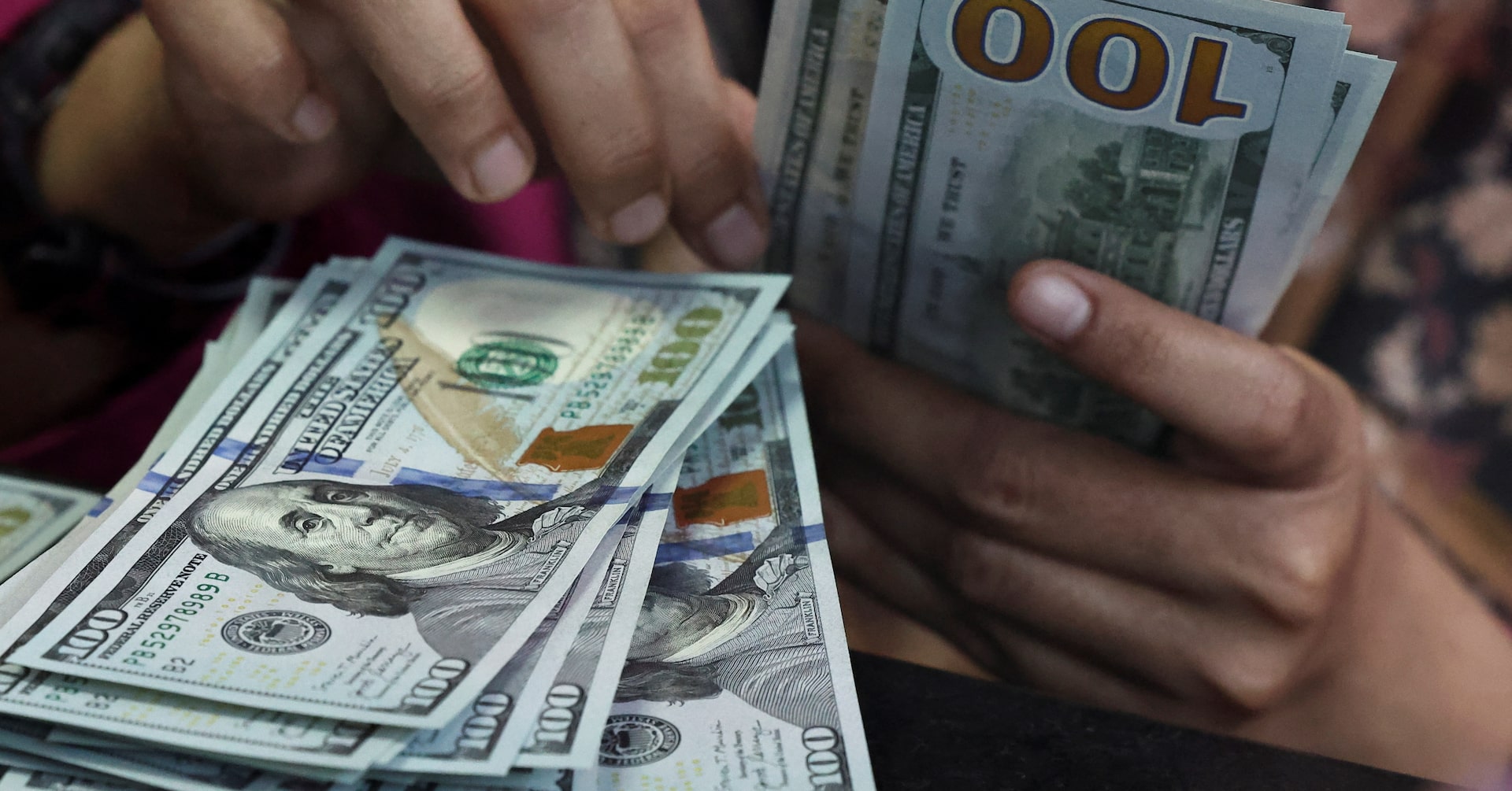
- The US dollar has surged to its highest level in two months, reflecting increased investor confidence in the Federal Reserve's commitment to combating inflation through aggressive monetary policy tightening.
- Market expectations for the Federal Reserve's upcoming interest rate hikes have significantly intensified, with traders now pricing in a greater probability of larger, more frequent increases to curb persistent inflationary pressures.
- This dollar strength is putting pressure on other major currencies and commodities, potentially leading to increased import costs for nations reliant on dollar-denominated goods and exacerbating global economic imbalances.
- Economic data releases, particularly those related to inflation and employment, are now under intense scrutiny as they will heavily influence the Federal Reserve's decision-making process regarding future rate adjustments.
- The rapid appreciation of the dollar could pose challenges for US multinational corporations by making their exports more expensive and reducing the value of foreign earnings when converted back into dollars.
- Central banks worldwide are closely monitoring the Federal Reserve's actions, as the strengthening dollar and rising US interest rates can trigger capital outflows from emerging markets and create financial stability risks.
The Record
The US dollar index, a benchmark measuring the dollar's value against a basket of major world currencies, has decisively broken through key resistance levels, marking its most significant advance in recent trading sessions. This upward momentum is not merely a fleeting fluctuation but a sustained climb, pushing the greenback to levels not seen in approximately sixty days. The underlying driver is a palpable shift in market sentiment, where traders and investors are increasingly convinced that the Federal Reserve will adopt a more hawkish stance to combat stubbornly high inflation. This conviction is being translated directly into market pricing, with futures markets now reflecting a heightened probability of not just one, but multiple substantial interest rate hikes in the coming months, potentially exceeding previous forecasts. This aggressive posture from the Fed, if enacted, would typically lead to a stronger dollar as higher interest rates attract foreign capital seeking better yields, thereby increasing demand for the currency.
Recent economic indicators have painted a complex picture, but the persistent upward trend in inflation figures has become a dominant narrative. Despite some signs of moderation in certain sectors, the overall cost of living and production remains elevated, presenting a significant challenge for policymakers. The Federal Reserve, tasked with maintaining price stability, is under immense pressure to demonstrate its resolve in bringing inflation back towards its target range. The market's interpretation of recent speeches from Fed officials suggests a growing consensus that more forceful action is necessary. This perception is amplified by the fact that inflation has proven more resilient than initially anticipated, forcing a reassessment of the optimal path for monetary policy. Consequently, the dollar's ascent is a direct reflection of this repricing of risk and future policy actions, as the market braces for a period of tighter financial conditions designed to cool the economy and tame price pressures.
The implications of this dollar surge extend far beyond the immediate currency markets. For countries importing goods priced in dollars, a stronger greenback translates into higher costs, potentially fueling domestic inflation and straining trade balances. This is particularly concerning for developing economies that often carry significant dollar-denominated debt, as servicing this debt becomes more expensive with a stronger dollar. Furthermore, global commodity prices, many of which are benchmarked in dollars, can become more volatile. While a stronger dollar can make dollar-denominated commodities cheaper for foreign buyers in their local currency terms, it can also dampen demand if the overall economic outlook deteriorates due to tighter global financial conditions. The interconnectedness of the global financial system means that shifts in the dollar's trajectory have ripple effects across continents, influencing investment flows, corporate profitability, and sovereign debt sustainability.
How We Got Here
The path to the dollar's current two-month peak has been paved by a series of evolving economic realities and policy responses. Initially, global markets were grappling with the lingering effects of the pandemic, including supply chain disruptions and pent-up consumer demand, which began to fuel inflationary pressures. Central banks, including the Federal Reserve, initially characterized these inflationary surges as 'transitory,' suggesting they would abate as supply chain issues resolved and economic activity normalized. This perspective led to a period of relatively accommodative monetary policy, characterized by low interest rates and quantitative easing, which supported economic recovery but also contributed to asset price inflation and, as it turned out, more persistent price increases.
However, as inflation data continued to surprise to the upside, defying earlier predictions of a swift decline, a significant pivot began to occur within the Federal Reserve and among market participants. The realization that inflation was becoming more entrenched, spreading across a wider range of goods and services, and potentially de-anchoring inflation expectations, necessitated a reassessment of monetary policy. Speeches from Fed officials became increasingly hawkish, signaling a greater urgency to act decisively. This shift in tone was crucial, as it began to shape market expectations, leading traders to price in a more aggressive tightening cycle than previously anticipated. The market's forward-looking nature meant that even before concrete policy actions were taken, the anticipation of future rate hikes began to influence currency valuations.
The culmination of these factors – persistent inflation, a hawkish shift in central bank rhetoric, and the market's rapid repricing of future policy – has propelled the dollar higher. Investors, seeking to hedge against inflation and capitalize on potentially higher yields, have gravitated towards the perceived safety and strength of the US dollar. This influx of capital into dollar-denominated assets further bolsters its value against other currencies. The narrative has firmly shifted from managing post-pandemic recovery to aggressively combating inflation, and the dollar's strength is the primary market manifestation of this new economic paradigm and the anticipated policy response.
Why It Matters
The dollar's ascent to a two-month high is far more than a mere financial statistic; it represents a significant recalibration of global economic forces with tangible consequences for businesses, consumers, and governments worldwide. A stronger dollar makes American exports more expensive for foreign buyers, potentially dampening international sales and impacting the competitiveness of US industries in global markets. Conversely, it makes imports cheaper for American consumers, which could offer some relief from inflation domestically but also puts pressure on domestic producers facing increased competition. This dynamic can lead to shifts in trade balances and influence corporate earnings reports, as companies with substantial international operations see the value of their foreign earnings diminish when repatriated.
For emerging markets and developing economies, a strengthening dollar often signals a period of heightened financial risk. Many of these nations hold substantial amounts of debt denominated in US dollars. As the dollar appreciates, the cost of servicing this debt increases significantly in their local currency terms, potentially leading to fiscal strain, reduced public spending, and, in severe cases, sovereign debt crises. Furthermore, a stronger dollar can trigger capital outflows from these economies as investors seek higher, safer returns in the US, leading to currency depreciation, higher borrowing costs, and potential economic instability. This can create a challenging environment for growth and development, forcing difficult policy choices.
The Federal Reserve's aggressive stance, reflected in the dollar's strength, is a deliberate attempt to cool the economy and bring inflation under control. However, this tightening of monetary policy comes with its own set of risks. Higher interest rates can slow economic growth, increase the cost of borrowing for businesses and consumers, and potentially lead to job losses. The delicate balancing act for the Fed is to curb inflation without tipping the economy into a recession. The dollar's strength is a key transmission mechanism for this policy, influencing global financial conditions and economic activity, making its trajectory a critical indicator of the success and impact of the Fed's anti-inflationary campaign.
The Debate
A central point of contention among economists and policymakers revolves around the Federal Reserve's optimal pace and magnitude of interest rate hikes. While there is broad agreement that inflation must be addressed, the debate centers on whether the current trajectory is too aggressive, risking an unnecessary economic downturn, or not aggressive enough, risking entrenched inflation. Some argue that the Fed is reacting to lagging indicators and that the economy is already showing signs of slowing, making further aggressive hikes potentially counterproductive and overly damaging to employment. They advocate for a more measured approach, allowing existing tightening measures to take effect before implementing further significant increases, emphasizing the risks of overtightening.
Conversely, a significant faction believes that the Fed must remain resolute and potentially even accelerate its tightening cycle to decisively break the back of inflation. They point to the persistence of price pressures across various sectors and the potential for inflation expectations to become unanchored as critical risks. From this perspective, a brief, sharp economic slowdown might be a necessary price to pay for long-term price stability. This view often emphasizes the historical lessons learned from periods where central banks were perceived as being too slow to act against inflation, leading to prolonged periods of economic pain. The current dollar strength is seen by some as a validation of this more aggressive stance, reflecting market confidence in the Fed's commitment.
Another layer of the debate concerns the global ramifications of the Fed's actions. Critics argue that the Fed, in prioritizing domestic inflation concerns, is exporting its tightening policy to the rest of the world, potentially destabilizing economies and exacerbating financial conditions in other regions, particularly emerging markets. They question whether the Fed adequately considers the international spillover effects of its decisions. Proponents, however, maintain that the Fed's primary mandate is domestic price stability and full employment, and that a strong, stable US economy ultimately benefits the global economy. They argue that allowing US inflation to run unchecked would have even more severe global consequences in the long run.
Your Questions Answered
What Happens Next
The trajectory of the US dollar in the near term will be heavily dictated by upcoming economic data and the Federal Reserve's subsequent policy communications. Key inflation indicators, such as the Consumer Price Index (CPI) and the Personal Consumption Expenditures (PCE) price index, will be closely scrutinized. Any signs that inflation is beginning to moderate more decisively could lead to a reassessment of the Fed's aggressive hiking path, potentially causing the dollar to pause or even retreat. Conversely, persistently high inflation readings would likely reinforce market expectations for further tightening, sustaining the dollar's upward momentum. Investors will be parsing every word from Fed officials for clues about the future direction of monetary policy.
Beyond inflation data, employment figures will also play a critical role. A robust labor market can give the Fed more room to continue raising rates without immediately triggering a sharp economic downturn. However, signs of significant weakening in the labor market could signal that the economy is becoming overly sensitive to rate hikes, potentially influencing the Fed to adopt a more cautious approach. The interplay between inflation and employment data will be crucial in shaping the Fed's decisions and, consequently, the dollar's performance. Market participants will be keenly watching for any indication that the Fed is nearing the end of its tightening cycle, which could mark a turning point for the currency.
Furthermore, global economic developments and geopolitical events could introduce additional volatility. Any escalation of international conflicts, significant disruptions to global supply chains, or unexpected economic shocks in other major economies could drive further demand for the dollar as a safe-haven asset, even if domestic US economic conditions are less favorable. The synchronized nature of global monetary policy is also a factor; if other major central banks begin to aggressively hike rates, it could reduce the relative yield advantage of the US dollar. Ultimately, the dollar's path forward will be a complex interplay of domestic US policy, global economic health, and unforeseen external events.














Comments
No comments yet. Be the first to comment!