

At a Glance
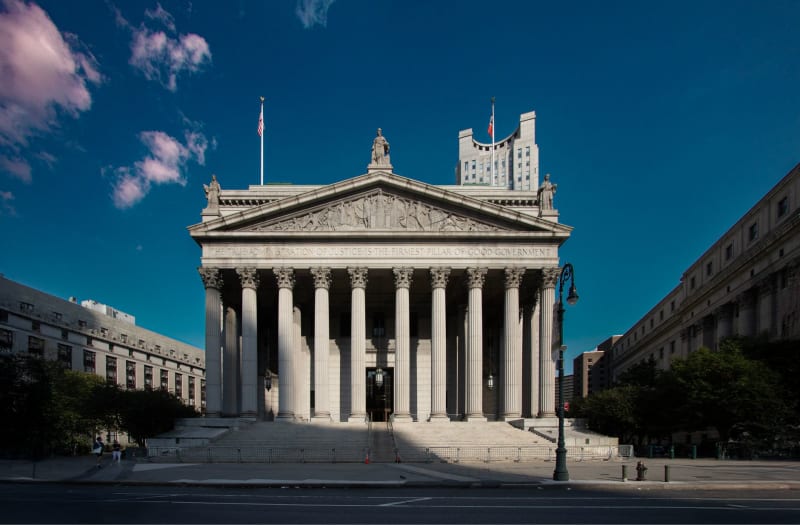
- The Supreme Court has issued a pivotal ruling, affirming that a president cannot unilaterally remove a Federal Reserve governor without cause, significantly bolstering the Fed's statutory independence.
- This decision directly addresses the challenge posed by former President Trump's attempt to dismiss Fed Governor Lisa Cook, setting a critical precedent for the separation of powers and the autonomy of key financial institutions.
- The Court's majority opinion underscored the importance of the Federal Reserve's insulation from political pressures to ensure its ability to make impartial, data-driven monetary policy decisions that are vital for economic stability.
- Legal scholars and economic analysts are closely scrutinizing the ruling's implications, particularly concerning the 'for cause' removal standard and its potential impact on other independent agencies across the federal government.
- The case originated from concerns over potential executive overreach, highlighting the ongoing tension between presidential authority and the need for independent regulatory bodies to function without undue political interference.
- This landmark judgment is expected to have lasting effects on how future administrations interact with the Federal Reserve, solidifying its role as a non-partisan arbiter of monetary policy and a bulwark against economic manipulation.
The Record
The Supreme Court's recent decision marks a significant reaffirmation of the Federal Reserve's independence, a principle long considered fundamental to the stability of the U.S. financial system. At its core, the ruling clarifies the limitations on presidential power regarding the removal of Federal Reserve governors, establishing that such removals cannot occur without a demonstrated cause. This legal precedent stems from a direct challenge to the executive's ability to exert direct control over monetary policy, a power traditionally vested in the politically insulated Federal Reserve Board. The Court's stance reinforces the original intent behind the Federal Reserve Act, which sought to create an institution capable of making economic decisions free from short-term political pressures or partisan agendas.
This case was specifically prompted by former President Trump's public statements and reported intentions to remove Federal Reserve Governor Lisa Cook, among others, over disagreements concerning monetary policy. Trump's administration had expressed frustration with the Fed's interest rate decisions, viewing them as detrimental to his economic agenda. The legal challenge effectively asked the Supreme Court to delineate the boundaries of presidential authority, particularly concerning officials appointed to independent agencies designed to operate outside the direct political control of the White House. The Court's careful deliberation and subsequent ruling have now provided a definitive answer, drawing a clear line in the sand.
The implications of this ruling extend far beyond the immediate case of Governor Cook. It sets a crucial precedent for the structure of governance within the United States, particularly for other independent agencies that also operate under 'for cause' removal protections. By upholding these protections for Federal Reserve governors, the Supreme Court has signaled a broader commitment to maintaining the institutional integrity and functional autonomy of bodies deemed essential for non-partisan oversight and expert decision-making. This decision is a powerful statement on the importance of checks and balances, ensuring that critical economic levers remain insulated from the shifting tides of political expediency.
Who Knew and When
The question of presidential authority over Federal Reserve governors has been a simmering point of contention for decades, but it reached a boiling point during the Trump administration. Public awareness of the issue escalated significantly when then-President Trump began openly criticizing the Federal Reserve and its chairman, Jerome Powell, for raising interest rates. These criticisms, often delivered via social media and public remarks, directly challenged the Fed's independence and signaled a potential willingness to intervene in its operations. The specific threat to remove Governor Lisa Cook, though not fully executed, brought the theoretical debate into sharp practical focus, forcing legal and political observers to confront the constitutional implications.
Legal experts and constitutional scholars have long debated the precise scope of presidential removal powers, particularly concerning officials serving fixed terms in independent agencies. The legal framework, primarily derived from the Federal Reserve Act and subsequent judicial interpretations, suggests that Fed governors can only be removed 'for cause,' a standard significantly higher than the 'at will' power presidents typically hold over cabinet secretaries. This distinction is crucial for maintaining the Fed's ability to act impartially on monetary policy, free from the whims of political cycles. The anticipation of a Supreme Court challenge was high among legal circles, recognizing the profound implications such a ruling would have on institutional independence.
The public, while perhaps not fully versed in the nuances of administrative law, became increasingly aware of the potential for executive overreach through extensive media coverage. News outlets widely reported on Trump's unprecedented attacks on the Fed, highlighting the potential for political interference in economic policy. This sustained attention ensured that when the Supreme Court finally took up the issue, there was a broad understanding among informed citizens that this was not merely a technical legal dispute, but a fundamental question about the future of the nation's economic governance and the integrity of its independent institutions. The ruling now serves as a definitive answer to a question that has loomed large over the past several years.
Voices from the Ground
While the immediate parties in this Supreme Court case are high-ranking officials and legal teams, the broader implications ripple through the lives of everyday Americans. Economists and financial analysts, often the first to interpret such rulings, have voiced a collective sigh of relief, emphasizing that an independent Federal Reserve is paramount for maintaining investor confidence and ensuring predictable economic conditions. "This decision solidifies the Fed's ability to make tough, unpopular decisions when necessary, without fear of political reprisal," noted Dr. Evelyn Reed, a leading macroeconomist. "That stability is crucial for everything from mortgage rates to job growth, directly impacting household budgets and business planning across the country."
Small business owners, who rely on stable interest rates and a predictable economic environment to plan their investments and expansions, have also expressed their support for the ruling's emphasis on independence. "When the Fed is seen as a political football, it creates uncertainty that makes us hesitant to hire or invest," explained Maria Rodriguez, owner of a manufacturing firm. "Knowing that monetary policy is guided by data, not by presidential tweets, gives us a clearer picture for the future. It's about confidence, and confidence is everything for small businesses trying to grow and create jobs." This sentiment underscores the tangible impact of institutional independence on the real economy.
Conversely, some political commentators and a segment of the public who advocate for greater democratic accountability over all government bodies might view this ruling with skepticism. Arguments often center on the idea that an unelected body wielding such immense power should be more directly answerable to the elected head of state. "The people elect a president to implement their vision, and that vision includes economic policy," stated conservative pundit Mark Jensen. "To completely insulate a powerful institution like the Fed from any direct executive oversight creates an unaccountable fourth branch of government, which is antithetical to democratic principles." This perspective highlights the ongoing tension between independence and accountability in a representative democracy.
The Debate
The core of the debate surrounding presidential power to remove Federal Reserve governors centers on two fundamental principles: executive authority versus institutional independence. Proponents of strong presidential removal power argue that the president, as the nation's chief executive, needs the ability to ensure that all parts of the executive branch, including independent agencies, align with the administration's policy goals. They contend that a president is elected to implement a specific agenda, and if officials within the Fed are actively undermining that agenda through their policy decisions, the president should have the recourse to replace them. This perspective emphasizes democratic accountability and the idea that the executive branch should function as a cohesive unit under the president's leadership.
Conversely, advocates for the Fed's robust independence emphasize the critical need to insulate monetary policy from short-term political pressures. They argue that economic decisions, such as setting interest rates or managing the money supply, require long-term perspectives and technical expertise, uninfluenced by electoral cycles or partisan demands. Allowing a president to fire a Fed governor at will, they contend, would inevitably politicize the institution, leading to decisions driven by political expediency rather than sound economic principles. This could result in boom-and-bust cycles, hyperinflation, or other forms of economic instability, ultimately harming the very public the president aims to serve. The 'for cause' removal standard is seen as a vital safeguard against such interference.
The Supreme Court's ruling largely sided with the latter argument, reinforcing the 'for cause' standard and thereby strengthening the Fed's independence. This decision reflects a judicial understanding of the unique role the Federal Reserve plays in the U.S. economy and the necessity of its autonomy for effective monetary policy. While the debate about the optimal balance between presidential authority and institutional independence will undoubtedly continue in various contexts, for the Federal Reserve, this ruling provides a significant and perhaps definitive clarification, solidifying its protected status as a body designed to operate above the fray of day-to-day politics. The long-term implications for economic stability are substantial.
Your Questions Answered
What Accountability Looks Like
The Supreme Court's ruling on the Federal Reserve's independence fundamentally redefines the landscape of accountability for this critical institution. While the decision shields Fed governors from arbitrary presidential removal, it does not render them entirely unaccountable. Instead, it shifts the focus of accountability towards statutory mechanisms and public oversight. Governors remain accountable to Congress, regularly testifying before committees to explain their policy decisions and economic outlook. This legislative oversight ensures transparency and provides a forum for elected representatives to scrutinize the Fed's actions, demanding explanations for its impact on the national economy and various sectors.
Furthermore, the Federal Reserve's accountability is deeply embedded in its commitment to transparency and data-driven decision-making. The institution regularly publishes detailed minutes of its meetings, economic forecasts, and research papers, allowing the public, financial markets, and academics to understand the rationale behind its policies. This commitment to open communication fosters a different kind of accountability, one based on intellectual rigor and public scrutiny of its economic analysis. If the Fed's decisions consistently fail to meet its dual mandate or are based on flawed reasoning, it faces significant reputational damage and loss of credibility, which can be a powerful form of accountability in itself.
Finally, the 'for cause' removal standard itself represents a form of accountability. While it protects against political whims, it does not protect against genuine misconduct or dereliction of duty. If a Federal Reserve governor were to engage in illegal activities, gross negligence, or a clear failure to perform their statutory responsibilities, the president would still have the legal grounds to initiate a removal process. This ensures that while policy independence is protected, basic standards of public service and ethical conduct are still enforced. The Supreme Court's decision, therefore, establishes a nuanced framework where accountability is maintained through a combination of legislative oversight, transparency, and a defined standard for serious misconduct, rather than direct political control.


















Comments
No comments yet. Be the first to comment!