

At a Glance
- An unnamed European Central Bank (ECB) official has issued a stark warning, emphasizing that the escalating climate crisis is rapidly becoming a direct and significant threat to the fundamental stability of the eurozone's financial system.
- This declaration moves climate change beyond an environmental issue, positioning it squarely as a critical economic and financial risk that demands immediate and strategic attention from policymakers and financial institutions alike.
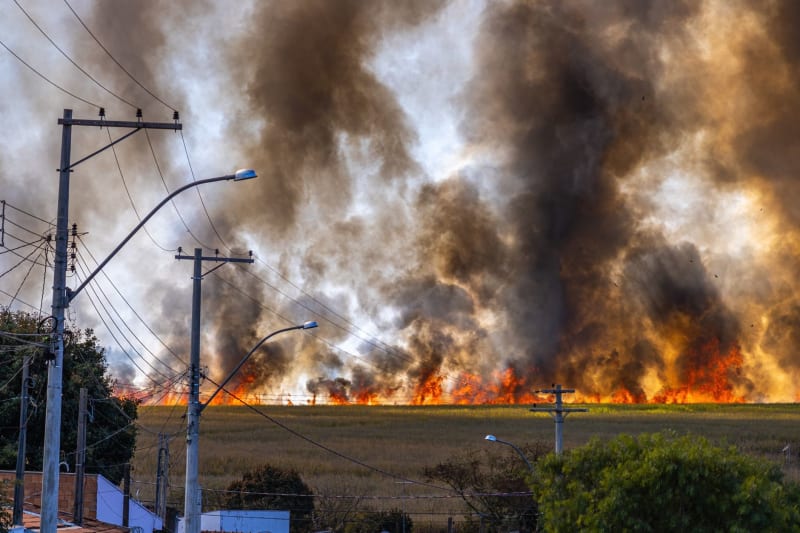
- The official underscored that physical risks, such as extreme weather events, and transition risks, stemming from the shift to a low-carbon economy, both pose substantial challenges to asset valuations, loan portfolios, and overall economic resilience.
- Central banks, including the ECB, are increasingly recognizing their crucial role in assessing and mitigating these climate-related financial risks, moving beyond traditional monetary policy mandates to safeguard economic stability.
- The warning highlights the urgent need for financial institutions to integrate climate risk analysis into their stress tests, capital requirements, and investment strategies to build greater resilience against future shocks.
- Failure to address these growing climate threats could lead to widespread financial instability, impacting everything from bank solvency and insurance markets to sovereign debt and the broader economic well-being of the eurozone.
The Record
A senior official from the European Central Bank (ECB), speaking on condition of anonymity due to the sensitivity of the topic, has unequivocally stated that the climate crisis is not merely an environmental concern but a burgeoning threat to the very core of financial stability within the eurozone. This declaration marks a significant escalation in the rhetoric from a major global financial institution, signaling that the economic ramifications of climate change are now front and center in their risk assessments. The official's comments underscore a growing consensus among central bankers that inaction on climate change poses systemic risks that could destabilize economies, disrupt markets, and undermine long-term prosperity.
The ECB's concern extends beyond direct physical damage from extreme weather events. It encompasses the broader 'transition risks' associated with the global shift away from fossil fuels. This transition, while necessary, can create significant financial shocks. Industries heavily reliant on carbon-intensive processes face devaluation of assets, stranded investments, and potential bankruptcies. Banks lending to these sectors could see a surge in non-performing loans, while investors holding their bonds could suffer substantial losses. The official emphasized that these interconnected risks could cascade through the financial system, affecting everything from insurance markets to pension funds and sovereign debt, making it a multifaceted challenge.
This warning is not an isolated incident but rather a continuation of a trend where central banks are increasingly incorporating climate risk into their mandates. The ECB, along with others like the Bank of England and the Network for Greening the Financial System (NGFS), has been actively researching and developing frameworks to understand and manage these risks. Their work includes stress testing financial institutions for climate-related scenarios, advocating for better climate-related financial disclosures, and exploring how monetary policy tools might be adapted to support green transitions. The official's statement serves as a powerful call to action, urging all stakeholders to accelerate their efforts in mitigating these profound and complex financial threats.
Who Knew and When
While the recent ECB official's warning brings renewed urgency, the awareness of climate change's financial implications is far from new. Scientists have been predicting the economic fallout of global warming for decades, with early reports from the Intergovernmental Panel on Climate Change (IPCC) in the 1990s already outlining potential disruptions to agriculture, infrastructure, and human health, all of which have direct economic costs. However, it took time for these scientific warnings to translate into tangible concerns within the financial sector, which traditionally focused on shorter-term economic cycles and more immediate market risks. The shift began to accelerate in the early 2010s as the frequency and intensity of extreme weather events became undeniable.
Key milestones in the financial sector's awakening include Mark Carney's 'Tragedy of the Horizon' speech in 2015, delivered while he was Governor of the Bank of England and Chairman of the Financial Stability Board. Carney explicitly warned that climate change posed a systemic risk to the global financial system, highlighting the mismatch between the long-term nature of climate risks and the shorter horizons of financial markets. This speech was a pivotal moment, galvanizing central banks and regulators worldwide to seriously consider climate-related financial risks. Subsequently, the establishment of the Network for Greening the Financial System (NGFS) in 2017, a group of central banks and supervisors, further solidified this commitment, creating a platform for collaborative action and research.
Since then, a growing body of research and policy papers from institutions like the IMF, World Bank, and various national central banks has consistently reinforced the message: climate risk is financial risk. Reports have detailed the potential impact on sovereign debt, insurance industries, real estate markets, and the stability of the banking sector. The ECB itself has been increasingly vocal, publishing its own climate risk stress test results and integrating climate considerations into its supervisory practices. The latest warning from the ECB official is therefore not a sudden revelation, but rather a culmination of years of escalating concern and a clear signal that the window for preventative action is rapidly closing, demanding immediate and decisive policy responses.
Voices from the Ground
While central bank officials articulate macro-level risks, the ground reality for businesses and communities is already stark. Maria Rossi, a vineyard owner in Tuscany, laments, 'Our harvest cycles are completely unpredictable now. One year, a scorching drought, the next, torrential rains that ruin the grapes. This isn't just about losing a season's profit; it's about the long-term viability of our family business, which has thrived here for generations. Banks are starting to look at us differently, questioning our ability to repay loans when our primary asset is so vulnerable to the weather.' Her experience highlights how physical climate risks directly translate into credit risk for financial institutions, impacting lending decisions and local economies.
In the industrial heartland of Germany, Klaus Müller, CEO of a medium-sized automotive parts manufacturer, expresses his frustration with 'transition risk.' 'We've invested heavily in traditional combustion engine components for decades. Now, with the rapid push for electric vehicles, we're facing immense pressure to retool, retrain, and reinvent our entire business model. The capital expenditure is enormous, and the uncertainty about future demand for our legacy products is crippling. Our investors are demanding clear sustainability plans, and our banks are scrutinizing our carbon footprint more than ever. It's a race against time, and many smaller players simply won't survive this seismic shift without significant support.' This illustrates the profound challenges faced by industries adapting to a low-carbon economy.
Across coastal communities in the Netherlands, residents like Pieter van Dijk are grappling with rising sea levels and increased flood risks. 'Our insurance premiums have skyrocketed, and some insurers are even withdrawing coverage altogether for properties in high-risk zones. My home, which has been in my family for over a century, is now considered a liability. This isn't just about personal finances; it affects property values across entire regions and puts immense strain on municipal budgets for flood defenses. The financial system needs to understand that these aren't isolated incidents; they are systemic vulnerabilities impacting millions of people and billions in assets, demanding a coordinated, long-term strategy beyond mere risk assessment.'
The Debate
The ECB's assertive stance on climate change as a core financial stability threat has ignited a vigorous debate within economic and policy circles. Proponents argue that central banks, by virtue of their mandate to maintain price stability and financial system integrity, have an undeniable responsibility to address climate risks. They contend that ignoring these risks would be a dereliction of duty, as climate change directly impacts inflation through supply chain disruptions and resource scarcity, and threatens financial stability through asset devaluation and increased credit risk. Furthermore, they believe central banks possess unique tools, such as stress testing and supervisory oversight, to compel financial institutions to internalize these risks and build resilience, thereby safeguarding the broader economy from future shocks.
Conversely, critics raise concerns about 'mandate creep,' arguing that central banks should strictly adhere to their traditional roles of monetary policy and financial supervision, without venturing into what they perceive as environmental policy. They contend that climate action is primarily the domain of elected governments and fiscal authorities, who are better equipped to make decisions about industrial policy, carbon pricing, and green investments. These critics fear that central bank involvement in climate issues could compromise their independence, politicize their decisions, and distract from their core objectives, potentially leading to suboptimal economic outcomes or even undermining public trust in these crucial institutions. They advocate for a clear division of labor, with central banks providing data and analysis but refraining from direct climate intervention.
A third perspective seeks a middle ground, suggesting that central banks should act within their existing mandates but interpret them broadly enough to encompass climate-related financial risks. This view emphasizes that climate change is an 'externality' that impacts the economy in ways central banks cannot ignore, making it a legitimate area of concern for financial stability. They propose that central banks focus on identifying, measuring, and mitigating climate risks within the financial system, rather than dictating climate policy. This could involve enhancing disclosure requirements, conducting climate stress tests, and adjusting prudential regulations to reflect climate risks, all while maintaining their operational independence and focusing on their primary objectives. The ongoing debate reflects the complex challenge of integrating a long-term, systemic environmental issue into institutions designed for short-to-medium term economic management.

Your Questions Answered
What Accountability Looks Like
Accountability in addressing climate-related financial risks spans multiple layers, beginning with financial institutions themselves. Banks, insurers, and asset managers must be held accountable for accurately identifying, measuring, and reporting their exposure to both physical and transition risks. This means integrating robust climate risk assessments into their lending, underwriting, and investment decisions, moving beyond mere box-ticking exercises. Regulators, including the ECB, are increasingly demanding that institutions demonstrate tangible progress in these areas, backed by clear metrics and transparent disclosures. Failure to do so should result in stricter capital requirements or other supervisory penalties, ensuring that the financial sector genuinely internalizes the costs of climate inaction.
Central banks and financial supervisors bear a significant responsibility in setting the regulatory framework and enforcing compliance. Their accountability lies in developing comprehensive stress tests that genuinely challenge institutions' resilience to various climate scenarios, ensuring that these tests are not just theoretical exercises but lead to actionable changes. Furthermore, central banks must be accountable for providing clear guidance and fostering an environment where financial institutions can effectively manage these complex risks without being stifled by ambiguity. This includes promoting consistent international standards for climate-related financial disclosures, which is crucial for comparability and effective risk management across borders.
Ultimately, governments and policymakers also play a crucial role in the broader accountability landscape. While central banks address financial stability, governments must implement the overarching climate policies—such as carbon pricing, green infrastructure investments, and subsidies for renewable energy—that create the necessary economic incentives for a smooth transition. Without clear and consistent government policy, financial institutions face immense uncertainty, making their risk management efforts far more challenging. Accountability, therefore, is a shared burden, requiring coordinated action from all stakeholders to ensure that the financial system is not only resilient to climate change but actively contributes to a sustainable future.














Comments
No comments yet. Be the first to comment!