
What We Know
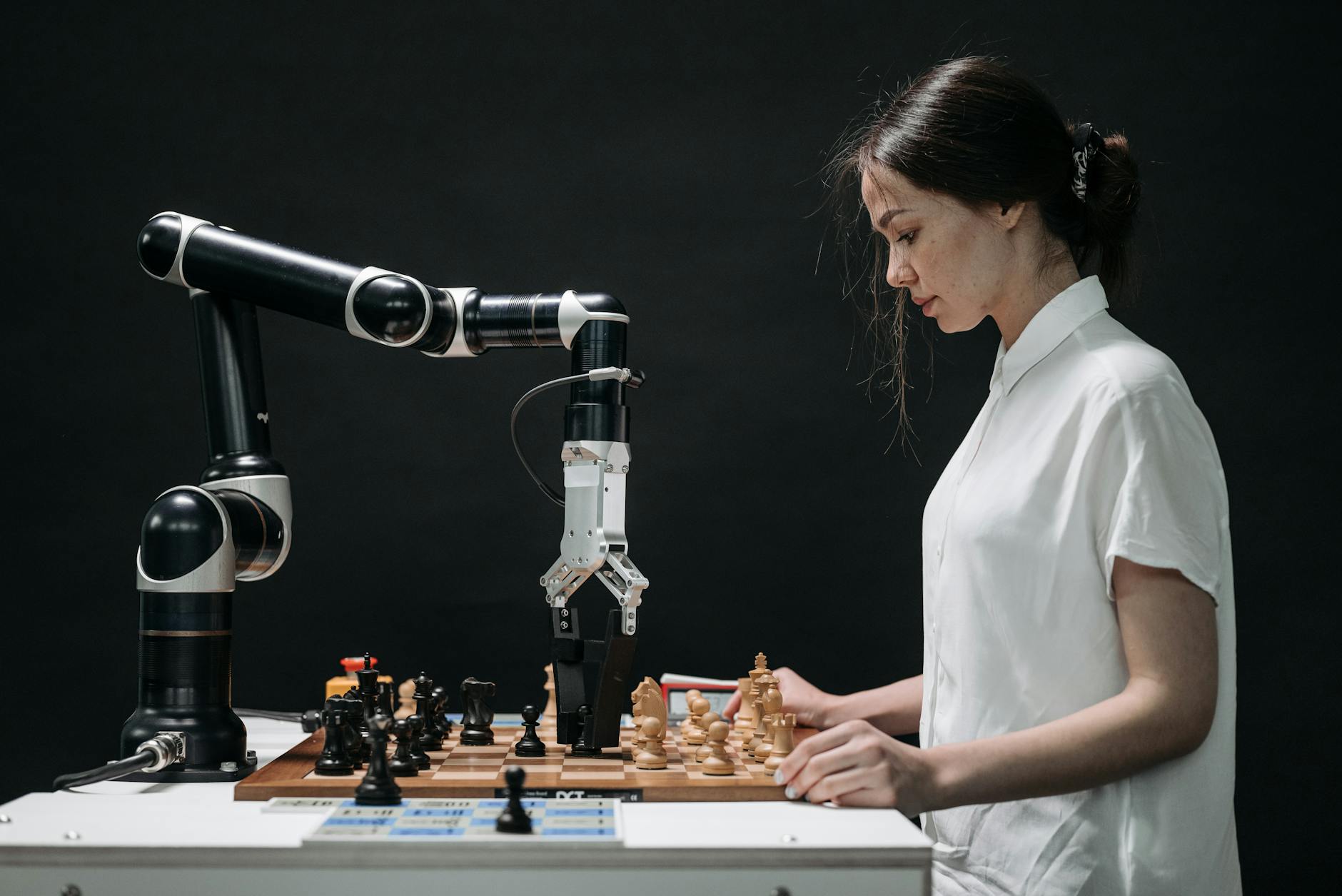
- AI agents are increasingly sophisticated, capable of understanding complex creative briefs and generating high-quality outputs across various media, including text, images, music, and code.
- These agents can automate repetitive and time-consuming tasks, such as initial drafting, image editing, data analysis, and code debugging, freeing up human creators to focus on higher-level conceptualization and refinement.
- The integration of AI agents into creative workflows is accelerating, with many professionals already experimenting with or adopting these tools to enhance productivity and explore new artistic possibilities.
- There's a growing recognition that AI agents are not merely tools for automation but can act as collaborative partners, offering novel ideas and perspectives that can inspire and push creative boundaries.
- The development of user-friendly interfaces and platforms is making AI agent technology more accessible to a broader range of creators, democratizing access to advanced creative capabilities.
- Ethical considerations and intellectual property rights surrounding AI-generated content are actively being debated and addressed by legal experts, policymakers, and industry stakeholders worldwide.
What We Do Not Know Yet
- The long-term economic impact on creative professions, including potential job displacement and the emergence of new roles, remains uncertain as AI capabilities continue to evolve rapidly.
- The precise legal frameworks and copyright laws that will govern AI-generated content and the ownership of creative works produced with AI assistance are still being defined and tested globally.
- The extent to which AI agents can truly replicate or surpass human creativity, particularly in areas requiring deep emotional intelligence, nuanced cultural understanding, and original conceptual breakthroughs, is yet to be fully determined.
- The potential for AI agents to perpetuate or amplify existing biases present in their training data, leading to skewed or unrepresentative creative outputs, requires ongoing scrutiny and mitigation strategies.
- The future evolution of AI agent capabilities and their potential to autonomously develop new creative forms or styles beyond human comprehension is a subject of ongoing speculation and research.
- The societal implications of widespread AI adoption in creative fields, including its effect on cultural diversity, artistic authenticity, and the very definition of art, are complex and multifaceted.
Background
The journey toward intelligent agents assisting in creative endeavors began with early automation tools designed to streamline specific tasks. Initially, software could only perform narrowly defined functions, such as spell-checking or basic image manipulation. As computing power grew and algorithms became more sophisticated, these tools evolved. Machine learning and, more recently, deep learning have enabled AI to understand context, learn from vast datasets, and generate content that mimics human creativity. This evolution has moved beyond simple task automation to sophisticated content generation, pattern recognition, and even collaborative ideation, marking a significant paradigm shift in how creative work can be approached and executed. The current generation of AI agents represents a culmination of decades of research and development, bringing powerful generative capabilities to the fingertips of creators.
The advent of large language models (LLMs) and diffusion models has been a pivotal moment in the development of creative AI agents. These powerful neural networks, trained on immense volumes of text and image data respectively, can produce remarkably coherent and aesthetically pleasing outputs. LLMs can write articles, scripts, and poetry, while diffusion models excel at generating photorealistic or stylized images from textual descriptions. This has democratized access to capabilities previously requiring specialized skills or expensive software. For instance, a writer can now use an LLM to brainstorm plot points or draft dialogue, and a graphic designer can generate multiple visual concepts for a project within minutes using a diffusion model. This rapid advancement has accelerated the integration of AI into professional creative workflows, prompting both excitement and apprehension.
Historically, creative tools have always evolved, from the invention of the printing press to the development of digital design software. Each technological leap has initially been met with skepticism and concerns about its impact on existing professions. However, history shows that these tools often augment human capabilities rather than replace them entirely, leading to new forms of expression and efficiency. AI agents are the latest iteration in this long lineage of creative technology. They offer the potential to lower the barrier to entry for complex creative tasks, enable faster iteration, and unlock entirely new artistic avenues. Understanding this historical context is crucial for navigating the current landscape and anticipating how AI agents will ultimately be integrated into the fabric of creative production.
Why It Matters
The integration of AI agents into creative workflows represents a fundamental shift in how content is produced, impacting everything from individual artistic expression to the economics of entire industries. For creators, these agents offer the potential to dramatically enhance productivity, overcome creative blocks, and explore novel artistic territories previously inaccessible due to technical limitations or time constraints. This empowers individuals to bring their visions to life more efficiently and effectively, potentially democratizing creativity and allowing a wider range of voices to be heard. The ability to rapidly prototype ideas, generate diverse options, and automate tedious tasks means that the focus can shift from the mechanics of creation to the conceptualization and refinement of the final product.
Beyond individual benefits, the widespread adoption of AI agents has significant implications for businesses and the broader economy. Companies can leverage these tools to accelerate product development, personalize marketing campaigns at scale, and create more engaging user experiences. This can lead to increased efficiency, reduced costs, and a competitive edge in rapidly evolving markets. However, it also raises critical questions about intellectual property, copyright, and the ethical use of AI-generated content. Establishing clear guidelines and frameworks is essential to ensure fair competition, protect creators' rights, and foster trust in AI-assisted creative outputs. The speed at which these technologies are advancing necessitates proactive engagement from policymakers and industry leaders.
The societal impact of AI agents in creative fields cannot be overstated. They have the potential to democratize access to creative tools, enabling individuals without specialized training to produce professional-quality work. This could lead to a flourishing of diverse artistic expression and new forms of cultural production. Conversely, concerns exist regarding the potential for job displacement in traditional creative roles and the homogenization of creative output if AI models are not carefully developed and deployed. It is imperative to consider how these technologies can be used to augment human creativity and foster innovation, rather than simply automate existing processes, ensuring that the future of creativity remains vibrant, diverse, and human-centric.
Timeline of Events
- Early 2010s: Advancements in deep learning and neural networks lay the groundwork for more sophisticated generative AI capabilities, moving beyond basic pattern recognition.
- Mid-2010s: Development of generative adversarial networks (GANs) demonstrates the potential for AI to create novel images and data that are indistinguishable from real examples.
- Late 2010s: Emergence of large language models (LLMs) capable of generating coherent and contextually relevant text, sparking interest in AI for writing and content creation.
- Early 2020s: Breakthroughs in diffusion models lead to the creation of highly realistic and customizable AI-generated images from text prompts, gaining widespread public attention.
- 2022-2023: Rapid proliferation of user-friendly AI tools and platforms, making advanced generative AI accessible to a broad audience of creators and businesses.
- Present Day: Ongoing research focuses on improving AI agent reasoning, multi-modal capabilities, ethical considerations, and integration into professional creative workflows across industries.
Rapid-Fire Q&A
What Is Coming
- Expect AI agents to become more deeply integrated into existing creative software suites, offering seamless workflows and advanced generative capabilities directly within familiar platforms.
- The development of more sophisticated AI agents capable of understanding and executing complex, multi-step creative projects with minimal human intervention will accelerate.
- We will likely see the emergence of AI agents specialized in niche creative domains, offering highly tailored assistance for specific industries like game development, fashion design, or architectural visualization.
- Increased focus on AI agents that can collaborate more dynamically with humans, engaging in genuine dialogue and co-creation rather than simply responding to prompts.
- Further advancements in AI's ability to understand and generate content across multiple modalities simultaneously (text, image, audio, video) will lead to richer and more immersive creative outputs.
- Ongoing debates and the establishment of clearer legal and ethical guidelines surrounding AI-generated content, intellectual property, and the future of creative professions will shape the landscape.



Comments
No comments yet. Be the first to comment!