
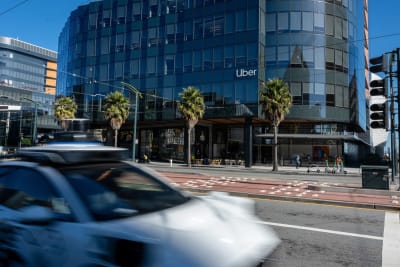
Forget simply driving passengers from point A to point B. Uber is pivoting towards an ambitious, almost clandestine, long-term vision: transforming its vast network of millions of human drivers' vehicles into a sprawling, real-world sensor grid. This isn't about the immediate future of autonomous vehicles on the road; it's about building the foundational data infrastructure that will power AI development for years to come. The company's Chief Technology Officer, Praveen Neppalli Naga, recently outlined this expansive plan, signaling a significant shift from its previous, more direct involvement in self-driving car development. This move positions Uber not as a builder of autonomous machines, but as the essential provider of the raw intelligence they crave. The genesis of this strategy lies in a stark realization: the bottleneck in autonomous vehicle (AV) advancement is no longer the sophisticated hardware or complex software. According to Naga, the critical constraint is data – specifically, diverse, real-world data collected across countless scenarios. Companies like Waymo and others spend enormous sums deploying specialized fleets to gather the necessary information to train their AI models. They need to capture specific traffic patterns, unpredictable pedestrian behavior, and varied weather conditions at precise times and locations. The sheer capital expenditure and logistical complexity of this data acquisition are immense, creating a barrier that Uber now aims to surmount by leveraging its existing driver network. This pivot carries significant historical weight for Uber. The company once poured substantial resources into developing its own self-driving car technology, a venture that ultimately proved costly and was largely abandoned. This strategic retreat, which former CEO Travis Kalanick has publicly decried as a profound error, left many questioning Uber's long-term relevance in an increasingly autonomous transportation landscape. By shifting its focus to becoming the indispensable data layer for the entire AV ecosystem, Uber is effectively finding a new, potentially more lucrative, and less capital-intensive path to influence and profit in the future of mobility. Currently, Uber's AV Labs operates a small, dedicated fleet of sensor-equipped vehicles. However, the true power of this initiative lies in its potential scalability. Imagine even a fraction of Uber's millions of global drivers equipping their cars with the necessary sensor kits. These vehicles, already navigating diverse urban and rural environments daily, would become ubiquitous data collection platforms. This would provide AV developers with an unparalleled volume and variety of real-world driving data, far exceeding what any single AV company could gather on its own, effectively democratizing access to crucial training information. The public reaction, as it unfolds on social media, is likely to be mixed. While many will see the technological advancement and potential for safer AVs, concerns about privacy and data security will inevitably surface. The idea of cars constantly collecting sensor data – from lidar and radar to cameras – raises questions about what information is being gathered, who has access to it, and how it will be anonymized. Uber will face a significant challenge in building trust and transparency around this data collection process, especially given past controversies surrounding data handling in the tech industry. What most coverage misses is the sheer breadth of Uber's ambition. This isn't just about powering self-driving cars. The data collected – insights into traffic flow, road conditions, infrastructure, and even human driver behavior – has immense value for a multitude of AI applications. Urban planning, insurance risk assessment, predictive maintenance for vehicles, and even the development of advanced driver-assistance systems (ADAS) could all benefit from this distributed sensing network. Uber is positioning itself as the central nervous system for a vast array of AI-driven services, not just autonomous transportation. Uber has already established partnerships with 25 AV companies, including London-based Wayve, and is actively building what Naga describes as an "AV cloud" – a comprehensive library of meticulously labeled sensor data. This infrastructure is designed to serve as a marketplace, where AV developers can access the specific datasets they need to refine their algorithms. The company is actively working through the regulatory landscape, recognizing that clear guidelines are needed regarding sensor data collection and sharing across different states. This proactive approach suggests a well-thought-out, multi-stage rollout plan. Looking ahead, the critical factors to watch will be Uber's success in overcoming regulatory hurdles, its ability to gain widespread adoption and trust among its driver network, and the robustness of its data privacy and security protocols. The technological feasibility of equipping millions of vehicles with sophisticated sensors affordably and reliably, along with the ongoing development of its AV cloud platform, will also be key indicators of this ambitious project's trajectory. The next phase will likely involve pilot programs and gradual expansion, offering early glimpses into the real-world impact of Uber's data-centric future.
In Brief
Uber's CTO reveals a groundbreaking plan to transform millions of driver cars into a massive sensor grid, collecting vital data for AI and autonomous vehicle development. This strategic pivot aims to solve the industry's data bottleneck.Advertisement





Comments
No comments yet. Be the first to comment!