
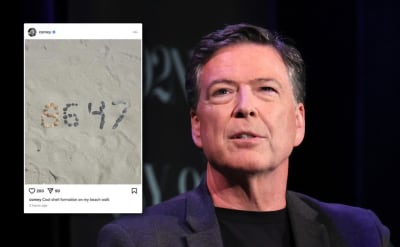
The common phrase '86,' often heard in casual conversation and service industries, carries a surprisingly complex and evolving history, extending far beyond its familiar meanings of dismissal or unavailability. While many associate it with a simple act of removal – be it an item from a menu or a patron from a bar – recent events have thrust the term into a new, more charged political arena, prompting a re-evaluation of its contemporary significance. This linguistic shift is not merely academic; it reflects deeper societal anxieties about coded language, political polarization, and the very nature of public discourse in the digital age. Understanding the journey of '86' offers a window into how words gain and lose meaning, and how historical context can be weaponized or reinterpreted. Tracing its origins, the term '86' is steeped in the vernacular of American cities, particularly New York. For decades, it served as an insider's shorthand. Bartenders and restaurateurs would '86' an ingredient when supplies ran out, meaning it was no longer available. Patrons who became too rowdy or were over-served might find themselves '86'd,' politely or not so politely asked to leave. In other contexts, it signified a rejection or disqualification, such as a player not making a team or a product being deemed unacceptable. This usage was largely confined to informal, everyday interactions, a colorful piece of urban lingo that added flavor to conversations without carrying significant weight or controversy. It was a practical term, rooted in the operational realities of commerce and social order. However, the term's semantic landscape has dramatically shifted, particularly in the charged atmosphere of online political commentary. A recent instance involving former FBI Director James Comey, where an image he posted was interpreted by some as a coded 'call for violence' using the numeral '86,' exemplifies this new interpretation. This wasn't the familiar '86' of a depleted menu item; it was a potential harbinger of something far more sinister, linking the term to acts of aggression or elimination. This leap from everyday slang to a perceived political threat highlights a growing tendency to 'read between the lines' of public statements, especially in a hyper-partisan environment where every utterance can be scrutinized for hidden meanings. The ambiguity of the term, once a source of its casual utility, now makes it a potent tool for suspicion and accusation. This re-contextualization of '86' is not an isolated incident but part of a broader trend of language being weaponized in political discourse. Figures on various ends of the political spectrum have been accused of using veiled language or coded messages to signal to supporters, with critics often quick to interpret these as incitements. The specific case of Comey's seashell photo, and the subsequent debate over whether '86' was intended as a threat or simply a benign numerical reference, underscores the difficulty in discerning intent in the digital public square. When even seemingly innocuous imagery or language can be reframed as a threat, it reveals a deep-seated distrust and a readiness to perceive malice where none may exist, or conversely, to overlook genuine incitement disguised as innocent communication. Examining the data behind online discourse, social media analytics reveal a significant uptick in the use of '86' in contexts unrelated to its traditional meanings, particularly within politically charged online forums. While precise figures for its interpretation as a 'call to violence' are difficult to quantify due to the subjective nature of online interpretation, the volume of discussion surrounding such interpretations has demonstrably increased. For example, analyses of political subreddits and X (formerly Twitter) discussions show a spike in users debating the meaning of '86' in relation to public figures and political events. This linguistic phenomenon is fueled by algorithms that often amplify polarizing content, encouraging users to engage with sensational or conspiratorial interpretations. Stakeholder views on this linguistic evolution are predictably divided. For some, particularly those who feel marginalized or threatened by political opponents, the interpretation of '86' as a code for violence is a valid concern, a necessary vigilance against subtle incitement. They argue that in an era where direct threats might be easily policed, coded language becomes the new frontier of dangerous communication. Conversely, others, often those who feel unfairly targeted or misrepresented, decry this trend as an overreach, a form of 'witch-hunt' where innocent language is twisted to score political points. They lament the loss of common understanding and the erosion of trust, where everyday phrases are imbued with sinister intent, leading to an environment of perpetual suspicion. For the average citizen, the implications are profound. This semantic shift means that a simple, everyday term can suddenly become a source of anxiety or suspicion. It highlights the increasing difficulty of navigating public discourse, where the line between genuine expression and coded messaging is perpetually blurred. It forces individuals to become amateur cryptographers, constantly trying to decipher the 'real' meaning behind words, which can be exhausting and contribute to a sense of alienation from the political process. The potential for misinterpretation, whether innocent or deliberate, can have real-world consequences, fueling division and eroding civil dialogue. The broader significance lies in how this linguistic malleability reflects and contributes to societal fragmentation. When a single word can be perceived in radically different ways by different groups, it underscores a breakdown in shared understanding. The '86' phenomenon is a microcosm of a larger issue: the erosion of a common linguistic ground, making constructive dialogue and consensus-building increasingly challenging. It suggests a society where context is disregarded in favor of pre-existing biases and where language itself becomes another battleground in the culture wars. Looking ahead, the trajectory of '86' will likely depend on how public discourse evolves. If the trend of interpreting common phrases as coded threats continues, we may see the term become permanently associated with political subversion, its original meanings further obscured. Alternatively, a concerted effort to reclaim the term's more benign usages, or a shift in public discourse towards greater clarity and less sensationalism, could see it revert to its former status. However, given the current climate, the potential for '86' to remain a charged and contested term remains high, a constant reminder of language's power to both connect and divide.
In Brief
Once a simple term for removal or unavailability, '86' is now entangled in political controversy. This article unpacks its journey from bar slang to coded language and what it means for public discourse.Advertisement




Comments
No comments yet. Be the first to comment!