
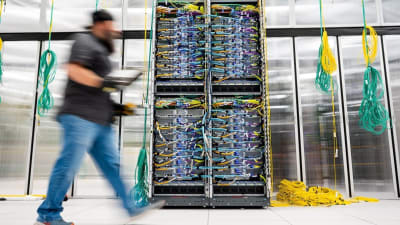
The digital revolution is accelerating at an unprecedented pace, with major technology firms planning to pour an astounding $3.7 trillion into artificial intelligence infrastructure over the next five years. This colossal investment, detailed in a new report by commercial real estate giant CBRE, is poised to reshape the American economic landscape, potentially dwarfing historical infrastructure booms like the 19th-century railroad expansion in its relative economic impact. While the promise of enhanced productivity and global competitiveness hangs heavy in the air, the human element – the millions of workers whose livelihoods and career paths will be undeniably altered – demands immediate attention. The sheer scale of capital being mobilized signals a seismic shift, one that requires a deep understanding of its ripple effects beyond the server farms and data centers. To grasp the magnitude of this AI build-out, one must look to history. The 1850s saw a transformative period for the United States as railroads crisscrossed the nation, connecting vast territories, enabling commerce on a scale previously unimagined, and fundamentally altering settlement patterns and economic activity. CBRE's analysis suggests that the current AI investment is on a trajectory to match, if not exceed, that transformative power in terms of its proportional economic significance. This isn't just about building more data centers; it's about creating the foundational infrastructure for an entirely new era of technological advancement and economic integration, a process that will necessitate a profound reevaluation of how and where economic activity takes place. Currently, the investment is primarily concentrated in the hands of a few dominant 'hyperscaler' companies, including giants like Google, Amazon, and Microsoft. These entities are at the forefront of developing and deploying AI technologies, requiring immense computing power and specialized facilities. This concentration of investment raises questions about equitable distribution of the benefits and the potential for a widening economic divide. While the overall economic stimulus is projected to be significant, ensuring that this growth translates into broad-based prosperity rather than concentrated wealth requires careful consideration of policy and strategic planning. The implications for the workforce are particularly complex. While fears of widespread job displacement are prevalent, a more nuanced perspective suggests a significant transformation of existing roles and the creation of entirely new ones. Julie Whelan, head of occupier research at CBRE, emphasizes that workers have historically adapted to technological shifts, leading to the emergence of careers that were unimaginable just a generation ago. With a demographic trend of fewer working-age individuals entering the labor force, AI may become a critical engine for maintaining economic growth and productivity, rather than solely a source of unemployment. Public reaction, amplified through social media, reflects this duality of hope and apprehension. Online discussions are rife with both optimistic visions of AI-powered efficiency and dystopian scenarios of mass unemployment. A Pew Research Center report highlighted this sentiment, indicating that a significant portion of workers harbor concerns about AI's impact on job availability. This public discourse underscores the urgent need for clear communication and proactive strategies to address anxieties and build confidence in the evolving job market. This development matters to ordinary people because it will fundamentally alter the nature of work and the skills required to thrive. Nearly 80% of American companies are already experimenting with AI, though many report minimal impact thus far. This suggests we are still in the early stages of understanding AI's transformative potential. The jobs most exposed to AI have seen lower entry-level employment growth in recent years, a trend that warrants close monitoring and proactive intervention to ensure pathways to better-paying jobs remain accessible for all. The future outlook is one of dynamic change. The report acknowledges the spectrum of predictions, from dire warnings to utopian ideals, but the immediate focus for businesses and policymakers must be on facilitating this transition. This means investing not only in the technological infrastructure but also in human capital through robust education and retraining programs. The success of this AI-driven economic expansion hinges on our ability to equip individuals with the skills needed to collaborate with AI, rather than be replaced by it. For individuals, staying informed and adaptable is paramount. Exploring AI-related educational opportunities, whether through formal courses or online resources, can provide a competitive edge. For businesses, investing in employee upskilling and redesigning job roles to leverage AI capabilities will be crucial for long-term success. Policymakers face the challenge of creating frameworks that encourage innovation while ensuring a just transition for the workforce, potentially through new social safety nets or incentivized retraining initiatives. What to watch next will be the concrete strategies companies and governments deploy to manage this monumental shift and whether they prioritize inclusive growth alongside technological advancement.
In Brief
A $3.7 trillion AI infrastructure boom is set to redefine the U.S. economy, mirroring historical expansion but raising crucial questions about workforce adaptation and societal impact.Advertisement





Comments
No comments yet. Be the first to comment!