
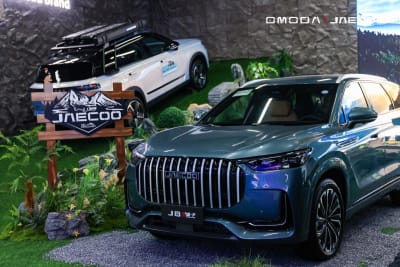
Drivers in cities worldwide are increasingly seeing their vehicles not just as modes of transport, but as extensions of their personal brand and lifestyle. This shift is pushing automakers beyond traditional manufacturing and sales, compelling them to forge deeper connections with consumers through integrated "ecosystems" of services and accessories. Chery International, a prominent Chinese automaker, is aggressively leaning into this trend, signaling a significant strategic pivot at its recent International Business Summit in Wuhu. The company unveiled a sprawling, 2,000-square-meter "Ecosystem Pavilion," a physical manifestation of its ambition to weave its vehicles into the fabric of its customers' daily lives, from urban commutes to off-road adventures and even pet-friendly travel. The core of Chery's strategy lies in reimagining the car dealership and ownership experience. Instead of static displays of metal and chrome, the company is focusing on immersive, scenario-based environments. Dealers and partners at the April summit were guided through thematic zones replicating real-world user situations. Imagine a retro-customization area where a specific model is presented not just as a car, but as a canvas for personal expression, or an outdoor lifestyle zone showcasing how a vehicle seamlessly integrates with camping gear and recreational activities. This approach aims to demonstrate tangible product applications and unlock new business opportunities for dealers by highlighting the potential for bundled sales and service packages. This new user ecosystem business unit, a focal point at the summit, presented a vision far removed from the transactional nature of car buying. The "Ecosystem Tree" design concept for the pavilion illustrates this integration: a central display of key vehicle models, branching out into specialized areas like pet travel, automotive accessories, and outdoor living. This systematic presentation aims to position Chery vehicles as central hubs for a variety of consumer pursuits, fostering brand loyalty and encouraging repeat engagement beyond the initial purchase. It's a calculated move to capture a larger share of the consumer's wallet and attention. Key products showcased within this new framework include models like the OMODA 7 and JAECOO 8, presented in contexts designed to resonate with specific demographics and interests. The OMODA line, for instance, is being positioned with a focus on fashion-forward, future-oriented design, even featuring a "fashion runway" display. Conversely, the JAECOO brand is emphasizing its off-road capabilities, with the JAECOO 8 highlighted in "super off-road scenarios." This segmentation and contextualization are crucial for appealing to a global market increasingly segmented by lifestyle choices rather than solely by price or performance metrics. Experts observe this shift as a critical evolution in the automotive industry. "Automakers are realizing that the customer relationship doesn't end when the keys are handed over," notes Dr. Anya Sharma, an automotive industry analyst at Global Mobility Insights. "The real value lies in the ongoing engagement, in becoming an indispensable part of their customers' lives. Chery's investment in these experiential ecosystems is a direct response to that realization, aiming to build a sticky user base that is less susceptible to competitive offers." The implications for consumers are multifaceted. On one hand, it promises a more personalized and integrated ownership experience, with a wider array of curated accessories and services readily available. On the other, it could lead to increased brand lock-in, where a consumer's investment in a particular ecosystem makes switching to a competitor more costly or inconvenient. For Chery, the potential gains are substantial: enhanced brand perception, increased customer lifetime value, and a more resilient business model less dependent on volatile new vehicle sales cycles. However, this ambitious strategy also presents significant challenges. Building and managing a complex ecosystem of services, accessories, and lifestyle partnerships requires substantial investment and sophisticated logistical capabilities. Ensuring the quality and relevance of these offerings across diverse international markets will be a constant test. Furthermore, the success hinges on accurately predicting and adapting to evolving consumer preferences in areas like sustainable mobility, digital integration, and personalized experiences. Looking ahead, the success of Chery's ecosystem strategy will depend on its ability to translate the immersive experiences showcased in Wuhu into tangible, scalable offerings for consumers globally. Observers will be watching closely to see how effectively Chery integrates digital platforms with its physical product and service offerings, how it fosters partnerships within these lifestyle domains, and ultimately, whether this holistic approach can cultivate the deep customer loyalty it seeks, setting a new benchmark for automotive brand engagement.
In Brief
Chinese automaker Chery is pioneering a new era by transforming vehicles into hubs for integrated lifestyle ecosystems, moving beyond traditional sales to foster deeper consumer connections through curated services and experiences.Advertisement



Comments
No comments yet. Be the first to comment!