

"The implications of this ruling are profound, potentially altering the landscape of American representation for decades to come," stated Dr. Lena Hanson, a constitutional law scholar at Georgetown University. "What we're seeing is a fundamental shift in how electoral districts are viewed – moving away from ensuring representation for diverse communities towards a more permissive environment for partisan advantage." This seismic shift, emanating from the nation's highest court, signals a new chapter in the contentious art of political map-making, with ramifications that extend far beyond the immediate electoral cycle. The court's decision effectively loosens the federal government's ability to ensure that minority voters have a fair opportunity to elect candidates of their choice, a cornerstone of voting rights protections for decades. The legal battle that culminated in this ruling centered on the Voting Rights Act of 1965, specifically Section 2, which prohibits voting practices or procedures that discriminate on the basis of race, color, or membership in a language minority group. For years, this provision has been instrumental in challenging redistricting plans that dilute minority voting strength, often leading to the creation of majority-minority districts that ensure representation for communities historically disenfranchised. The majority opinion, however, reinterpreted the burden of proof required to demonstrate a Section 2 violation, making it significantly harder for plaintiffs to prove that a redistricting plan is discriminatory, even if it results in fewer minority representatives being elected. This new interpretation emphasizes the intent of the lawmakers drawing the maps, rather than solely focusing on the discriminatory *effect* of those maps. This recalibration of the legal standard provides Republican lawmakers, particularly in Southern states, with a considerably broader latitude to redraw congressional and state legislative maps. Historically, the requirement to create districts that allowed minority voters a reasonable chance to elect their preferred candidates served as a significant check on purely partisan gerrymandering. Now, with that judicial guardrail substantially weakened, GOP strategists see an opportunity to consolidate power by eliminating or reconfiguring Democratic-leaning districts, thereby increasing their overall seat count in the House of Representatives and in state legislatures. This could translate into a significant, albeit potentially delayed, advantage in future elections, allowing them to secure majorities even when vote totals are closely divided. The immediate practical challenge, however, is the timing of the Supreme Court's decision. In many states, the deadlines for candidate filings for primary elections, and in some cases, the primaries themselves, have already passed. This means that electoral maps for the upcoming cycle are largely set in stone, and ballots have already been printed or early voting has commenced. States like Louisiana, where a key part of the legal challenge originated, found themselves in a race against the clock. With federal primary elections scheduled for May 16 and early voting set to begin just days before, state officials were urgently convening to determine how, or even if, they could comply with the new legal landscape without disenfranchising voters or creating electoral chaos. The political pressure to capitalize on this ruling is palpable within the Republican party. Across states where GOP leadership controls the redistricting process, there are immediate calls to review and potentially redraw existing maps to maximize partisan advantage. Figures like Rick Jackson, a businessman and gubernatorial candidate in Georgia, publicly urged for swift action, framing the redraw as a necessary step to "ensure secure elections" and counter perceived partisan assaults. This urgency reflects a broader strategic effort to solidify electoral gains and proactively shape the political playing field in anticipation of future contests, even if the immediate impact on the current election cycle is limited. What much of the ensuing coverage has missed is the subtle yet critical distinction in the ruling's focus: the shift from examining the *effect* of redistricting to scrutinizing the *intent* behind it. While the outcome may appear similar – fewer minority-represented districts – the legal pathway to challenge such outcomes is now significantly more arduous. Proving discriminatory intent requires a deeper dive into legislative debates, internal communications, and a complex web of circumstantial evidence, a far cry from demonstrating that a map, in practice, disenfranchises a specific group of voters. This makes future legal battles much more complex and less likely to succeed. The social media sphere has predictably exploded with reactions, ranging from celebratory pronouncements by conservative commentators about reclaiming electoral integrity to dire warnings from civil rights organizations about the erosion of democracy. Hashtags like #FairMaps and #VoterSuppression trended, reflecting the polarized public discourse. While online discussions highlight the emotional stakes, they often simplify the intricate legal arguments and the nuanced, long-term consequences of the court's decision, focusing more on immediate political wins or losses than on the structural changes to the electoral system itself. Looking ahead, the true impact of this decision will unfold gradually. The immediate focus will be on states that can still redraw their maps before the next major election cycle. However, the long-term battle will be fought in courtrooms as civil rights groups and advocacy organizations devise new strategies to challenge discriminatory maps under the heightened burden of proof. Additionally, attention will turn to state-level initiatives and potential legislative efforts to codify protections that the Supreme Court has, in effect, loosened. The coming years will reveal whether this ruling truly reshapes American politics by empowering one party, or whether it will spur new forms of grassroots activism and legal challenges aimed at preserving equitable representation.
In Brief
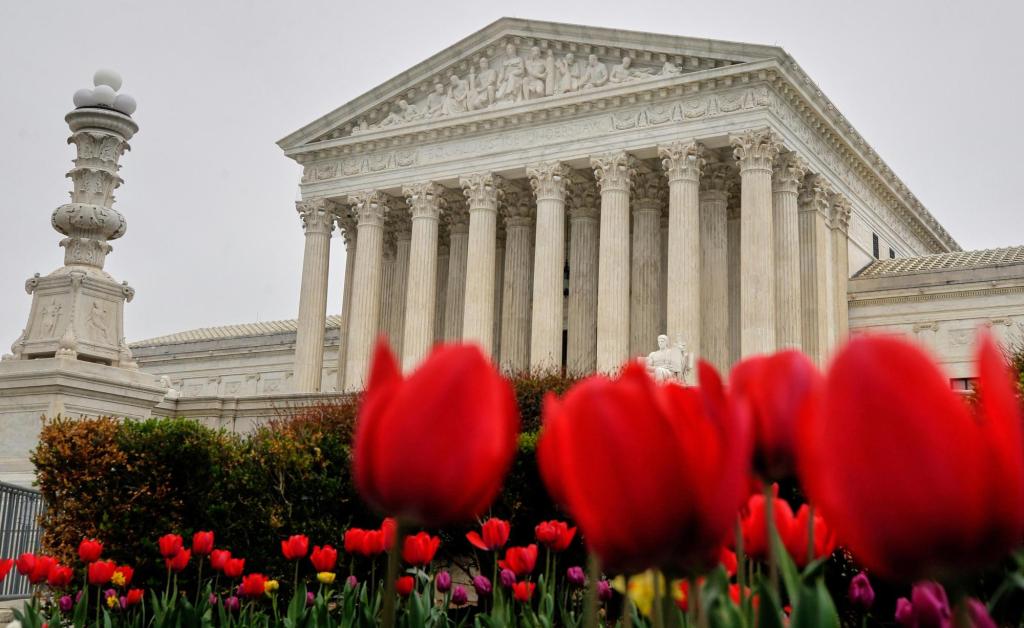
The Supreme Court's latest redistricting ruling has significantly altered the legal framework for drawing electoral maps, potentially reshaping American politics for decades by making it harder to challenge maps that dilute minority voting strength.Advertisement



Comments
No comments yet. Be the first to comment!