
The Numbers
- A commanding majority stake of 51 percent has been acquired by Morgan Stanley Infrastructure Partners, fundamentally altering the ownership structure of the historic French environmental services provider.
- The remaining 49 percent of the equity will be retained by the founding Nicollin family, who will continue to guide the operational legacy and maintain a significant voice in strategic decisions.
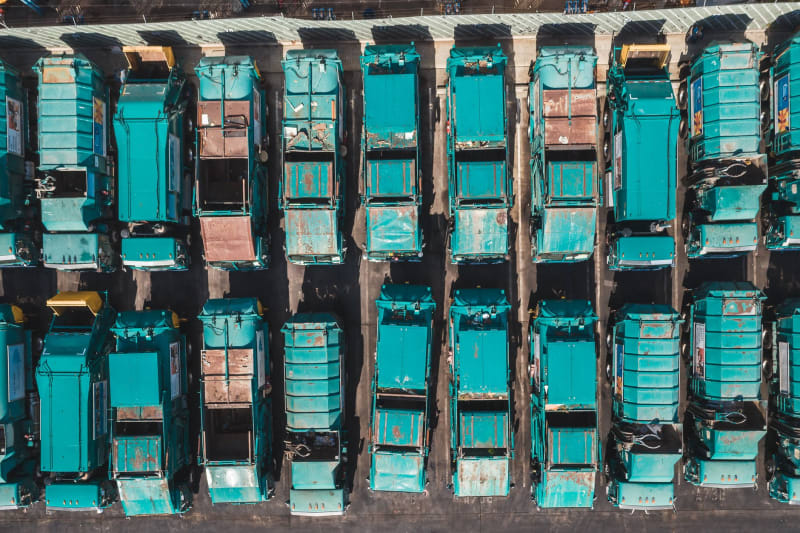
- Nicollin currently manages a massive network of municipal contracts, serving over 10 million citizens daily across France through its extensive waste collection, sorting, and urban cleaning services.
- The transaction values the French environmental services pioneer at an enterprise level that reflects the premium currently placed on stable, inflation-linked infrastructure assets in Western Europe.
- Over 400 municipal contracts are currently active under Nicollin's management, providing a highly predictable, long-term revenue stream that perfectly aligns with the risk-return profile of global infrastructure funds.
- The capital injection is expected to fuel a multi-million euro investment program targeting advanced recycling facilities, fleet electrification, and localized decarbonization initiatives over the next five years.
Context Check
The European waste management and recycling sector is undergoing a profound transformation driven by stringent regulatory mandates and ambitious net-zero targets. As the European Union tightens its circular economy directives, traditional waste management companies are forced to transition from simple landfill and incineration models to highly sophisticated resource recovery operations. This transition requires massive capital expenditure, which is increasingly being supplied by global private equity and specialized infrastructure funds looking for resilient, long-term yields.
France, in particular, represents a highly competitive yet lucrative market where municipal authorities are demanding more sustainable and technologically advanced waste solutions. Local governments are no longer satisfied with basic collection services; they now require integrated solutions that include automated sorting, organic waste treatment, and localized energy generation. For regional players like Nicollin, partnering with a global financial powerhouse is no longer just an option for growth, but a strategic necessity to defend market share against consolidated giants.
This partnership highlights a broader macroeconomic trend where institutional capital is aggressively flowing into essential public services. Infrastructure funds are drawn to the sector's high barriers to entry, long-term municipal contracts, and inflation-indexed pricing models. By securing a majority stake in Nicollin, Morgan Stanley Infrastructure Partners is positioning itself at the very center of France's ecological transition, capitalizing on guaranteed public sector demand while driving operational efficiencies through scale.
Background
Founded in the mid-20th century, Nicollin has grown from a localized family business into the third-largest player in the French environmental services market. The company has built a formidable reputation based on operational reliability and deep-rooted relationships with municipal leaders across France. For decades, the Nicollin name has been synonymous with public sanitation, household waste management, and industrial cleaning services, maintaining a distinct family-led culture that set it apart from its corporate rivals.
Despite its strong market position, the rapid consolidation of the European waste sector has presented Nicollin with unprecedented challenges. Larger competitors, backed by massive corporate balance sheets, have been able to bid aggressively on complex, capital-intensive municipal tenders. To maintain its competitive edge and fund the next generation of recycling infrastructure, Nicollin required a financial partner capable of matching the scale of its long-term ambitions without erasing its operational heritage.
Morgan Stanley Infrastructure Partners, a leading global infrastructure investment platform, recognized the unique value proposition of Nicollin's stable cash flows and established market presence. The firm specializes in investing in essential service assets with strong defensive characteristics and growth potential. This acquisition represents a strategic entry point into the French environmental market, providing the fund with a robust platform to deploy capital and pursue further consolidation opportunities in the region.
Winners and Losers
The clear winners in this transaction are the Nicollin family and the company's executive leadership, who have successfully unlocked substantial liquidity while retaining a highly influential 49 percent stake. This structure allows them to leverage Morgan Stanley's vast financial resources to accelerate growth while maintaining their operational control and preserving the family legacy. Additionally, French municipalities stand to benefit from a more financially robust partner capable of investing in state-of-the-art waste processing technologies.
On the other hand, smaller, independent regional waste operators in France may find themselves at a distinct disadvantage. As Nicollin gains access to institutional-grade capital, it will be positioned to bid more aggressively on local contracts, potentially squeezing out smaller competitors who lack the financial backing to compete on technology and scale. These smaller players face the difficult choice of either seeking their own financial backers or risking gradual marginalization in an increasingly consolidated market.
Furthermore, there may be underlying concerns among municipal labor unions regarding the entry of a global private infrastructure fund. While the partnership promises growth, institutional investors typically demand rigorous operational efficiency and cost discipline. Employees and labor representatives will need to remain vigilant to ensure that the drive for increased profitability does not compromise working conditions, safety standards, or the localized, community-oriented culture that Nicollin has cultivated over decades.
Analyst Perspectives
Financial analysts view this transaction as a textbook example of the growing convergence between private infrastructure capital and environmental services. Industry experts note that the waste management sector is increasingly viewed as a utility-like asset class, offering highly predictable, inflation-protected cash flows that are highly attractive in volatile macroeconomic environments. The acquisition demonstrates that global funds are willing to pay a premium for established platforms with strong municipal relationships.
Environmental policy analysts suggest that this deal will accelerate the deployment of advanced circular economy technologies across France. With Morgan Stanley's backing, Nicollin can rapidly scale its investments in high-tech sorting facilities, organic waste anaerobic digestion plants, and carbon-neutral collection fleets. This capital injection is crucial for helping French municipalities meet the strict recycling and landfill reduction targets mandated by both national laws and European Union directives.
However, some market observers caution that the influx of global financial capital into essential public services could lead to upward pressure on municipal contract pricing over the long term. As infrastructure funds seek to maximize returns on their investments, they will inevitably focus on margin expansion and cost recovery. Municipalities will need to structure future tenders carefully to ensure that the benefits of technological modernization are shared equitably with taxpayers and do not lead to excessive service fees.

Key Questions Explained
The Outlook
The outlook for Nicollin under its new ownership structure is highly positive, with the company well-positioned to capture a larger share of the evolving French environmental services market. The combination of local operational excellence and global financial backing creates a formidable competitor capable of bidding for the most complex municipal and industrial contracts. We expect to see immediate announcements regarding capital expenditures for new recycling facilities and fleet modernization.
Over the medium term, this partnership is likely to trigger further consolidation within the French waste sector. Backed by Morgan Stanley, Nicollin may pursue strategic acquisitions of smaller regional players to expand its geographic footprint and achieve greater economies of scale. This aggressive growth strategy will likely force other mid-sized competitors to seek similar financial alliances, accelerating the professionalization and corporate backing of the entire industry.
Ultimately, the success of this joint venture will depend on how well the partners balance the profit expectations of a global infrastructure fund with the public service obligations of a municipal contractor. If managed correctly, this partnership could serve as a blueprint for how private capital can be successfully mobilized to upgrade public infrastructure, meet urgent environmental mandates, and deliver high-quality, sustainable services to millions of citizens.















Comments
No comments yet. Be the first to comment!