
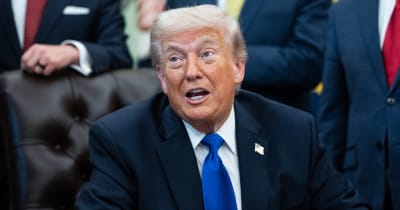
The White House has declared an end to "hostilities" with Iran, a move that legally allows the president to bypass the mandatory 60-day congressional notification period under the War Powers Resolution, even as a U.S. naval blockade of Iranian ports remains firmly in place. This semantic maneuver sidesteps a critical deadline that would typically necessitate congressional approval for continued military engagement, signaling a significant executive branch strategy to assert control over foreign policy actions. The declaration, made in a letter to lawmakers, hinges on the argument that active combat operations have ceased, thereby resetting the legal clock and avoiding a direct confrontation with a divided Congress. This approach, however, raises profound questions about the balance of power and the executive's unilateral ability to define the parameters of military engagement abroad. The War Powers Resolution of 1973 was enacted to curb presidential overreach and ensure legislative oversight of military deployments. It mandates that the president must consult with Congress before introducing U.S. armed forces into hostilities and requires congressional authorization if forces are to remain engaged beyond 60 days. This framework was designed to prevent presidents from unilaterally committing the nation to prolonged conflicts without democratic consent. The current situation, where the administration redefines "hostilities" to circumvent this timeline, directly challenges the spirit and intent of this landmark legislation. It represents a recurring tension in American governance, where the executive often seeks to maximize its agility in foreign affairs, sometimes at the expense of legislative checks and balances. This strategic declaration comes at a moment of heightened political pressure and uncertainty surrounding U.S. involvement in the region. Defense Secretary Pete Hegseth echoed the administration's stance, suggesting during a Senate hearing that a de facto ceasefire "pauses or stops" the critical 60-day clock. This interpretation, while legally defensible on a narrow reading of "hostilities," glosses over the ongoing, albeit non-kinetic, military posture maintained by the U.S. naval blockade. The blockade itself represents a significant act of coercion and a potential precursor to renewed conflict, placing the nation in a prolonged state of military tension without explicit congressional buy-in for the sustained engagement. The political landscape in Washington further complicates this issue. House Speaker Mike Johnson has been notably reticent to directly address the 60-day deadline, characterizing the situation as "not war" and expressing reluctance to interfere with "sensitive negotiations." This cautious approach reflects the internal divisions within the Republican party and the broader desire to avoid being drawn into a public debate that could be politically damaging. However, a notable dissent emerged from Senator Susan Collins of Maine, a key moderate Republican facing a challenging re-election bid. Her vote with Democrats on a measure to end operations without congressional approval highlights a growing unease among some lawmakers about the administration's expansive interpretation of presidential authority. Adding to the complexity, intelligence reports indicate that Iran is actively preparing for a potential resurgence of hostilities, even as the U.S. maintains its blockade. Furthermore, discussions are reportedly underway within the Trump camp regarding strategic options for the Strait of Hormuz, a vital chokepoint for global oil supplies. This suggests that while the administration is seeking to legally pause congressional oversight, the underlying strategic calculus points towards a continued, and potentially escalating, confrontation in the region. The ongoing naval presence, coupled with Iran's preparedness, creates a precarious situation where the "termination" of hostilities feels more like a temporary lull than a definitive resolution. The systemic issue at play here is the persistent struggle between the executive and legislative branches over control of foreign policy and the deployment of military force. Presidents have historically found ways to expand their authority in this domain, often citing national security imperatives and the need for swift action. However, the current administration's explicit redefinition of key legal terms to circumvent congressional oversight represents a significant escalation of this trend. It raises concerns that the checks and balances designed by the founders are being eroded, leaving the nation more susceptible to prolonged military engagements initiated and sustained by presidential decree rather than democratic deliberation. This situation underscores the broader challenge of maintaining democratic accountability in an era of rapid global developments and evolving military technologies. The War Powers Resolution, while a crucial safeguard, relies on clear definitions and congressional willingness to assert its authority. When the executive branch can effectively redefine terms like "hostilities" to its advantage, the legislative branch's ability to provide meaningful oversight is significantly diminished. The long-term consequence could be a gradual shift of power away from Congress, leaving the nation's foreign policy decisions increasingly concentrated in the hands of a single branch. Looking ahead, the critical question will be whether Congress, particularly the Senate, will find the political will and unity to challenge the administration's interpretation of the War Powers Resolution. The upcoming legislative session will likely reveal whether lawmakers are prepared to reclaim their constitutional role in authorizing military action, or if the executive branch will continue to expand its unilateral powers in foreign affairs. The nation's commitment to democratic principles of oversight and accountability will be tested in the coming months, particularly as geopolitical tensions in the Middle East remain volatile and the potential for renewed conflict lingers.
In Brief
The White House declared an end to "hostilities" with Iran, legally sidestepping a key congressional oversight deadline. This move redefines military engagement and raises questions about the balance of power.Advertisement



Comments
No comments yet. Be the first to comment!