
What We Know
- A novel AI system has been developed, specifically engineered to map orchards with unprecedented precision, offering a granular view of individual trees and their health metrics.
- This advanced technology leverages drone imagery and sophisticated machine learning algorithms to identify tree species, assess canopy size, and detect early signs of disease or stress, providing actionable insights for growers.
- The system promises to significantly enhance resource management by enabling targeted application of water, fertilizers, and pesticides, thereby reducing waste and environmental impact while boosting overall efficiency.
- Early trials have demonstrated remarkable accuracy in tree counting and health assessment, far surpassing traditional manual methods and even existing satellite-based solutions in terms of detail and reliability.
- The AI's ability to create detailed 3D models of orchards allows for comprehensive spatial analysis, which can inform optimal planting strategies, pruning schedules, and harvest planning, leading to more predictable and higher yields.
- Integration with existing farm management software is a key feature, ensuring that the data generated by the AI system can be seamlessly incorporated into daily operational workflows, making it a practical tool for modern agriculture.
What We Do Not Know Yet
- The exact cost structure for widespread commercial adoption of this AI orchard mapping system remains unclear, including initial setup expenses for hardware and ongoing subscription fees for software and data processing.
- While early trials are promising, the long-term scalability and performance of the AI system across diverse geographical regions and varying orchard types, particularly in challenging terrains or extreme climates, have not been fully validated.
- The specific training required for orchard managers and agricultural workers to effectively utilize and interpret the complex data outputs from the AI system is still being determined, potentially impacting adoption rates.
- How the AI system will integrate with a multitude of proprietary farm management platforms from different vendors, and the potential for data silos or compatibility issues, needs further investigation and standardization efforts.
- The precise impact of this technology on labor requirements within orchards, including potential job displacement or the creation of new roles, is an area that requires careful analysis and forecasting.
- While environmental benefits are anticipated, the full scope of the system's ecological footprint, including energy consumption for data processing and drone operations, needs a comprehensive life cycle assessment.
Background
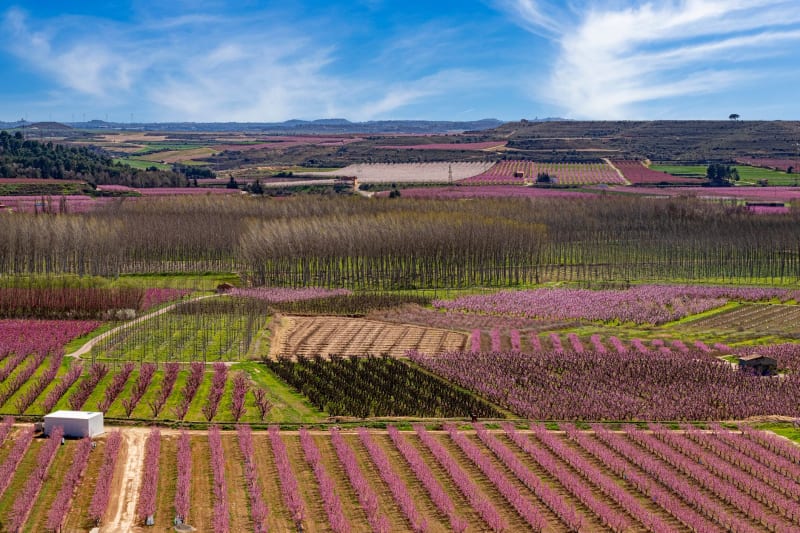
For decades, orchard management has relied on a blend of traditional knowledge, manual inspection, and increasingly, basic remote sensing techniques. Growers have painstakingly walked rows, visually assessing tree health, counting fruit, and identifying issues. While effective to a degree, this approach is inherently labor-intensive, time-consuming, and often lacks the precision needed for optimal resource allocation. The sheer scale of modern orchards, often spanning hundreds or thousands of acres, makes comprehensive manual assessment practically impossible, leading to inefficiencies in irrigation, fertilization, and pest control. This reliance on generalized data rather than specific tree-level insights has historically resulted in suboptimal yields and increased operational costs.
The advent of drone technology and advancements in computer vision began to offer a glimpse into a more precise future. Drones equipped with multispectral cameras could capture aerial imagery, providing insights into plant vigor and stress across an entire orchard. However, these early systems often produced raw data that required significant human interpretation and lacked the granular detail necessary for individual tree management. They could identify broad problem areas but struggled with the nuanced assessment of specific trees, such as differentiating between various diseases or accurately estimating fruit counts on a per-tree basis. This gap highlighted the need for more sophisticated analytical tools that could transform raw visual data into actionable intelligence.
This new AI system represents a significant leap forward, moving beyond mere data collection to intelligent data analysis. By integrating high-resolution drone imagery with advanced machine learning algorithms, it can now process vast amounts of visual information to identify individual trees, assess their unique health status, and even predict yield with remarkable accuracy. This level of precision was previously unattainable, offering growers an unprecedented ability to understand and manage their orchards at a micro-level. It’s a paradigm shift from broad-stroke management to hyper-localized intervention, promising to unlock new levels of efficiency and productivity in the agricultural sector.
Why It Matters
The introduction of AI-powered precision orchard mapping is not merely an incremental improvement; it represents a fundamental shift in agricultural practices with profound implications for global food security and environmental sustainability. By providing growers with real-time, highly granular data on every single tree, this technology empowers them to make informed decisions that drastically reduce waste. Imagine applying water only where and when it's needed, fertilizing individual trees based on their specific nutrient deficiencies, or targeting pest treatments precisely to affected areas. This level of efficiency directly translates to lower input costs for farmers, making their operations more economically viable and resilient in an increasingly competitive market.
Beyond economic benefits, the environmental advantages are substantial. Reduced water usage in agriculture, a sector that consumes a significant portion of global freshwater resources, is critical in an era of increasing scarcity. Minimizing the indiscriminate use of fertilizers and pesticides protects soil health, prevents runoff into waterways, and preserves biodiversity. This AI system offers a tangible pathway towards more sustainable farming practices, mitigating the ecological footprint of large-scale agriculture. As climate change continues to impact growing seasons and resource availability, tools that enhance efficiency and resilience become indispensable for maintaining a stable food supply.
Ultimately, this innovation contributes directly to the broader challenge of feeding a growing global population more efficiently and sustainably. With precise yield predictions, farmers can better plan their harvests, optimize storage, and reduce post-harvest losses, ensuring more food reaches consumers. The ability to detect and address tree health issues early can prevent widespread crop failures, safeguarding livelihoods and regional economies dependent on agriculture. This technology is a critical step towards a future where farming is not only more productive but also more environmentally responsible and economically stable for growers worldwide.
Timeline of Events
- **Early 2000s:** Initial research begins on using satellite imagery and basic aerial photography for agricultural monitoring, primarily focusing on large-scale crop health assessment rather than individual trees.
- **Mid-2010s:** The proliferation of commercial drones makes high-resolution aerial data more accessible to farmers, leading to early attempts at using drone imagery for orchard mapping, though often requiring extensive manual analysis.
- **Late 2010s:** Significant advancements in machine learning and computer vision algorithms begin to enable automated object detection and classification in aerial images, laying the groundwork for more sophisticated analysis of individual trees.
- **Early 2020s:** Dedicated research and development efforts intensify, focusing on combining drone technology with AI to create comprehensive, tree-level mapping solutions for orchards, moving beyond simple health indicators.
- **Mid-2023:** Prototype AI systems demonstrate promising results in controlled environments, accurately identifying tree species, counting individual trees, and assessing canopy volume with high precision.
- **Late 2023 - Early 2024:** Extensive field trials are conducted in various orchard types and geographical locations, refining the AI models and validating their performance under real-world agricultural conditions, leading to the current breakthrough announcement.
Rapid-Fire Q&A
What Is Coming
- Expect to see a phased commercial rollout of this AI orchard mapping system, initially targeting large-scale commercial growers and agricultural cooperatives who stand to gain the most from its immediate efficiency improvements.
- Further enhancements to the AI's predictive capabilities are anticipated, including more sophisticated models for forecasting disease outbreaks and even more precise yield predictions based on real-time environmental data and historical trends.
- The development of user-friendly interfaces and mobile applications will make the system's powerful analytics more accessible to a broader range of farmers, reducing the technical barrier to entry and accelerating adoption.
- Integration with autonomous ground vehicles and robotic harvesting systems is on the horizon, creating a fully automated, AI-driven orchard management ecosystem that minimizes human intervention and maximizes operational efficiency.
- Research will likely expand into new agricultural applications beyond orchards, potentially adapting the core AI mapping technology for row crops, vineyards, and even forestry management, broadening its impact across the agricultural sector.
- Ongoing efforts will focus on making the technology more affordable and scalable for small to medium-sized farms, potentially through subscription-based models or partnerships, ensuring that the benefits of precision agriculture are not limited to large enterprises.









Comments
No comments yet. Be the first to comment!