

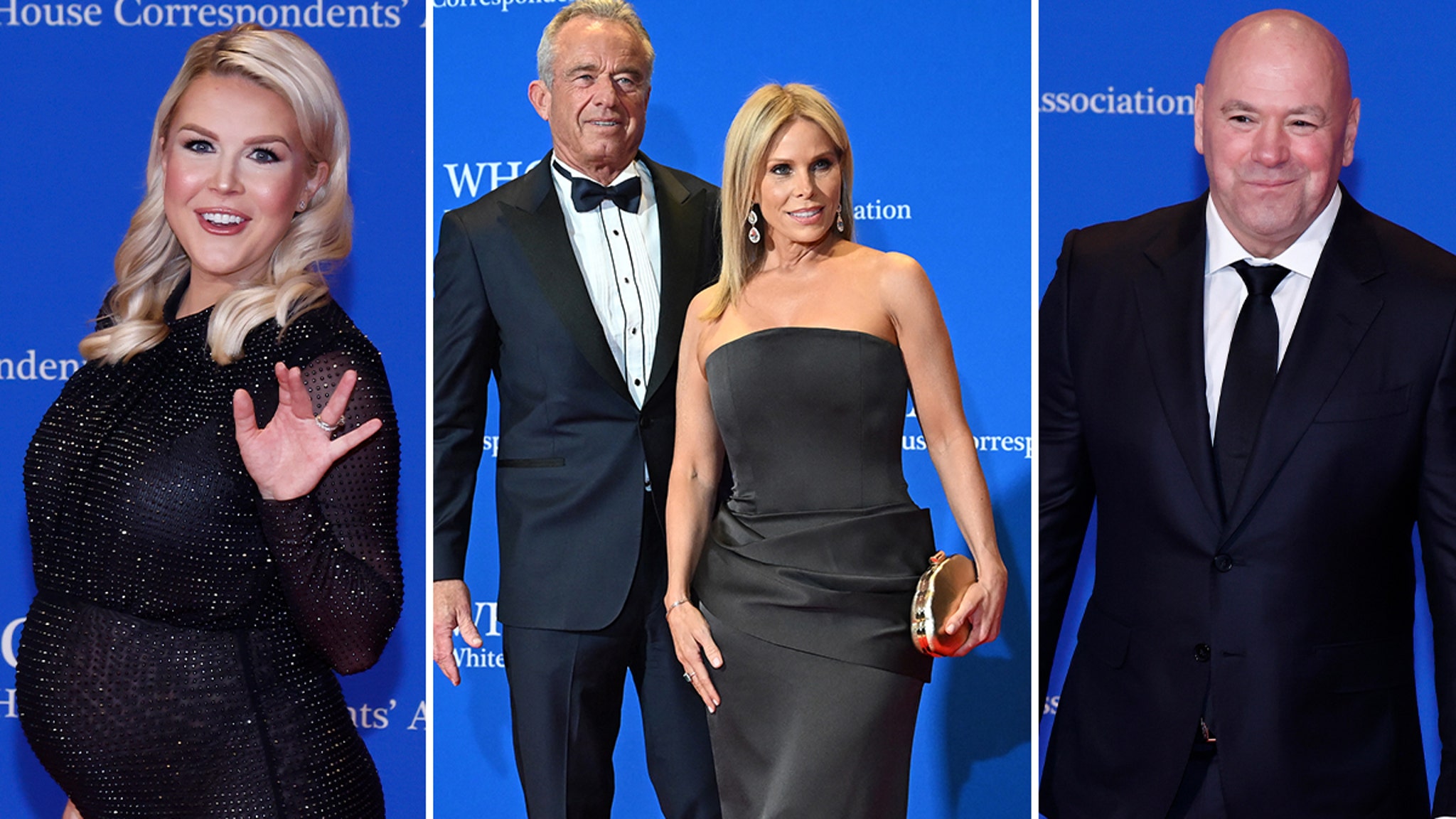
Does the increasing polarization of American politics inevitably lead to heightened personal threats against its leaders? This question looms large following a dramatic security incident late Saturday, where a man armed with firearms and knives breached the perimeter of a Washington D.C. hotel just as President Donald Trump was scheduled to speak. The swift apprehension of the suspect, identified as 31-year-old Cole Tomas Allen of Torrance, California, averted a potentially catastrophic event, but the psychological impact on the nation's highest office, and the broader implications for political discourse, are undeniable. This incident, which the President has characterized as a potential assassination attempt, marks a disturbing escalation in the climate of political tension. The immediate aftermath saw a subdued and introspective President Trump address reporters at the White House. His tone was a stark departure from his often combative public persona. "It's always shocking when something like this happens. Happened to me, a little bit. And that never changes," he stated, referring to what he perceives as a pattern of threats against him. This framing suggests a deeply personal connection to the event, seeing it not as an isolated act of a disturbed individual, but as a direct consequence of his political identity and the highly charged environment he operates within. The presidency, he observed, has become a "dangerous profession," a sentiment that resonates beyond his personal experience, pointing to a global trend where political affiliation can translate into tangible danger. Beyond the immediate shock and the President's personal reflections, the incident underscores a palpable shift in the nature of political engagement. Trump's assertion that impactful leaders are often targets, drawing a parallel to Abraham Lincoln, highlights a historical perspective on the risks associated with significant political action. However, the context today is vastly different. The ease with which an individual could approach such a high-security event, even if ultimately intercepted, raises urgent questions about the effectiveness of existing security protocols in an era of pervasive social media and increasingly volatile public sentiment. The incident serves as a potent, albeit terrifying, symbol of the anxieties many feel regarding the safety of public figures and the stability of democratic institutions. In the wake of the breach, President Trump extended an olive branch, urging national unity and bipartisan healing. "We have to, we have to resolve our differences," he declared, a sentiment that seemed to genuinely reflect a desire for a less fractious America. He described the attendees at the White House Correspondents' Association dinner as a diverse group, noting an unexpected sense of camaraderie and "tremendous amount of love and coming together" that night. This call for unity, while potentially politically strategic, also speaks to a deeper human response to shared vulnerability. The shared experience of a near-tragedy, even one targeting the President, can momentarily transcend partisan divides, fostering a collective reflection on what truly matters. The social media reaction to the incident was, predictably, fragmented. While many expressed relief that the President was unharmed and condemned the act of violence, others used the event to amplify existing political grievances. Online discussions quickly devolved into partisan finger-pointing, with some blaming political rhetoric from the opposition for inciting such acts, while others dismissed the incident as an overblown security scare or a publicity stunt. This digital cacophony illustrates the profound challenge of fostering national unity when the very platforms intended to connect people are often used to deepen divisions and spread misinformation, making a unified response to threats, both internal and external, increasingly difficult. Experts in political psychology and security analysis point to a growing pattern of political violence globally. Dr. Evelyn Reed, a professor of Political Science at Georgetown University, notes, "We are observing a concerning normalization of aggressive rhetoric, which can, in susceptible individuals, lower the threshold for violent action. The perceived legitimacy of certain actions can be dangerously amplified through online echo chambers." She further elaborated that while direct assassination attempts on high-profile leaders are rare, the psychological impact of such events, coupled with the constant threat of lower-level violence or harassment, creates a pervasive atmosphere of fear that can chill political participation and public service. The broader societal implications extend far beyond the immediate security concerns. This incident, and the President's reaction to it, forces a national conversation about the corrosive effects of extreme partisanship. When political opponents are routinely demonized, and disagreements are framed as existential battles, the line between robust debate and dangerous animosity becomes dangerously blurred. The incident serves as a stark reminder that words have consequences, and that the constant barrage of inflammatory rhetoric, amplified by social media, can have tangible, real-world repercussions, potentially impacting the safety of everyone involved in public life, not just the President. Looking ahead, the focus will undoubtedly remain on security enhancements around presidential events and public figures. However, the more profound challenge lies in addressing the root causes of political animosity. Will this incident serve as a genuine catalyst for de-escalation and a renewed commitment to civil discourse, or will it become another flashpoint, further entrenching existing divisions? The answer will depend not only on the actions of political leaders but also on the willingness of citizens to engage with differing viewpoints constructively, both online and in their communities. The path forward requires a concerted effort to rebuild trust and foster a sense of shared national identity, lest such threats become an accepted, and tragically common, feature of American life.
In Brief
A dramatic security breach at a high-profile event has President Trump calling for national unity amidst rising political polarization. The incident prompts a deeper look at the climate of political violence and its societal implications.Advertisement



Comments
No comments yet. Be the first to comment!