
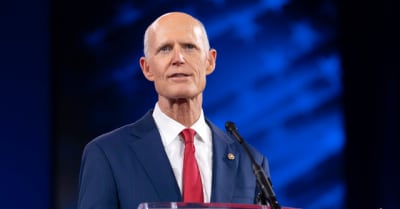
As the nation grapples with a disturbing surge in threats against public officials, a critical question looms large: Why is the agency tasked with protecting our leaders, including the President, consistently facing funding shortfalls? This isn't a new problem, but recent events, including an alleged assassination attempt, have thrust the issue of Secret Service resource allocation into the harsh glare of the national spotlight, exposing a dangerous political stalemate. The immediate catalyst for renewed urgency was the reported attempt on former President Donald Trump’s life. This incident, the latest in a string of concerning threats, underscores the escalating risks faced by those in public service. The Secret Service, by its very nature, operates on the front lines of these dangers, yet its ability to effectively carry out its mission appears to be hampered by an ongoing budgetary battle. This isn't merely about partisan bickering; it's about ensuring the physical security of individuals deemed vital to national stability and democratic processes. The implications of underfunding the Secret Service extend far beyond the immediate protection of high-profile figures. The agency is responsible for safeguarding the nation's financial infrastructure against counterfeiting and fraud, a mission that requires significant investment in technology and personnel. Furthermore, the increasing frequency of threats means agents are stretched thinner than ever, impacting their readiness for both routine duties and extraordinary events like the upcoming FIFA World Cup and the 2028 Olympic Games. Secret Service Director Sean Curran has explicitly warned that the agency requires more resources, seeking to hire 852 new positions to meet projected demands through 2028, a request that highlights a significant staffing deficit. This crisis resonates deeply because it touches upon fundamental anxieties about safety and order. In an era marked by intense political polarization and the proliferation of online hate speech, the perception that those in power are not adequately protected breeds a sense of unease. The public witnesses these threats and the subsequent political wrangling, leading to questions about the government's capacity to maintain security for all its citizens, not just its leaders. The fact that funding for such a crucial agency has become a bargaining chip in broader legislative debates, particularly those concerning immigration enforcement, reveals a deeper systemic issue: the weaponization of national security concerns for political gain. The core of the problem lies in a legislative gridlock where essential government functions are held hostage by unrelated policy disputes. Republicans have accused Democrats of leveraging immigration reform demands to block funding for the Department of Homeland Security (DHS) and its components, including the Secret Service. Conversely, Democrats argue that the GOP's approach prioritizes certain security aspects while neglecting broader humanitarian concerns at the border. This impasse has reportedly left Secret Service agents without full pay for extended periods, a situation that Senator Rick Scott has publicly decried as a "ridiculous political stunt" that jeopardizes the safety of those tasked with protecting the President. This story is particularly compelling now because it exposes the vulnerability of our democratic institutions when partisan priorities overshadow national security imperatives. The constant political maneuvering, where essential services become leverage, erodes public trust. It suggests a system where the safety of key personnel and the integrity of critical financial systems are secondary to scoring political points. The narrative that "Democrats have REFUSED to pay Secret Service agents for over 70 DAYS," as stated by Scott, powerfully illustrates the human cost of this political deadlock, impacting the very individuals sworn to protect. Addressing this requires a fundamental shift away from using security funding as a political weapon. Potential solutions include establishing a bipartisan agreement to decouple essential security funding from contentious policy debates, perhaps through dedicated appropriations for critical agencies like the Secret Service. Another approach could involve creating independent oversight bodies that can assess and recommend funding levels based on operational needs rather than political expediency. Furthermore, fostering a more civil political discourse where national security is viewed as a shared responsibility, not a partisan battleground, is crucial for long-term stability. Ultimately, the public is left with a stark reminder that the safety of our nation's leaders and the security of our financial systems are not abstract concepts but tangible outcomes dependent on functional governance. The current situation demands that lawmakers move beyond partisan posturing and prioritize the well-being of the agents dedicated to protecting our country's most vital assets. The onus is now on Congress to demonstrate that it can rise above political expediency to ensure the continuity and effectiveness of the Secret Service. Looking ahead, it will be critical to monitor whether recent events and public pressure compel lawmakers to find common ground on Secret Service funding. The upcoming legislative sessions will likely reveal whether a lasting solution can be forged, or if this issue will remain a recurring point of contention, perpetually jeopardizing the operational capacity of a vital national security agency.
In Brief
Amidst escalating threats to public figures, a critical funding standoff for the Secret Service exposes deep political divisions and raises urgent questions about national security priorities.Advertisement





Comments
No comments yet. Be the first to comment!