

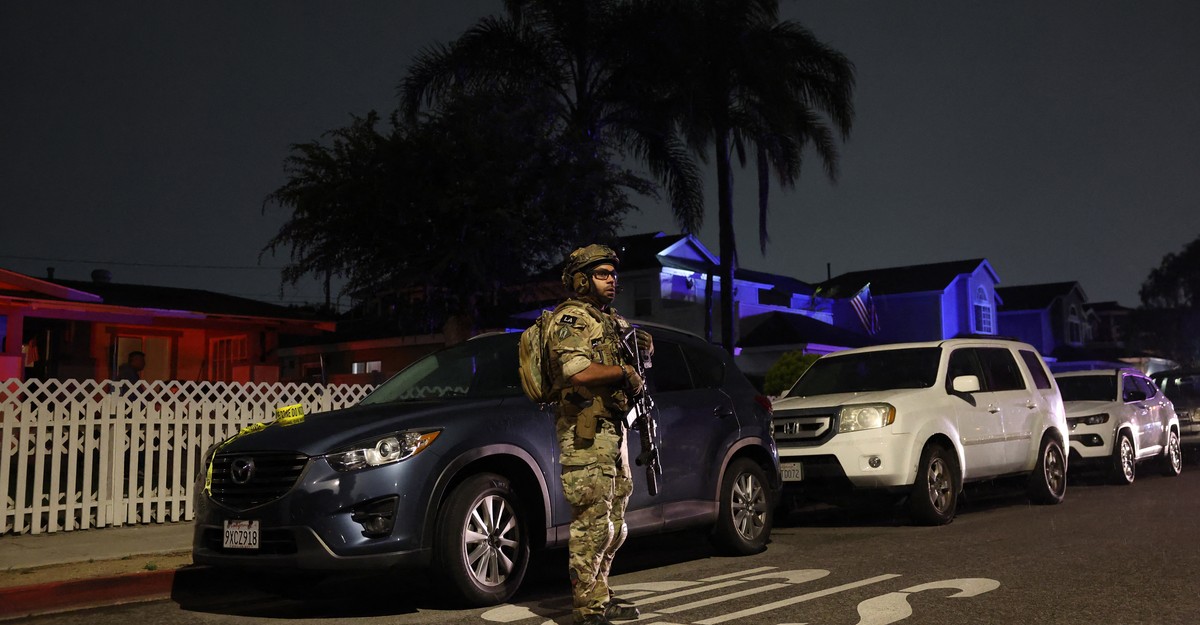
In the wake of a dramatic security incident that saw an armed individual breach the perimeter of a high-profile event, a fundamental question arises: Has the increasingly toxic nature of American political discourse created a climate where individuals feel compelled to act violently against perceived enemies, and what does this portend for the nation's stability? President Donald Trump, speaking with an uncharacteristic tone of solemnity and reflection, addressed the nation after a man armed with firearms and knives attempted to penetrate the security cordon at a Washington hotel where the president was scheduled to speak. This was not an isolated event; the president himself alluded to what he described as a third attempt on his life within a compressed timeframe, framing his presidency as an inherently dangerous profession in an era of heightened political animosity. The historical tapestry of political violence in the United States, while thankfully not a constant feature, is woven with threads of assassination and targeted attacks. From the profound impact of Abraham Lincoln's murder to the tragic assassinations of John F. Kennedy and Martin Luther King Jr., history offers stark reminders of how deeply held political beliefs can, in extreme cases, manifest as lethal action. Trump's own reference to Lincoln, a figure who enacted monumental change and consequently became a target, serves as a historical anchor, suggesting that those who significantly disrupt the status quo or champion divisive ideologies may find themselves in the crosshairs of those who oppose them with equal fervor. This recent incident, therefore, cannot be viewed in a vacuum but as a potential echo of historical patterns, amplified by modern communication and polarization. The immediate aftermath of the security breach saw the suspect, identified as 31-year-old Cole Tomas Allen of Torrance, California, taken into custody. While authorities continue their investigation into Allen's motives and the specific circumstances of his actions, the president's immediate reaction was to connect the event to his personal political standing and the broader landscape of political extremism. He emphasized that "the presidency is a dangerous profession," a statement that, while perhaps self-serving to some, reflects a genuine concern about the personal risks associated with the nation's highest office in a fractured society. The implication is clear: the intense political polarization has created a volatile environment where such incidents are not merely random acts of violence but potentially targeted assaults fueled by ideological opposition. What is particularly striking is the president's subsequent call for unity and bipartisan healing, a stark departure from his often combative rhetorical style. Addressing reporters, Trump articulated a need to "resolve our differences," noting the diverse assembly of individuals at the event, from Republicans and Democrats to conservatives and progressives. He observed a "tremendous amount of love and coming together" within the crowd, suggesting that despite the palpable divisions in the country, moments of shared experience and mutual respect are still possible. This plea for reconciliation, coming in the immediate shadow of a violent threat, aims to reframe the national conversation away from partisan conflict and towards a collective sense of shared vulnerability and the necessity of a united front. This call for unity, however, faces significant headwinds in a political climate meticulously cultivated over years, characterized by demonization of opponents and the amplification of grievances. The very rhetoric that Trump himself has often employed, while galvanizing his base, has also contributed to the deepening chasm between political factions. Therefore, his current appeal for bipartisan healing is not merely a response to a personal threat but a complex maneuver that attempts to bridge the divide he has, at times, actively widened. The sincerity and effectiveness of this call will be tested by his future actions and the broader political ecosystem's response to this overture. Beyond the immediate security concerns and the president's personal experience, this incident shines a spotlight on the broader societal implications of unchecked political polarization. When political discourse devolves into personal attacks and the vilification of opposing viewpoints, the potential for real-world violence escalates. The incident serves as a potent reminder that the words spoken in political arenas and on social media platforms have tangible consequences, shaping perceptions and potentially inciting action. Understanding this connection is crucial for fostering a more stable and less volatile society, where robust debate can occur without descending into animosity. The implications for the future are profound. If the nation cannot find a way to temper its political divisions and foster a greater sense of shared civic responsibility, such security breaches and acts of politically motivated violence may become more commonplace. The challenge lies not only in enhanced security measures but in a fundamental re-evaluation of the tone and substance of political engagement. The president's expressed desire for unity, if genuine and sustained, could serve as a catalyst for broader societal introspection. However, without a collective commitment to de-escalation and mutual respect, the path forward remains fraught with peril. For citizens, this moment demands a conscious effort to disengage from the most toxic elements of political discourse and to actively seek out common ground. It means questioning the narratives that seek to divide and recognizing the humanity in those with differing political perspectives. Supporting media outlets that prioritize factual reporting over sensationalism and engaging in respectful dialogue, even with those with whom you strongly disagree, are concrete actions that can help mend the fraying social fabric. Awareness of how inflammatory rhetoric can lead to dangerous outcomes should inspire a more mindful approach to political engagement, both online and in person. Moving forward, observers will be watching closely to see if this moment of vulnerability and introspection translates into sustained efforts towards national reconciliation. The true test will be whether the president and other political leaders can prioritize a more civil and less divisive approach to governance, and whether the public, weary of constant conflict, will embrace opportunities for genuine dialogue and understanding. The next few months will reveal whether this incident marks a fleeting moment of reflection or a genuine turning point in the nation's ongoing struggle with political polarization.
In Brief
Following a security breach at a presidential event, President Trump reflected on political violence and called for national unity, a stark contrast to his usual tone. This incident highlights the growing dangers of extreme polarization in America.Advertisement



Comments
No comments yet. Be the first to comment!