
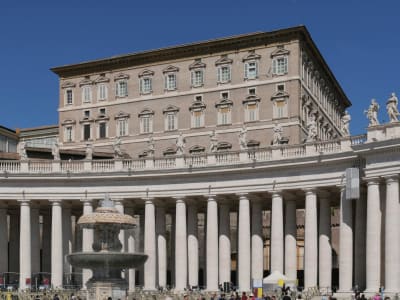
The hushed halls of the Vatican, typically echoing with centuries of tradition and theological debate, now resonate with a new, urgent conversation: the profound implications of artificial intelligence. Pope Leo XIV's recent establishment of a dedicated study group on AI marks a significant moment, signaling the Church's proactive engagement with a technology rapidly reshaping global society. This initiative, born from a deep-seated concern for human dignity and societal well-being, arrives as the Pontiff prepares to release his first major encyclical, a document widely anticipated to anchor the burgeoning AI revolution within a robust ethical framework. The impetus behind this Vatican study group stems from the sheer velocity of AI's advancement. In a world where algorithms are increasingly influencing everything from economic markets to personal relationships, the Church felt compelled to foster an internal dialogue. "Its potential effects on human beings and on humanity as a whole" were cited as key drivers, reflecting a recognition that AI's reach extends far beyond technological novelty, touching the very core of human existence. This isn't merely a theological exercise; it's an attempt to understand and guide a force with the power to redefine what it means to be human. The timing of this announcement is particularly striking, occurring precisely 135 years after Pope Leo XIII's landmark encyclical, *Rerum Novarum*. That foundational text, issued during the throes of the Industrial Revolution, courageously addressed the exploitation of labor and the societal inequalities spawned by unprecedented technological change. Pope Leo XIV has repeatedly drawn parallels between that era and our own, suggesting that the AI revolution presents analogous, perhaps even more complex, existential questions regarding human labor, economic justice, and the very structure of society. This historical resonance underscores the depth of the Church's concern. Just as *Rerum Novarum* became a cornerstone of Catholic social teaching, offering a moral compass for navigating industrial capitalism, the upcoming encyclical is poised to provide a similar ethical grounding for the AI age. Its expected focus on peace, justice, and the inherent dignity of every individual places the current technological upheaval within the long-standing tradition of the Church's engagement with socio-economic issues, from fair wages to the rights of the marginalized. Meghan Sullivan, a philosophy professor at the University of Notre Dame and director of its ethics institute, observes that the Catholic Church is positioning itself as a crucial voice in these complex debates. "For sure, the pope is going to be one of the most forceful advocates for human dignity in these discussions," Sullivan noted, highlighting the Church's potential role as a moral anchor in what can often feel like uncharted territory. This perspective suggests a deliberate strategy to imbue the development and deployment of AI with a conscience, prioritizing human flourishing over unchecked technological progress. Pope Leo XIV's commitment to this issue was evident even in his early days as Pontiff. Shortly after his election in 2025, he alerted cardinals to the Church's obligation to leverage its "treasury of its social teaching" to address the burgeoning challenges posed by AI. His focus on "human dignity, justice, and labor" clearly indicates that the forthcoming encyclical will not shy away from the difficult questions surrounding job displacement, algorithmic bias, and the potential for AI to exacerbate existing inequalities. The forthcoming encyclical is also set to become a significant point of discourse, potentially a point of contention, with global policy on AI. The Vatican's emphasis on ethical regulation and human-centric development stands in contrast to the accelerating pace of AI advancement championed by some national governments, including the United States under the Trump administration. This administration has prioritized rapid AI development for economic and security reasons, often sidestepping international calls for stricter oversight. The Church's stance, therefore, offers a distinct philosophical and moral counterpoint. This story is resonating now because the anxieties and opportunities presented by artificial intelligence are no longer theoretical. From generative AI creating art and text to sophisticated algorithms making life-altering decisions, the technology's presence is increasingly palpable. The Vatican's intervention taps into a widespread public desire for thoughtful consideration of AI's impact, moving beyond purely technical or economic discussions to address the fundamental human questions it raises. What will be crucial to watch is how the Vatican's established ethical principles are translated into actionable guidance for policymakers, technologists, and the faithful alike, and whether this moral framework can gain traction in a rapidly evolving global landscape.
In Brief
Pope Leo XIV has established a Vatican study group on artificial intelligence, coinciding with his upcoming encyclical that will address the technology's ethical implications. The move echoes historical papal interventions during periods of significant technological change.Advertisement




Comments
No comments yet. Be the first to comment!