
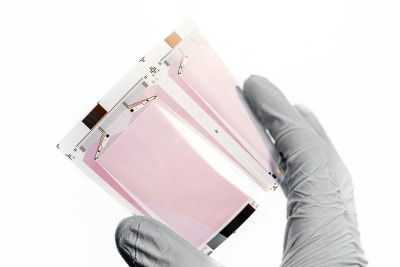
Can a single display innovation fundamentally alter the way we experience digital content? MSI's latest gaming monitor, the MAG 271QPX32, suggests the answer might be a resounding yes. At its core lies a groundbreaking 5-layer QD-OLED panel from Samsung, a significant leap from the 4-layer technology that has dominated the premium monitor market until now. This isn't just an incremental upgrade; it represents a paradigm shift in pixel performance, particularly in areas crucial for immersive gaming and detailed visual work. The technological advancement centers on Samsung's "Penta Tandem" architecture. Unlike previous generations that relied on a 4-layer stack, this new design incorporates five distinct layers. This expanded structure allows for more efficient light management and color conversion, utilizing blue OLED emitters paired with quantum dots. The direct benefit is a noticeable improvement in peak brightness, making content pop even in well-lit environments, a common challenge for traditional OLED displays. Furthermore, the enhanced stability at high pixel densities is a critical factor for achieving the monitor's impressive 1440p resolution and blistering refresh rates. MSI has integrated this advanced panel into their MAG 271QPX32, touting several key benefits that go beyond raw specifications. One of the most significant claims is a remarkable 40% improvement in black level performance, attributed to a proprietary "DarkArmor" film technology. This innovation tackles the notorious "black crush" issue that can plague OLED panels, where subtle shadow details are lost, especially when Variable Refresh Rate (VRR) or dynamic refresh rates are engaged. The ability to retain luminance at wider viewing angles, with MSI citing an 83% figure verified by UL Solutions compared to conventional OLEDs' 44%, also means a more consistent and vibrant experience for anyone not directly in front of the screen. The raw performance metrics are, frankly, astonishing. The 27-inch display pushes a 1440p resolution at an eye-watering 320Hz refresh rate. Coupled with a near-instantaneous 0.03 ms response time, this monitor is engineered for the absolute bleeding edge of competitive gaming, where every millisecond counts. However, the benefits extend beyond esports. The enhanced color reproduction and contrast, driven by the QD-OLED technology and the new panel structure, offer a richer visual experience for cinematic content and detailed photo editing. The "Perfect Panel Uniformity" feature, aimed at reducing visual distractions, further solidifies its appeal to professionals who demand pixel-perfect accuracy. While the inclusion of HDMI 2.1 ports is a welcome addition for console gamers and high-bandwidth PC connections, the continued reliance on DisplayPort 1.4a for higher refresh rates at native resolution is a point of contention for some enthusiasts. This might limit users seeking the absolute maximum bandwidth for future-proofing or for specific high-refresh-rate 4K scenarios, although it's less of a concern for the 1440p target resolution. It highlights the ongoing balancing act manufacturers face between adopting new panel technologies and supporting the latest connectivity standards across the board. Public reaction on tech forums and social media has been a mix of excitement and skepticism. Early adopters and tech reviewers are largely impressed with the reported improvements in contrast and response times, often sharing benchmark results that showcase the monitor's speed. However, discussions also touch upon the longevity of QD-OLED panels and the real-world impact of "burn-in" concerns, despite manufacturers implementing various mitigation technologies. The price point, often a premium for cutting-edge display tech, also generates debate about its value proposition compared to established technologies. What often gets lost in the technical specifications and marketing hype is the tangible difference this level of visual fidelity makes to the user experience. It's not just about faster refresh rates; it's about a deeper sense of immersion, clearer perception of distant enemies in games, and the subtle nuances of color grading in video production that were previously obscured. This technology moves beyond incremental gains to offer a qualitatively different way of seeing digital information, blurring the lines between on-screen action and reality. The implications for the broader display industry are significant. If Samsung's 5-layer QD-OLED proves successful and scalable, it could force competitors to accelerate their own R&D in advanced panel architectures. We may see this technology trickle down into other form factors, including larger TVs and even mobile devices, further refining the visual experience across the digital ecosystem. The focus will likely shift to how other manufacturers integrate and differentiate themselves using this new foundation, potentially leading to a new wave of display innovation. Looking ahead, the key developments to watch will be the wider adoption of this 5-layer QD-OLED technology across different brands and screen sizes. Independent long-term reliability testing will be crucial for addressing user concerns. Furthermore, the evolution of accompanying technologies, such as HDR standards and connectivity protocols, will play a vital role in unlocking the full potential of these advanced displays and shaping the future of visual computing.
In Brief
A revolutionary 5-layer QD-OLED panel from Samsung is poised to redefine visual performance, offering unprecedented black levels and speed for gamers and creatives.Advertisement





Comments
No comments yet. Be the first to comment!