
What We Know
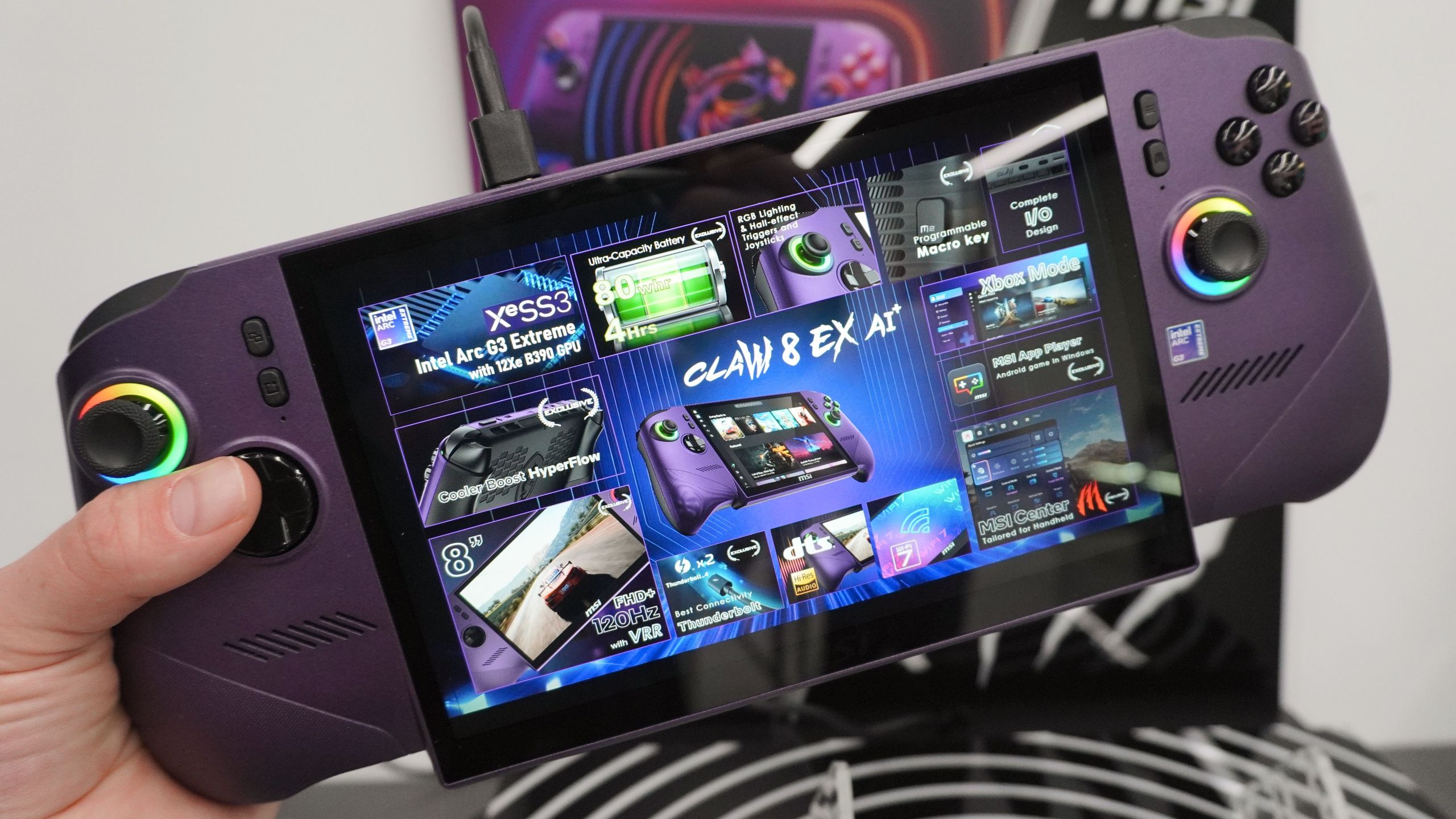
- The MSI Claw 8 EX AI+ represents a significant hardware iteration, boasting a larger 8-inch display compared to its predecessor, enhancing visual immersion for portable gaming sessions.
- Integration of Intel's Arc G3 integrated graphics marks a potential paradigm shift, offering a competitive alternative to existing solutions and promising improved graphical fidelity and performance in demanding titles.
- AI acceleration features are a core component of this new model, suggesting enhanced capabilities for tasks beyond gaming, such as content creation or specific AI-driven applications, though their practical impact on gaming remains to be fully explored.
- The device is engineered with a focus on performance, aiming to deliver a smoother and more responsive gaming experience across a wider range of PC titles, including those that are graphically intensive.
- MSI's commitment to the handheld PC gaming market is evident with this release, signaling continued investment in a growing but competitive segment of the consumer electronics industry.
- Initial reports suggest a premium pricing strategy for the Claw 8 EX AI+, positioning it as a high-end option within the handheld gaming device market, which will undoubtedly influence consumer purchasing decisions.
What We Do Not Know Yet
- The precise real-world performance uplift provided by the Intel Arc G3 graphics over previous integrated solutions in a wide array of AAA and indie games remains a critical unknown, necessitating extensive benchmarking.
- The long-term software support and driver optimization from Intel for their Arc integrated graphics in a portable form factor are yet to be fully assessed, impacting future game compatibility and performance.
- The battery life under various demanding gaming scenarios and typical usage patterns is a crucial factor for handheld portability that requires thorough testing to determine its practical limitations.
- The overall user experience, including thermal management during extended gaming sessions and the responsiveness of the controls and software interface, needs comprehensive evaluation to gauge its comfort and usability.
- The specific AI workloads that the dedicated AI acceleration features excel at and how they translate into tangible benefits for gamers or other users are still largely theoretical and require practical demonstration.
- The competitive landscape's reaction to the Claw 8 EX AI+ and how its pricing and performance stack up against established and emerging competitors will significantly shape its market reception and long-term viability.
Background
The portable PC gaming market has seen a surge in interest, driven by the desire for console-like experiences on the go without compromising on the vast libraries available on PC platforms. Devices like the Steam Deck, ASUS ROG Ally, and Lenovo Legion Go have paved the way, establishing a baseline for performance, display quality, and ergonomic design. These early entrants have demonstrated a strong consumer appetite for high-fidelity gaming in a handheld form factor, pushing manufacturers to innovate and refine their offerings. The competition has spurred rapid development, with each new device aiming to address the shortcomings of its predecessors and rivals, focusing on aspects like processing power, screen resolution, battery longevity, and software integration. This dynamic environment has created fertile ground for new hardware to enter, provided it can offer a compelling value proposition.
MSI, a long-standing player in the PC hardware industry, has entered this burgeoning handheld market with the Claw series, aiming to leverage its expertise in gaming components. The initial MSI Claw model, equipped with Intel's Core Ultra processors, garnered attention for its design and features but faced scrutiny regarding its performance, particularly when compared to competitors utilizing AMD's Ryzen APUs. This has set the stage for the Claw 8 EX AI+, which appears to be a strategic response to that feedback, incorporating Intel's newer Arc G3 integrated graphics and potentially addressing performance concerns. The inclusion of dedicated AI hardware also signals a forward-looking approach, anticipating the growing role of artificial intelligence in computing and gaming experiences.
The integration of Intel Arc G3 graphics into a handheld gaming device is a notable development. Historically, Intel's integrated graphics have lagged behind their discrete counterparts and AMD's APUs in gaming performance. However, with the 'Alchemist' architecture and subsequent iterations like the G3, Intel has made significant strides, aiming to offer a more competitive gaming experience directly from the CPU. This move into the handheld space with Arc G3 graphics is a test of Intel's ability to deliver robust gaming performance in a power-constrained mobile environment. Success here could open new avenues for Intel in the portable computing sector and provide consumers with more diverse hardware choices, potentially driving down prices and increasing innovation across the board.
Why It Matters
The MSI Claw 8 EX AI+ represents a critical juncture for Intel's integrated graphics strategy in the high-performance portable computing space. For years, Intel has struggled to compete with AMD's APUs in gaming-centric devices, often relegating its integrated solutions to less demanding tasks. The successful implementation of Arc G3 graphics in a device like the Claw could signal a genuine comeback for Intel in this segment, offering a viable alternative that might drive down prices and increase competition. This is crucial for consumers, as a more competitive market typically leads to better products and more affordable options. If Intel can prove its integrated graphics are up to par for modern gaming on the go, it could reshape the landscape of handheld PCs.
Furthermore, the inclusion of dedicated AI acceleration hardware on the Claw 8 EX AI+ highlights the accelerating trend of AI integration into consumer electronics. While the immediate benefits for gaming might be niche, the potential for AI to enhance user experiences, optimize performance, or enable new features is substantial. This device serves as an early indicator of how AI capabilities will be incorporated into portable gaming machines, potentially influencing future designs and software development. Understanding how effectively this AI hardware is utilized and whether it offers tangible advantages will be key to gauging the future direction of AI in handheld gaming and beyond.
The premium pricing associated with the Claw 8 EX AI+ also warrants attention. As handheld PCs become more sophisticated, their cost continues to rise, potentially creating a barrier to entry for many gamers. This device's positioning in the market will reveal whether consumers are willing to pay a significant premium for the latest technology, including potentially cutting-edge integrated graphics and AI features. The success or failure of such high-priced devices can influence future product development cycles and pricing strategies across the entire handheld gaming industry, impacting accessibility and market saturation.
Timeline of Events
- Early 2024: MSI unveils the original MSI Claw handheld gaming device, featuring Intel Core Ultra processors, marking its entry into the competitive handheld PC market.
- Mid-2024: Initial reviews and benchmarks of the first MSI Claw emerge, highlighting its design and features but also pointing out performance limitations compared to key competitors.
- Late 2024 (Projected): MSI is expected to launch the MSI Claw 8 EX AI+ model, featuring a larger 8-inch display and Intel's Arc G3 integrated graphics, aiming to address performance concerns and introduce AI capabilities.
- Post-Launch (Late 2024/Early 2025): Extensive testing and real-world usage reviews of the Claw 8 EX AI+ will become available, focusing on gaming performance, battery life, thermal management, and the practical utility of its AI features.
- Ongoing: Intel will likely continue to release driver updates and optimizations for its Arc G3 graphics, potentially improving performance and compatibility for games on the MSI Claw 8 EX AI+ over time.
- Future: The market reception and performance of the Claw 8 EX AI+ will influence MSI's and Intel's future strategies in the handheld gaming device sector, potentially leading to further iterations or new product lines.

Rapid-Fire Q&A
What Is Coming
- Further performance benchmarks and in-depth game testing will be released by tech reviewers, providing crucial data on how the Intel Arc G3 graphics handle a wide spectrum of modern titles.
- Long-term reviews will assess the durability, thermal performance under sustained load, and overall user satisfaction with the MSI Claw 8 EX AI+ after several months of use.
- Software updates from both MSI and Intel are expected, potentially optimizing performance, fixing bugs, and enhancing the functionality of the AI acceleration features over time.
- Comparisons with upcoming handheld gaming devices from competitors will emerge, offering a clearer picture of where the Claw 8 EX AI+ stands in the evolving market landscape.
- Analysis of the device's AI capabilities in non-gaming applications will likely surface, exploring its potential as a more versatile portable computing tool.
- Pricing adjustments or potential bundle deals may occur as the device matures in the market, influencing its accessibility and perceived value for consumers.















Comments
No comments yet. Be the first to comment!