
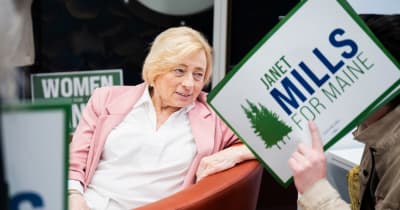
The political landscape in Maine was jolted this week not by a landslide victory or a stunning upset, but by the quiet withdrawal of a seemingly formidable candidate. Governor Janet Mills, a two-term incumbent with a proven statewide record, abruptly ended her bid for the U.S. Senate, a move that has sent ripples through the Democratic Party, exposing a deeper ideological struggle playing out far beyond the Pine Tree State. Her departure, ostensibly due to fundraising challenges against a progressive primary opponent, signals a potential crisis of confidence within the party's establishment regarding its path to national relevance. Mills was, by all traditional metrics, a dream candidate for national Democratic strategists. As governor, she had navigated Maine's political currents successfully, demonstrating an ability to win and govern in a state that leans Democratic but remains highly competitive. Her established fundraising network meant that national party committees, like the Democratic Senatorial Campaign Committee, wouldn't need to pour vast resources into propping up her campaign. The thinking was clear: she offered a pragmatic, left-of-center profile that could effectively challenge the state's moderate Republican Senator, Susan Collins, a perennial target for national Democrats. However, the path to victory is rarely as neat on paper as it appears. Mills' decision to step aside revealed the stark reality that even a seemingly strong candidate can be undone by internal party dynamics. The true challenge wasn't the incumbent Republican, but a rising progressive challenger, Graham Platner. Platner, an oyster farmer and veteran, has galvanized a segment of the Democratic base that feels overlooked by the party's more moderate wing. His emergence highlights a growing chasm between the party's established leadership and a more vocal, grassroots progressive movement. This internal conflict within the Democratic Party is not unique to Maine; it's a microcosm of a national debate. For years, the party has grappled with how to balance its appeal to suburban moderates with the energy and demands of its progressive flank. Figures like Platner, with his populist appeal and willingness to challenge norms, represent a faction that believes the party has become too cautious and has failed to deliver on its promises. They see him as a potential unifier, capable of drawing in younger voters and disaffected progressives who feel alienated by what they perceive as incrementalism. Conversely, establishment Democrats, represented by figures like Senate Minority Leader Chuck Schumer, often express concern that candidates like Platner, with their more unconventional backgrounds and past controversial statements or associations, risk alienating crucial swing voters. The fear is that such candidates, while energizing the base, could hand victories to Republicans in closely contested races. This tension underscores a fundamental question: does the party prioritize broad appeal through moderation, or does it risk alienating some in pursuit of a more energized, ideologically pure base? Platner's campaign has reportedly amassed significant financial support, with figures suggesting upwards of $12 million raised by the end of March, a substantial sum for a primary challenge. This financial traction, despite the concerns of party elders, demonstrates the potent appeal of his message. It suggests that the dissatisfaction with the status quo is deep enough to translate into real-world resources, challenging the traditional gatekeeping role of party establishment figures who rely on donor networks and fundraising prowess. The implications for the broader Democratic Party are significant. If the establishment cannot accommodate or effectively counter the rise of candidates like Platner, it risks alienating a key part of its coalition. This could lead to a string of missed opportunities in competitive races, as seen in the analysis of Mills' withdrawal. The party must find a way to bridge this divide, or it risks becoming a fractured entity, unable to present a united front in national elections. Looking ahead, the focus will be on how Maine Democrats navigate this primary and, more broadly, how the national party addresses the persistent tension between its centrist and progressive wings. Will they learn from Mills' situation and find strategies to unite disparate factions, or will these internal battles continue to undermine their electoral prospects? The coming months will reveal whether the party can forge a cohesive identity capable of winning across the diverse American electorate, or if it will remain a house divided.
In Brief
Governor Janet Mills' surprising exit from the Maine Senate race exposes deep ideological rifts within the Democratic Party, highlighting a national struggle between its establishment and progressive wings.Advertisement




Comments
No comments yet. Be the first to comment!