
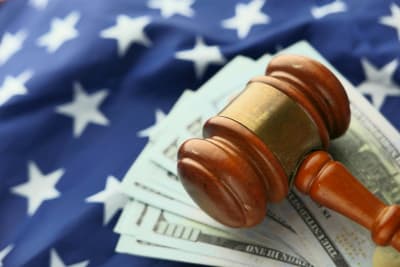
{ "title": "Supreme Court's Landmark Ruling on Campaign Finance Continues to Reshape Political Landscape Decades Later", "content": "\"The fundamental tension in campaign finance law is between protecting free speech and preventing corruption, and the courts have consistently grappled with where to draw that line,\" stated Dr. Eleanor Vance, a professor of political science specializing in constitutional law at Georgetown University. This ongoing debate, amplified by recent legal challenges and evolving campaign strategies, centers on how money flows into American politics and its impact on democratic representation. The landmark 1976 Supreme Court decision in *Buckley v. Valeo* remains a pivotal, and often contentious, touchstone in this discussion, establishing key precedents that continue to influence elections and advocacy today.\n\nAt its core, *Buckley v. Valeo* addressed the constitutionality of the Federal Election Campaign Act of 1971. The Court upheld limits on campaign contributions, viewing them as a necessary measure to prevent quid pro quo corruption or its appearance. However, it struck down limits on independent expenditures by individuals and groups, arguing that such restrictions infringed upon free speech rights guaranteed by the First Amendment. This dual-pronged ruling created a complex framework: while direct donations to candidates could be capped, spending by individuals or organizations supporting or opposing candidates, as long as it wasn't coordinated with a campaign, faced no such limits. This distinction has, over time, allowed for the rise of Super PACs and other influential spending vehicles.\n\nWhy this ruling matters now more than ever can be traced to the increasing sophistication of political spending and the amplification of voices through digital channels. The ability for unlimited independent expenditures, a direct consequence of *Buckley*, has paved the way for vast sums of money to enter political discourse, often through channels that are less transparent than traditional campaign donations. This has led to a situation where well-funded advocacy groups, often with opaque funding sources, can wield significant influence, potentially drowning out the voices of average citizens and grassroots movements. The sheer volume of money spent in recent election cycles, far exceeding historical norms, underscores the enduring impact of this legal precedent.\n\nThe individuals and groups most affected by the current landscape are manifold. Voters are impacted through the information they receive, which can be heavily shaped by advertising funded by unlimited expenditures. Candidates, particularly those without access to wealthy donors or large organizational backing, face an uphill battle against well-funded opponents. Non-profit organizations and grassroots activists also feel the squeeze, finding it harder to compete for public attention and influence when facing the financial might of large, independent expenditure groups. Even elected officials can find their policy priorities swayed by the concerns of major donors and advocacy groups that have demonstrated their ability to impact election outcomes.\n\nThe social media angle has become particularly potent. Platforms like X (formerly Twitter) and Facebook have become battlegrounds where political messages, often funded by independent expenditures, are disseminated rapidly and widely. Public reaction often manifests as frustration and cynicism, with many citizens expressing a sense of powerlessness as they observe campaigns dominated by expensive advertising. Online discussions frequently highlight the perceived disconnect between the ideals of representative democracy and the reality of money's pervasive influence, fueling debates about fairness and equal access to the political arena.\n\nWhat many analyses miss is the subtle but profound shift in *who* is speaking and *how* their speech is amplified. *Buckley v. Valeo* protected the right of individuals to spend unlimited sums on political speech, but it did not account for the rise of sophisticated digital targeting and micro-campaigns that can be executed by organizations with substantial financial resources. This means that while the *right* to speak is protected, the *ability* to have that speech heard and to effectively counter opposing messages is increasingly dependent on financial capacity. The focus has shifted from direct corruption to the potential for undue influence and the distortion of the public discourse, issues that the original *Buckley* framers may not have fully anticipated.\n\nSpecific figures illustrate the scale of this phenomenon. In the 2020 election cycle, outside groups spent over \$2.3 billion on federal elections, a significant portion of which was channeled through entities that benefited from the independent expenditure provisions established in *Buckley*. Furthermore, organizations like the Brennan Center for Justice have consistently documented the rise of \"dark money\" in politics, where the identities of donors to certain non-profit groups funding political ads remain undisclosed, making it difficult for the public to assess potential conflicts of interest or biases.\n\nLooking ahead, several developments warrant close observation. The Supreme Court itself may revisit aspects of campaign finance law, potentially in cases that challenge the distinction between coordinated and independent expenditures, or the definition of corruption. Additionally, legislative efforts, though often stalled, continue to be proposed to increase transparency in political spending or to introduce new forms of public financing for elections. The ongoing evolution of digital campaigning and the public's reaction to perceived financial imbalances in politics will also shape the future trajectory of this critical debate, making it a story that continues to unfold with significant implications for American democracy.", "description": "Decades after a pivotal Supreme Court ruling, the influence of money in politics continues to shape elections. Explore the complex legacy of Buckley v. Valeo and its impact on representation.", "seo_title": "Money and Speech in Politics: Buckley v. Valeo's Enduring Impact", "seo_description": "Examine how the 1976 Buckley v. Valeo Supreme Court case created a lasting framework for money and speech in politics, impacting elections and representation today." }
In Brief
{ "title": "Supreme Court's Landmark Ruling on Campaign Finance Continues to Reshape Political Landscape Decades Later", "content": "\"The fundamental tension in campaign finance law is between protecting free speech and preventingAdvertisement

Comments
No comments yet. Be the first to comment!