
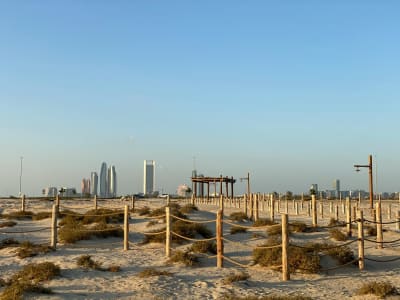
The air in Abu Dhabi, usually a hum of confident development, carried a different tenor in recent weeks. The distant rumble of geopolitical instability, once a concern confined to news reports, has now manifested as tangible threats, including drone incursions and missile strikes that have directly impacted the UAE. Yet, amidst this unsettling backdrop, a significant announcement was made: a staggering $1.7 billion commitment to a groundbreaking entertainment venue, Sphere, slated for completion in 2029. This bold move, revealed amidst heightened regional anxieties, signals a defiant assertion of confidence in the emirate's long-term vision, even as immediate security concerns loom large. The decision to press forward with ambitious tourism projects, particularly the substantial investment in Sphere, appears counterintuitive when viewed through the lens of immediate security threats. However, Abu Dhabi's strategy is rooted in a decade-long economic diversification plan, a deliberate pivot away from heavy reliance on hydrocarbon revenues. Tourism has been identified as a cornerstone of this future economy, a sector poised for substantial growth and capable of generating significant employment and revenue. The UAE, through entities like the Department of Culture and Tourism (DCT), has already poured billions into developing world-class attractions, from the Louvre Abu Dhabi on Saadiyat Island to the nearing completion of a Guggenheim outpost. This latest investment isn't an isolated gamble; it's a continuation and amplification of a deeply embedded national strategy. The repercussions of the escalating conflict in the region have been felt globally, but the UAE has found itself in a particularly precarious position. Direct attacks, including drone strikes targeting sensitive infrastructure and broader airspace, have presented a clear and present danger. These incidents not only pose a risk to the physical safety of residents and visitors but also cast a shadow over the nation's carefully cultivated image as a safe and glamorous destination. Reports indicate that during the recent Eid al-Fitr holiday, a traditionally high-traffic period, hotel occupancy rates in Abu Dhabi saw a sharp decline, reportedly falling by as much as 45% compared to the previous year, according to data from analytics firm CoStar. This dip underscores the immediate impact of security concerns on traveler confidence and the hospitality sector. This story is resonating now because it encapsulates a profound global dilemma: how do nations pursue ambitious economic development and project an image of stability when regional conflicts threaten to engulf them? Abu Dhabi's stance challenges the prevailing narrative that instability inevitably halts progress. It speaks to a deep-seated belief in resilience and the power of strategic long-term planning. Furthermore, the sheer scale of the investment in Sphere, a venue synonymous with cutting-edge entertainment, captures the public imagination and raises questions about the emirate's audacious vision for its future, even as headlines are dominated by more immediate, concerning developments. Much of the current coverage focuses on the immediate security implications and the apparent contradiction between defense needs and development spending. What is often missed is the intricate interplay of economic diversification, national branding, and the long-term geopolitical calculations that underpin Abu Dhabi's strategic decisions. The emirate is not merely reacting to threats; it is actively shaping its future trajectory, leveraging its financial strength and strategic location to solidify its position as a global hub for culture, business, and leisure. The $1.7 billion investment in Sphere, operated by the same company behind the successful Las Vegas venue, is a calculated play to attract a demographic that values unique experiences and is less deterred by geopolitical headlines if perceived safety measures are robust. Mohamed Khalifa Al Mubarak, the chairman of Abu Dhabi’s Department of Culture and Tourism (DCT), articulated this dual focus, stating, “We are doubling down on our tourism ecosystem as a whole.” This statement, made on the day of the Sphere announcement, was more than just rhetoric; it was a declaration of intent. It signifies a commitment to not only weather the current storm but to emerge stronger, with a more diversified and resilient economy. The figures underscore the ambition: Abu Dhabi hosted 26.6 million visitors in 2023 and aims to attract 39.3 million annually by 2030, with the sector's GDP contribution targeted to reach AED90 billion ($24.5 billion). These are not small aspirations; they represent a fundamental reorientation of the nation's economic engine. Despite the challenges, including a reported 45% drop in hotel occupancy during a key holiday period, there are indications of a nascent recovery. Tourism officials suggest that visitor numbers are beginning to rebound, a testament to the emirate's marketing efforts and the underlying appeal of its attractions. The resilience of the tourism sector, even in the face of external pressures, is crucial for Abu Dhabi's economic diversification goals. The success of existing cultural landmarks, like the Louvre Abu Dhabi, and the anticipation surrounding future projects like the Guggenheim, demonstrate a strategic layering of attractions designed to appeal to a broad spectrum of international visitors, from culture enthusiasts to families seeking entertainment. Looking ahead, the key will be Abu Dhabi's ability to maintain this delicate balancing act. Continued investment in security infrastructure will be paramount, not only to protect its citizens and assets but also to reassure potential visitors and investors. The success of the Sphere project will be a significant bellwether, demonstrating whether large-scale, ambitious entertainment ventures can thrive in an environment of heightened regional tension. Observers will be watching closely to see if the projected return of tourists materializes and if the emirate can effectively mitigate the perceived risks associated with its geographical proximity to ongoing conflicts, thereby safeguarding its ambitious economic trajectory.
In Brief
Abu Dhabi is defying regional instability and direct attacks by investing billions in new tourism ventures, signaling a bold bet on its economic future.Advertisement




Comments
No comments yet. Be the first to comment!