
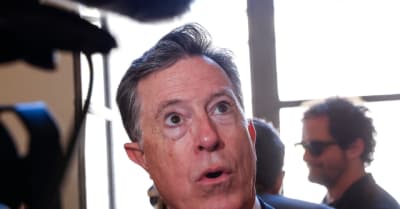
The hum of the studio lights, the expectant hush of the live audience, and the carefully constructed set of a late-night television institution – these were the familiar trappings surrounding Stephen Colbert in the lead-up to a recent interview that would touch upon the very nature of his comedic platform. While the specifics of the moment remain backstage, the fallout from his candid remarks, particularly those made to The New York Times, has ignited a broader conversation about political commentary on television and the delicate balance late-night hosts must strike. Colbert’s assertion that he “reject[s] the partisan description” and views himself as a neutral observer, or at least a fair dispenser of jokes across the political spectrum, has drawn sharp scrutiny from various corners of the media landscape. Colbert’s defense hinges on a nuanced interpretation of his role. He argues that a refusal to joke about any political party would be inherently limiting, suggesting that the “fertile fields” for satire exist on both sides of the aisle. This perspective, however, is met with skepticism by critics who point to the perceived leanings of his show’s content. They observe a pattern where Democratic politicians are frequently invited guests, while criticisms of their policies or actions are, in their view, less prevalent or less pointed than those directed at their Republican counterparts. This perceived imbalance fuels the debate over whether his approach constitutes genuine impartiality or a more subtle form of political advocacy. The discussion gains particular traction when considering the financial realities of television production. Reports circulating suggest that *The Late Show with Stephen Colbert* has faced significant financial challenges, with some estimates indicating annual losses in the tens of millions of dollars for CBS. This economic context adds another layer to the conversation, raising questions about whether the show's creative direction, including its approach to political humor, is influenced by ratings performance and the network’s bottom line. The pressure to maintain viewership in a crowded and evolving media environment is immense for any host, let alone one whose show is reportedly under such financial strain. This situation is not entirely unprecedented in the history of late-night television. The legacy of shows like *The Smothers Brothers Comedy Hour*, which was famously canceled in the late 1960s for its perceived political edge, serves as a historical touchstone. While the Smothers Brothers’ show was a ratings success at the time of its cancellation, it highlights how political commentary has long been a sensitive and potentially controversial element in broadcast entertainment. Colbert's situation, however, unfolds in a different era, one characterized by hyper-partisanship and a fragmented media landscape where audience engagement can be intensely polarized. Social media has amplified the debate, with clips from Colbert's show and excerpts from his interview circulating widely. Online discussions often reflect pre-existing political divides, with supporters lauding his wit and perceived courage to speak truth to power, while detractors decry what they see as overt bias and a departure from neutral entertainment. Hashtags and trending topics frequently capture the fervor, turning a discussion about comedic technique into a proxy battleground for broader political disagreements. This digital echo chamber often simplifies complex issues, making nuanced analysis challenging. Beyond the immediate reactions, Colbert’s remarks and the subsequent scrutiny point to a deeper systemic issue within the entertainment industry: the evolving role of satire in a polarized society. As political discourse becomes increasingly contentious, late-night hosts find themselves navigating a treacherous path. The demand for topical humor is high, but the risk of alienating significant portions of the audience, or being perceived as an agenda-driven partisan, is equally substantial. This tension forces creators to constantly re-evaluate the boundaries of acceptable commentary and the potential consequences for their platforms. Experts in media studies and comedy theory suggest that the very nature of late-night television has shifted. What was once a space for broader, often apolitical, entertainment has increasingly become a venue for political commentary, particularly in the wake of major cultural and political events. This evolution means that hosts are often judged not just on their comedic timing but on their perceived political alignment. The expectation for hosts to engage with current events, and often to take a stance, has become ingrained in the audience’s viewing habits, making a purely neutral approach increasingly difficult to maintain or even recognize. The future of *The Late Show* and Colbert’s role within it remain subjects of intense speculation. Network executives face the challenge of balancing creative integrity with commercial viability. For Colbert himself, the narrative is complex: a celebrated comedian grappling with the perception of partisanship, the pressures of ratings, and the ever-present scrutiny of a digitally connected world. The coming months will likely see continued debate over his comedic approach and the broader implications for political satire on television as the industry navigates these shifting sands.
In Brief
Stephen Colbert's defense of his political humor is under intense scrutiny amid reports of his show's financial struggles. The debate highlights the evolving role of satire in a polarized media landscape.Advertisement




Comments
No comments yet. Be the first to comment!