
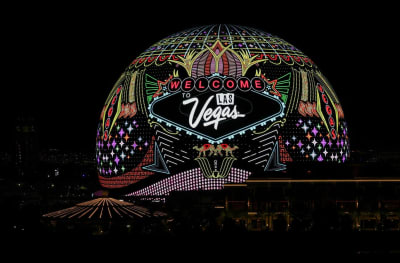
The dazzling spectacle of the Las Vegas Sphere, a colossal entertainment venue that has quickly become the world's highest-grossing, stands as a potent symbol of resilience and innovation in an industry often defined by consolidation. While its sheer existence might not directly dismantle arguments against industry giants, its remarkable success story offers a compelling counter-narrative to claims of insurmountable market control. The Sphere's journey from a high-risk gamble to a global phenomenon is a testament to bold vision overcoming considerable doubt. When construction began on the Sphere in 2018, few observers, and perhaps even fewer investors, foresaw its current standing. The project, spearheaded by owner James Dolan and his entertainment conglomerate, was plagued by delays and significant cost overruns. It was already years behind schedule and nearly a billion dollars over its initial budget before the first light show illuminated its exterior. This precarious start was further compounded by the unprecedented disruption of the global COVID-19 pandemic, which brought live events to a grinding halt and cast a dark shadow over the future of large-scale venues. The timing could not have been worse, creating an environment ripe for skepticism. The industry context is crucial here. In early 2020, as lockdowns swept the globe, the very viability of companies like Live Nation, deeply entrenched in live event promotion, ticketing, and artist management, was called into question. Critics who now label Live Nation a monopoly, citing its expansive control over the concert ecosystem, might have viewed the company's prospects very differently at the pandemic's outset. The share price of Live Nation itself reflected this uncertainty, plummeting amid the widespread cancellations and uncertainty. This period highlights the inherent volatility of the live entertainment sector, a reality that makes the Sphere's triumph all the more striking. Despite the mounting challenges – pandemic-induced shutdowns, escalating construction costs, and widespread investor apprehension – James Dolan persisted. The prevailing sentiment, even after the Sphere's completion, was one of cautious pessimism, with many anticipating it would be a financial drain. This skepticism was reflected in its stock performance; even as recently as last year, its shares traded at a modest $26. Today, however, the narrative has dramatically shifted, with shares soaring to $129, a staggering increase that underscores the market's re-evaluation of the venue's immense potential and its successful execution. The social media landscape has been abuzz with the Sphere's visual grandeur and its record-breaking financial achievements. Viral videos showcasing its immersive exterior and interior capabilities have captivated a global audience, generating organic buzz that traditional marketing campaigns could only dream of. While some online discourse focuses on the technological marvel, a significant undercurrent discusses its impact on the broader entertainment market, with many users sharing anecdotes about the high cost of tickets for events held there, fueling debates about accessibility and pricing in premium venues. This success story presents a nuanced perspective on market dominance. While Live Nation continues to face antitrust scrutiny for its comprehensive reach across the live music industry, the Sphere's independent trajectory demonstrates that significant opportunities for innovation and disruption still exist. It suggests that even within a seemingly consolidated market, bold, distinct ventures can carve out unique niches and achieve extraordinary success, challenging the notion that a single entity holds absolute sway over the industry's future. The Sphere's impact extends beyond its financial metrics; it has redefined the very concept of a live entertainment venue. Its commitment to a singular, technologically advanced experience offers a blueprint for future developments, pushing competitors and established players alike to consider how they can offer more than just a stage and seating. This focus on an all-encompassing sensory experience, rather than just facilitating ticket sales or artist bookings, represents a significant differentiation. Readers should recognize that the entertainment industry, despite its current structure, is not static. The Sphere's ascent serves as a powerful reminder that consumer appetite for unique, high-quality experiences can drive unexpected outcomes. It inspires a call to action for both industry stakeholders to innovate and for consumers to support ventures that push creative and technological boundaries, while also remaining critical of pricing and access. Looking ahead, the key developments to watch will be how other major entertainment players respond to the Sphere's success. Will we see a wave of similar, technologically ambitious venues emerge, or will existing giants attempt to replicate its features within their current portfolios? Furthermore, sustained ticket sales and profitability will be crucial in validating whether the Sphere is a sustainable model or a spectacular, albeit temporary, phenomenon that transcends its immediate competitive landscape. The ongoing antitrust investigations into Live Nation will also continue to shape the industry's future, potentially creating more space for independent successes like the Sphere to flourish.
In Brief
The Las Vegas Sphere's meteoric rise and financial success challenge perceptions of market dominance in the entertainment industry, offering a counter-narrative to claims against giants like Live Nation.Advertisement




Comments
No comments yet. Be the first to comment!