
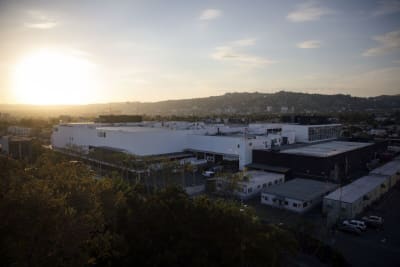
The hum of cameras and the bustle of set construction in the Los Angeles basin, long the heartbeat of the entertainment industry, are facing an unexpected disruption. A significant player in providing the physical infrastructure for film and television production, Hackman Capital Partners, is reportedly being compelled by its lenders to divest a portion of its extensive portfolio of soundstages and studio lots. This development signals a potential recalibration for a sector that has seen immense growth, raising questions about the stability of the very spaces where creative dreams are brought to life. Hackman Capital Partners, recognized as the largest independent owner of studio facilities and soundstages, has amassed a substantial collection of valuable real estate across the greater Los Angeles area. These properties are not merely empty buildings; they are the crucibles where iconic movies and binge-worthy series are forged. However, the economic tides appear to be turning. Reports indicate that a consortium of financial institutions, reportedly spearheaded by Deutsche Bank, is exerting pressure on Hackman to shed some of these prized assets. This move by lenders suggests a reassessment of risk and value within the real estate segment of the entertainment industry, a sector often perceived as recession-proof but now grappling with new economic realities. The immediate trigger for this pressure appears to be a confluence of factors impacting the entertainment real estate market. A softening in demand for production space, coupled with a general decline in property valuations, has created a challenging environment for large-scale property owners like Hackman. The industry has experienced a boom in recent years, fueled by the proliferation of streaming services and a voracious appetite for content. This led to significant investment in studio infrastructure. Now, as the streaming wars intensify and economic uncertainties loom, production budgets are being scrutinized more closely, potentially leading to reduced studio usage. Industry analysts point to a normalization after an unprecedented period of expansion. "We saw a massive build-out of soundstage capacity during the peak of the streaming surge," commented Dr. Eleanor Vance, a media economist at the Annenberg School for Communication and Journalism. "Now, as those companies adjust their spending and consolidation becomes a theme, the demand equation shifts. Lenders are reacting to this new equilibrium, demanding adjustments from their borrowers to mitigate potential losses." The implications of Hackman’s potential asset sales extend beyond the company’s balance sheet. For the countless production companies that rely on these facilities, it could mean a less stable, or at least a more dynamic, market for securing space. Smaller, independent filmmakers might find it harder to access prime locations, while larger studios could face increased competition or uncertainty over long-term leasing agreements. This ripple effect could impact everything from the speed of production to the overall cost of creating entertainment. Public reaction, often amplified through social media platforms, has been a mixture of concern and speculation. Hashtags related to Hollywood’s future and studio lot stability have seen increased traction. Many fans express worry about potential disruptions to beloved productions or the closure of historic filming locations. Others debate the role of major financial institutions in shaping the creative landscape, questioning whether the pursuit of financial returns should supersede the needs of the artistic community. This situation matters profoundly to ordinary people because the entertainment industry is a significant economic engine, particularly in Southern California. Job creation, from the highest-paid actors to the on-set catering staff, is intrinsically linked to the availability of production facilities. Furthermore, the content produced in these studios forms a substantial part of global popular culture. Any instability in the infrastructure supporting this creation process can ultimately affect the volume, diversity, and cost of the movies and shows that millions consume daily. The specific figures in play are substantial. Hackman Capital Partners’ portfolio includes over 10 million square feet of studio and production space. The pressure from lenders, particularly significant entities like Deutsche Bank, highlights the sheer volume of capital involved and the interconnectedness of finance and creativity. While exact details of the divestment remain under wraps, the scale of Hackman’s holdings suggests any sale would represent a significant transaction within the commercial real estate sector. Looking ahead, the key elements to monitor will be the specific assets Hackman chooses to sell, the identity of the buyers, and the terms of these transactions. The broader industry’s response, including whether other studio owners face similar pressures, will also be crucial. Ultimately, this situation will reveal much about the financial resilience of Hollywood’s physical backbone and its capacity to adapt to the evolving demands of the digital age.
In Brief
Hollywood's largest independent studio owner, Hackman Capital Partners, is reportedly under pressure from lenders like Deutsche Bank to sell off key Los Angeles-area production facilities. This move signals a potential shift in the entertainment real estate market.Advertisement



Comments
No comments yet. Be the first to comment!