
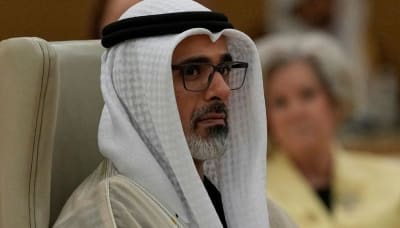
The hum of air conditioners and the glow of digital billboards are familiar comforts for millions, but the subtle tremors of global energy politics can disrupt these everyday scenes in ways unseen. Recent decisions by a key player in the Organization of the Petroleum Exporting Countries (OPEC) to chart an independent course are not abstract geopolitical maneuvers; they carry the potential to influence fuel prices at the pump, impact the cost of goods transported across continents, and reshape the economic landscape for nations reliant on stable energy markets. This is about more than just oil; it's about the future flow of global commerce and the strategic positioning of nations in a rapidly evolving world. The United Arab Emirates' decision to withdraw from OPEC, a move that has sent ripples through international energy forums, appears to be a calculated gamble driven by a complex interplay of national ambition and evolving global dynamics. While the immediate economic implications are being dissected by analysts, the underlying motivations suggest a deeper recalibration of the UAE's role on the world stage. This departure is not a sudden impulse but rather the culmination of years of strategic planning aimed at carving out a distinct identity beyond its traditional role as a major oil producer. The organization, long a bedrock of global oil supply management, has served as a powerful platform for coordinated action among its member states. Its influence, however, has been tested by internal divergences and the rise of non-OPEC producers, creating an environment where individual members might perceive greater strategic advantage in unilateral action. Beneath the surface of this organizational shift lies Saudi Arabia's ambitious Vision 2030 plan, a sweeping initiative designed to transform the Kingdom into a global financial and tourism powerhouse. This colossal undertaking involves unprecedented investment in megaprojects and lavish entertainment ventures, some reaching astonishing scales. The UAE, while not subject to the same explicit national transformation blueprint, has long pursued a parallel strategy of economic diversification, aiming to reduce its own historical dependence on hydrocarbon revenues. This shared regional impetus towards post-oil economies creates a context where individual nations might feel less tethered to the collective bargaining power of OPEC, prioritizing instead the agility required to pursue their unique development agendas. The substantial financial resources being channeled into these transformative projects necessitate a flexible economic framework, one that is not solely dictated by the often-volatile global oil market. Evidence supporting this strategic pivot can be found in the UAE's increasing investment in non-oil sectors, including technology, tourism, and renewable energy. The nation has actively courted foreign investment, sought to become a hub for innovation, and engaged in diplomatic outreach that extends far beyond traditional energy partnerships. Furthermore, recent trade data and investment flows reveal a deliberate effort to broaden economic partnerships, seeking out new markets and establishing robust supply chains independent of traditional energy alliances. The sheer scale of infrastructure development, from futuristic cities to advanced logistics networks, underscores a commitment to a future where economic prosperity is decoupled from oil extraction. This is not merely an economic diversification; it is a fundamental reimagining of national purpose. Reactions from various stakeholders highlight the multifaceted nature of this development. Within the UAE, the move is largely being framed as a bold step towards greater economic autonomy and a testament to the nation's burgeoning capabilities in a post-oil era. Conversely, some traditional OPEC allies may view this departure with concern, potentially fearing a destabilization of oil markets or a weakening of the cartel's collective bargaining power. Industry analysts are closely monitoring the potential impact on global oil prices and the strategic decisions of other OPEC members. Meanwhile, consumer groups and international bodies are focused on the potential downstream effects on energy affordability and the global push towards sustainable energy transitions, which might be indirectly influenced by shifts in major oil producers' strategies. The social media landscape has buzzed with speculation, ranging from theories of internal OPEC discord to pronouncements of a new era of Gulf state independence. Online discussions often reflect a simplified view, pitting economic pragmatism against political maneuvering, but the reality is far more nuanced. Public commentary, particularly in energy-consuming nations, frequently centers on the potential for price volatility and the fairness of market dynamics. Hashtags related to 'energy independence' and 'future of oil' have seen increased traffic, indicating a public appetite for understanding these complex shifts and their personal implications. This strategic recalibration by the UAE is not an isolated event but rather a significant manifestation of a larger global trend: the increasing assertiveness of regional powers and their pursuit of diversified economic models in the face of shifting geopolitical landscapes. Nations across the Middle East and beyond are grappling with the long-term implications of climate change, the global transition to renewable energy, and the evolving influence of major economic blocs. The UAE's move can be seen as a proactive response to these overarching challenges, an attempt to secure its future prosperity by reducing its vulnerability to external economic forces and by actively shaping its own destiny. It mirrors efforts seen elsewhere to build resilient economies that can withstand the vagaries of commodity markets and embrace new technological frontiers. Looking ahead, the critical question is how the UAE will leverage its newfound independence. Will it pursue more aggressive energy policies, focus on maximizing its oil revenues while the market allows, or use this autonomy to accelerate its transition to a knowledge-based economy? The success of its ambitious economic diversification plans will be closely scrutinized, and its future relationship with OPEC and other major energy producers will undoubtedly be a key determinant of global energy market stability. Observers will also be watching closely to see if this departure triggers a domino effect among other member nations, potentially ushering in a new, less predictable chapter for the world's most influential oil cartel.
In Brief
The UAE's surprise exit from OPEC signals a dramatic shift in its economic strategy and geopolitical positioning. This move reflects a broader regional push for diversification beyond oil, with significant implications for global energy markets and national development plans.Advertisement



Comments
No comments yet. Be the first to comment!