
Key Takeaways
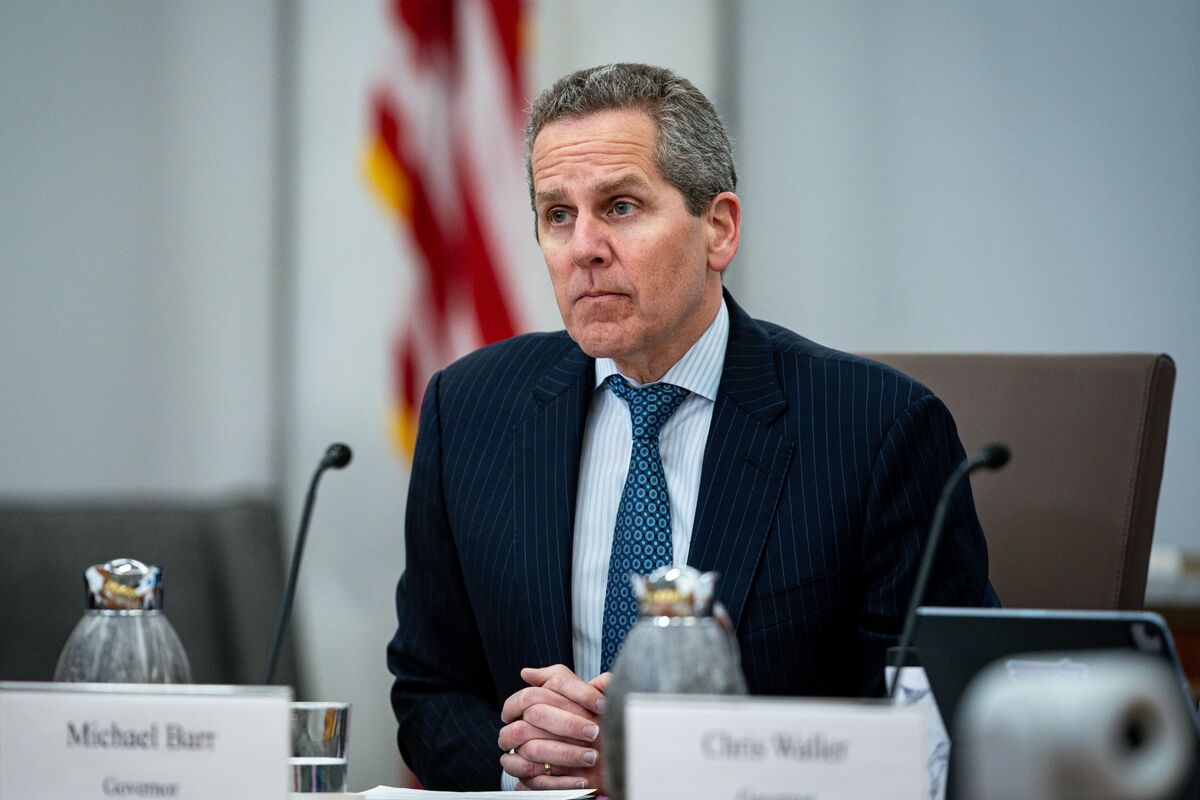
- Federal Reserve Vice Chair Michael Barr has voiced significant concerns about proposals to loosen regulations on large banks, warning of increased systemic risk.
- Barr highlighted that relaxing capital and liquidity requirements could undermine the resilience of the financial system, making it more vulnerable to shocks and crises.
- The push for deregulation is seen by some as a way to boost lending and economic growth, but Barr argues the potential costs to financial stability far outweigh any perceived benefits.
- Specific concerns include the potential for a return to the 'too big to fail' problem, where the failure of a large institution could trigger a wider collapse, necessitating taxpayer bailouts.
- Barr's remarks signal a strong stance from a key banking regulator, suggesting potential resistance to significant rollbacks of post-2008 financial reforms and emphasizing a cautious approach to regulatory changes.
- The debate over bank regulation involves balancing the need for financial stability with the desire to foster economic activity, a complex challenge with significant implications for market participants and the public.
Background
The debate surrounding the regulation of large financial institutions has been a persistent feature of economic policy since the 2008 global financial crisis. Following the near-collapse of the banking system, a wave of new regulations, notably the Dodd-Frank Wall Street Reform and Consumer Protection Act, was implemented to enhance stability and prevent future meltdowns. These reforms imposed stricter capital requirements, liquidity rules, stress tests, and resolution planning on the largest banks, often referred to as Systemically Important Financial Institutions (SIFIs). The intention was to create a financial system that could withstand severe economic downturns without requiring massive government intervention. However, the effectiveness and burden of these regulations have been subjects of ongoing discussion and political contention, with some arguing they stifle lending and economic growth, while others maintain they are essential safeguards.
In recent years, there has been a growing sentiment, particularly within certain political and industry circles, advocating for a rollback of some of these post-crisis regulations. Proponents of deregulation argue that the existing rules are overly burdensome, hindering banks' ability to lend and invest, thereby impeding economic expansion. They suggest that the financial system has evolved and strengthened since 2008, making some of the stringent requirements unnecessary. This perspective often emphasizes market efficiency and the belief that financial institutions can manage their own risks without excessive government oversight. The argument is that a lighter regulatory touch would spur innovation, increase capital flow, and ultimately benefit consumers and businesses through greater access to credit and investment opportunities. This viewpoint often clashes with those who believe that the fundamental risks in the financial system remain and that deregulation could reintroduce dangerous vulnerabilities.
Michael Barr, as the Federal Reserve's top bank supervisor, holds a pivotal position in shaping and enforcing these regulatory frameworks. His role involves assessing the health and stability of the U.S. banking system and making recommendations on regulatory policy. Barr's tenure has been marked by a commitment to maintaining the integrity of post-crisis reforms, even as calls for easing them have intensified. His public statements and actions carry significant weight, influencing not only the Federal Reserve's internal policies but also broader regulatory discussions in Washington and globally. Understanding Barr's perspective is crucial for grasping the current trajectory of financial regulation and the potential challenges faced by institutions seeking to operate under a less stringent oversight regime. His views represent a critical counterpoint to deregulation efforts, emphasizing prudence and risk management.
Why It Matters
The pronouncements from a senior Federal Reserve official like Michael Barr carry immense weight, directly influencing the direction of financial regulation and the stability of the U.S. economy. His warnings about the risks associated with loosening bank rules are not mere academic observations; they signal potential policy decisions that could have profound and far-reaching consequences. If regulations are indeed eased, it could lead to a resurgence of the very risks that precipitated the 2008 crisis, including excessive leverage, inadequate liquidity, and the re-emergence of 'too big to fail' institutions. Such a scenario could make the financial system more fragile, increasing the likelihood and severity of future financial shocks, which in turn could trigger recessions, job losses, and widespread economic hardship for individuals and businesses alike. The stability of the financial system is intrinsically linked to the health of the broader economy, making regulatory decisions a matter of national economic security.
Furthermore, Barr's stance highlights a fundamental tension in economic policymaking: the trade-off between fostering economic growth through deregulation and ensuring financial stability through robust oversight. While proponents of loosening rules argue it will spur lending and investment, critics like Barr contend that the potential for systemic crises outweighs these purported benefits. This debate is critical because it shapes the environment in which banks operate, affecting their profitability, risk-taking behavior, and ultimately, their ability to serve the real economy. A financial system that is too risky can lead to booms and busts, while one that is overly constrained might stifle innovation and growth. Finding the right balance is essential for sustainable economic prosperity, and Barr's intervention underscores the gravity of getting this balance wrong, suggesting that the cost of instability is unacceptably high.
The implications extend beyond the banking sector itself, impacting investors, consumers, and taxpayers. Investors rely on a stable financial system to protect their assets and generate returns; a crisis can wipe out savings and pensions. Consumers depend on banks for loans, mortgages, and payment systems; disruptions can severely affect their ability to finance major life events or conduct daily transactions. Taxpayers, as the ultimate backstop for the financial system, could be forced to bear the cost of bailouts if a crisis erupts due to lax regulation. Therefore, Barr's emphasis on systemic risk is a call to protect the broader public interest from the potential fallout of imprudent financial practices enabled by weakened oversight. His words serve as a crucial reminder that the decisions made in the corridors of financial power have tangible effects on the lives of millions.
Ground Reality
The core of Michael Barr's concern lies in the potential for large, interconnected financial institutions to pose a systemic risk – the danger that the failure of one institution could trigger a cascade of failures throughout the entire financial system. Post-2008 reforms aimed to build higher 'buffers' of capital and liquidity into these banks, making them more resilient to losses and less likely to require government bailouts. Capital acts as a cushion against unexpected losses, while liquidity ensures banks can meet their short-term obligations, even during times of market stress. Loosening these requirements, as some propose, would effectively reduce these buffers, making banks more vulnerable to economic downturns or market shocks. This could manifest as a reduced capacity for lending during a downturn, as banks hoard capital, or a liquidity crisis, where banks struggle to access funds, potentially freezing credit markets.
Another critical aspect of the ground reality is the concept of 'too big to fail.' Despite efforts to resolve failing institutions without taxpayer intervention, the sheer size and interconnectedness of the largest banks mean that their collapse could still have catastrophic consequences. If regulations are weakened, these institutions might grow larger and more complex, increasing the systemic risk they represent. This could lead to a situation where regulators feel compelled to intervene and bail out failing giants to prevent broader economic collapse, thus perpetuating the moral hazard problem where institutions take excessive risks knowing they might be rescued. Barr's warning is essentially a plea to avoid returning to a pre-2008 environment where the potential for such bailouts incentivized risky behavior among the largest players in the financial industry.
The practical impact of deregulation on lending and economic growth is also a key element of the ground reality. While proponents claim deregulation stimulates lending, historical experience suggests that periods of lax regulation often coincide with unsustainable credit booms that can lead to asset bubbles and subsequent busts. Conversely, well-regulated banks, while perhaps growing more slowly, tend to be more stable and reliable partners for businesses and consumers over the long term. Barr's perspective suggests that the 'growth' spurred by deregulation might be superficial or even dangerous, masking underlying vulnerabilities. The true measure of a healthy financial system is not just its size or the speed of credit expansion, but its resilience and its consistent ability to support sustainable economic activity without succumbing to crises.
What Experts Are Saying
Financial economists and regulatory experts largely echo Michael Barr's concerns, emphasizing the hard-won lessons from the 2008 crisis. Many point to the significant increase in capital ratios and liquidity buffers implemented post-crisis as crucial bulwarks against financial instability. They argue that any rollback of these measures would be premature and ill-advised, potentially reintroducing vulnerabilities that took years and trillions of dollars to address. For instance, institutions like the International Monetary Fund (IMF) and the Bank for International Settlements (BIS) have consistently advocated for maintaining strong regulatory standards, particularly for globally systemic banks. Their research often highlights the correlation between weaker regulation and increased financial fragility, underscoring the importance of robust oversight in preventing crises.
Conversely, some industry analysts and free-market advocates argue that Barr's perspective is overly cautious and potentially detrimental to economic dynamism. They contend that the current regulatory framework is indeed too restrictive, hindering banks' ability to innovate, lend, and compete, especially against less regulated non-bank financial institutions. These voices often cite studies suggesting that the cost of compliance outweighs the benefits, leading to reduced credit availability for small businesses and consumers. They might argue that market discipline, rather than regulatory mandates, is a more effective mechanism for ensuring bank soundness. This perspective often frames the debate as one between bureaucratic overreach and the efficiency of market forces, suggesting that a lighter regulatory touch would unlock significant economic potential.
Commentators on financial stability often draw parallels between current deregulation debates and historical periods that preceded financial crises. They highlight how deregulation in various sectors, from savings and loans in the 1980s to the repeal of Glass-Steagall provisions leading up to 2008, often paved the way for excessive risk-taking and eventual collapse. Barr's warning resonates with this historical perspective, suggesting that the allure of short-term economic gains from deregulation can blind policymakers to the long-term risks of systemic instability. Experts in this camp stress the importance of vigilance and a commitment to maintaining regulatory frameworks that prioritize resilience over short-term growth, arguing that the cost of another major crisis would be far greater than any perceived benefit from deregulation.

Frequently Asked Questions
What Happens Next
Michael Barr's cautionary remarks are likely to intensify the ongoing debate surrounding financial regulation. His position within the Federal Reserve means his warnings carry significant policy implications, potentially influencing the Fed's approach to future regulatory adjustments. We can expect continued scrutiny of proposals aimed at easing capital and liquidity requirements for large banks. Policymakers, including those in Congress and at other regulatory agencies like the FDIC and OCC, will need to weigh Barr's concerns against arguments for deregulation. This could lead to a more protracted and contentious process for any proposed changes, with regulatory bodies likely adopting a cautious stance unless compelling evidence suggests that current rules are unduly stifling the economy without compromising stability.
The banking industry and its allies will likely continue to advocate for regulatory relief, perhaps by focusing on specific areas where they believe the burden is most acute or by presenting new data to support their claims of economic hindrance. They may also seek to build broader political support for their position. Conversely, consumer advocacy groups and those focused on financial stability will likely amplify Barr's message, using his warnings as a basis to argue for maintaining or even strengthening existing regulations. This dynamic suggests that any significant shifts in regulatory policy will face considerable pushback from opposing sides, requiring careful consideration and robust justification from regulatory authorities.
Ultimately, the future path of bank regulation will depend on a complex interplay of economic conditions, political pressures, and the ongoing assessment of financial system risks. Barr's intervention serves as a significant marker, signaling that a key regulator remains committed to the lessons learned from past crises and views the potential for deregulation with deep skepticism. Future actions by the Federal Reserve and other agencies will be closely watched to see how these concerns are integrated into policy decisions. The possibility of regulatory divergence, where different agencies or even countries adopt varying approaches, also remains a factor to monitor as the global financial landscape continues to evolve.















Comments
No comments yet. Be the first to comment!