
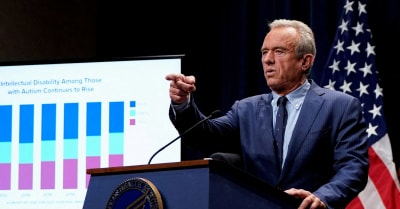
The ripple effects of a recent federal advisory committee's recommendations are already being felt by families navigating the complex landscape of autism spectrum disorder. For parents and caregivers, the potential shift towards a new classification, 'profound autism,' alongside a long-overdue call for enhanced medical care, offers a glimmer of hope amidst persistent systemic challenges. This isn't just about semantics; it's about ensuring that individuals with the most significant support needs receive accurate recognition and the specialized, comprehensive services they desperately require to thrive. The advisory group, established under the auspices of Health Secretary Robert F. Kennedy Jr., has put forth a bold proposal that seeks to redefine how severe autism is understood and addressed within the U.S. healthcare and social service systems. The core of their recommendation centers on adopting the term 'profound autism' to specifically identify individuals who exhibit the most significant challenges in communication, social interaction, and adaptive behaviors, often requiring intensive, lifelong support. This move aims to move beyond broader diagnostic categories that may not fully capture the distinct needs and complexities faced by this subset of the autism population. Historically, autism diagnostics have evolved significantly since the initial descriptions by Leo Kanner in the 1940s. Initially viewed as a rare, severe condition characterized by social withdrawal and a desire for sameness, understanding has broadened considerably. The introduction of the Autism Diagnostic and Statistical Manual (DSM) criteria, particularly the shift in DSM-5 to a single spectrum disorder, while intended to be more inclusive, has inadvertently led to concerns that the most severely affected individuals might be overlooked or that their unique challenges are diluted within a wide spectrum. The proposed 'profound autism' designation seeks to re-center attention on these critical needs. This proposed classification emerges from a growing awareness of critical gaps in current medical care for autistic individuals, especially those with high support needs. Families frequently report struggles in accessing appropriate diagnostic evaluations, specialized therapies, and coordinated healthcare services. The committee highlighted findings that suggest significant disparities in health outcomes, with autistic individuals experiencing higher rates of co-occurring medical conditions like gastrointestinal issues, epilepsy, and sleep disorders, yet often facing barriers to receiving timely and effective treatment for these conditions. A recent report by the Centers for Disease Control and Prevention (CDC) indicated that approximately 54% of children with autism spectrum disorder have co-occurring anxiety, underscoring the mental health challenges that often accompany the condition. The public reaction, particularly on social media platforms, has been a mixture of cautious optimism and outright skepticism. Many parent advocacy groups have expressed relief that the severe end of the spectrum is being given specific attention, hoping it will unlock more targeted funding and resources. However, others voice concerns about potential stigma associated with a new label or worry that it might inadvertently lead to a two-tiered system of care, potentially disadvantaging those who don't meet the criteria for 'profound autism.' Discussions on forums and social media reveal a deep-seated anxiety about how such a classification would be implemented in practice and whether it would truly translate into tangible improvements on the ground. The historical parallel that lends significant weight to this discussion can be drawn from the evolution of understanding and care for other complex disabilities. For decades, conditions like intellectual disability underwent reclassification and refinement to better reflect the spectrum of severity and the specific support requirements of individuals. Each shift was met with debate, but ultimately aimed to improve diagnostic accuracy, personalize interventions, and advocate for better societal integration and support structures. The current debate around 'profound autism' mirrors these past efforts to ensure that no individual is left behind due to imprecise terminology or inadequate service provision. Looking ahead, the path from recommendation to implementation is fraught with potential hurdles. Federal and state legislative bodies, healthcare providers, insurance companies, and diagnostic professionals will all need to align on the definition and application of 'profound autism.' The committee's call for improved medical care is particularly pressing, urging for better training for healthcare professionals on autism-specific needs, the development of integrated care models, and increased research into the medical comorbidities that frequently affect autistic individuals. The success of these recommendations hinges on robust funding and a genuine commitment to dismantling the systemic barriers that currently impede equitable access to care. For families, the immediate future involves closely monitoring policy discussions and advocating for changes that prioritize individualized support and comprehensive care. Staying informed about legislative developments, engaging with advocacy organizations, and sharing personal experiences will be crucial in shaping the implementation of any new guidelines. The hope is that this renewed focus will catalyze concrete actions leading to more effective, person-centered services, ensuring that every individual on the autism spectrum, regardless of their support needs, can live a life of dignity and opportunity.
In Brief
A federal panel has recommended adopting the term 'profound autism' to better identify individuals with the most severe support needs, alongside a critical call for overhauling medical care standards. This proposal aims to address long-standing gaps and ensure specialized services for those most affected.Advertisement




Comments
No comments yet. Be the first to comment!